



Summary and Humanized Account of the Incident at Manchester Airport
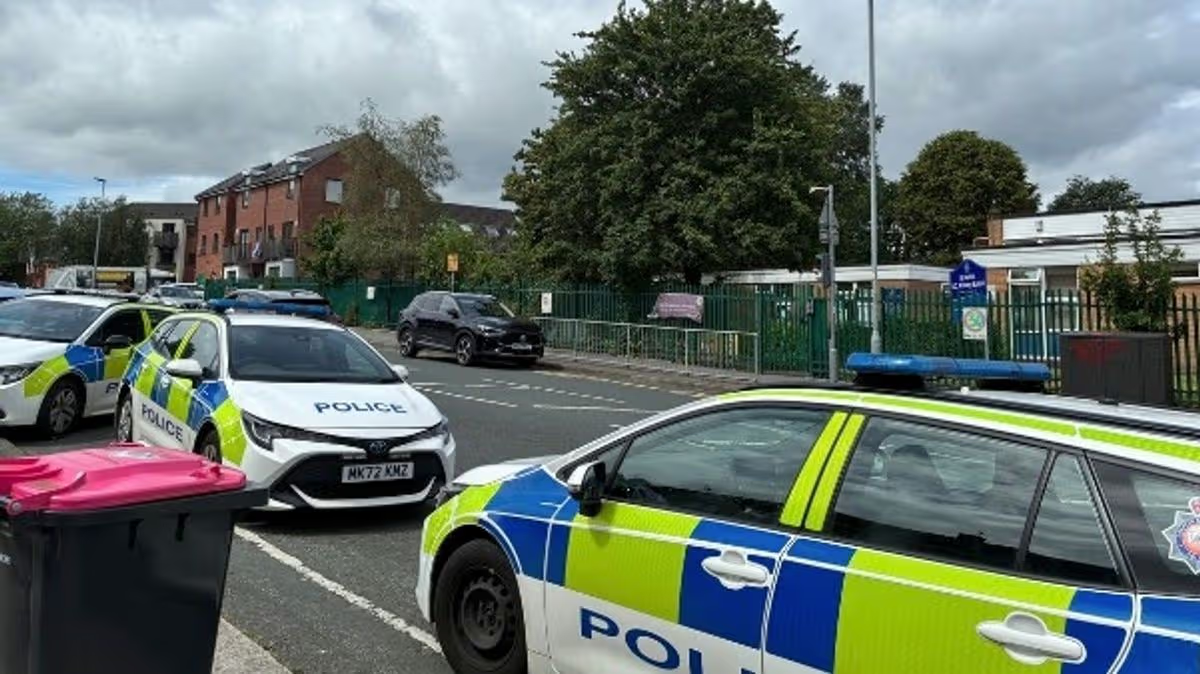
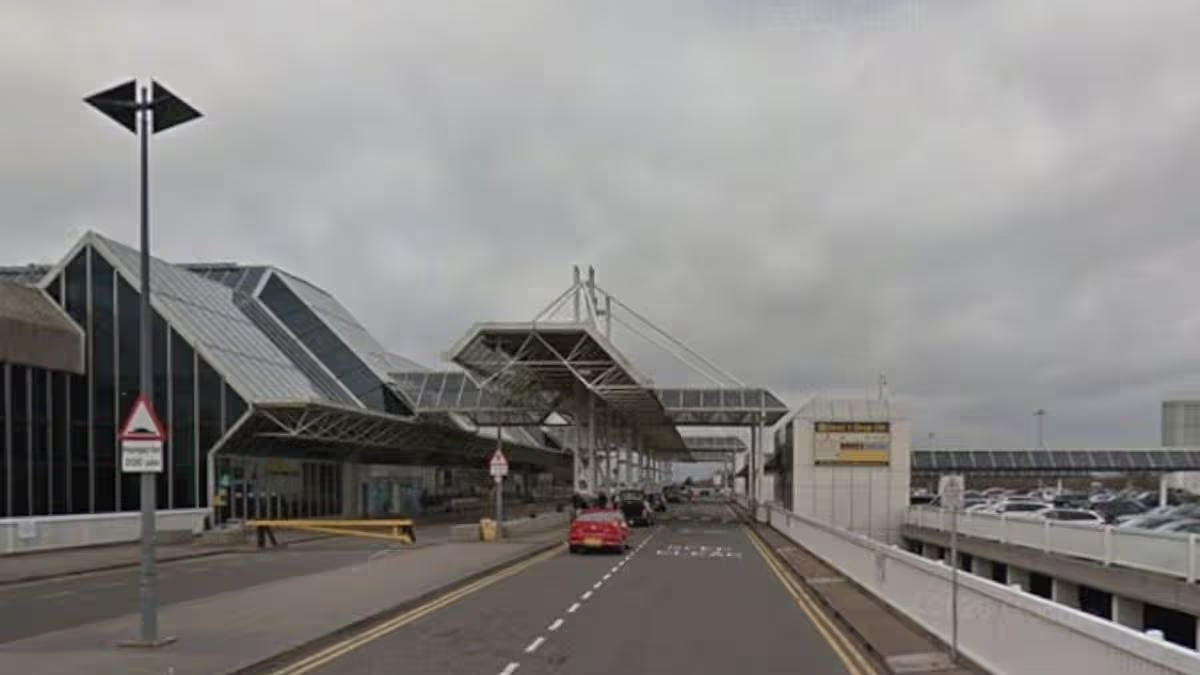
Travelers embarking from Manchester Airport’s Terminal 2 in the early hours of Monday, May 5th, 2026, were met with significant disruption and an unexpected scene of police activity following a serious incident. The morning’s chaos began when a police pursuit culminated in a road traffic collision near the terminal building. As a result, the airport’s upper forecourt drop-off zone at Terminal 2—a crucial artery for passengers being dropped off—was abruptly closed for approximately three hours, from around 2:30 AM until 5:30 AM. This closure triggered extensive congestion and delays, as all vehicle traffic was forcibly rerouted to the already busy lower forecourt area. Authorities quickly warned that journeys to the airport would take longer than usual, apologizing for the inevitable inconvenience to countless passengers starting their journeys.
The human impact of the incident was severe. Greater Manchester Police confirmed that the driver of the pursued vehicle sustained serious injuries in the crash and was transported to a hospital for treatment. While the specific reasons for the initial police chase were not immediately disclosed, the aftermath was visibly disruptive, transforming a routine travel hub into a cordoned-off area of emergency response. For early-morning passengers, the disruption translated into real stress: missed curbside goodbyes, fraught dashes with luggage from less convenient drop-off points, and the underlying anxiety about potentially missing flights due to the unexpected traffic snarls.
Manchester Airport’s communications team worked to manage the situation, using social media to provide real-time updates. They initially announced the closure of the upper forecourt, redirecting drivers and cautioning about congestion. By 5:30 AM, they confirmed the area had reopened, thanking the public for their patience during the tumultuous period. This incident starkly highlighted the fragility of airport logistics, where a single event on a nearby road can ripple through the entire travel ecosystem, affecting thousands of people. It served as an unwelcome reminder that the journey to the airport can sometimes be as unpredictable as the flight itself.
Unfortunately for Manchester Airport, this acute morning incident occurred against a backdrop of broader, chronic performance issues. New data released around the same time revealed a less-than-flattering statistic: Manchester Airport had the worst record for flight departure delays among all major UK airports in 2025. On average, flights took off nearly 20 minutes behind schedule. While industry experts note that such delays can stem from systemic issues like nationwide air traffic control problems or adverse weather, the consistent lag has damaged the airport’s reputation.
This persistent problem has not gone unnoticed by consumer advocates. Rory Boland, editor of Which? Travel, explicitly connected the dots between these systemic delays and passenger confidence. He pointed out that Manchester Airport has consistently ranked poorly in passenger surveys and stated that such reliable underperformance makes it difficult for travelers to book flights from there “with any real confidence.” The sentiment underscores a significant challenge for the airport: overcoming a perception of unreliability that is reinforced by both dramatic, isolated incidents like the police chase and by sobering long-term punctuality statistics.
In the end, the morning of May 5th presented a dual narrative for Manchester Airport. In the immediate foreground was an acute, dramatic crisis—a police chase ending in a crash, causing tangible, hours-long disruption for travelers. In the background, however, loomed the more persistent and perhaps more damaging story of operational struggles, as evidenced by its standing as the nation’s leader in flight delays. For passengers caught in that morning’s chaos, the experience was likely a frustrating blend of bad luck and a worrying confirmation of the airport’s troubled reputation, highlighting the urgent need for improvements in both crisis management and overall operational punctuality.