




A City in Mourning: Leipzig Remembers After Tragedy
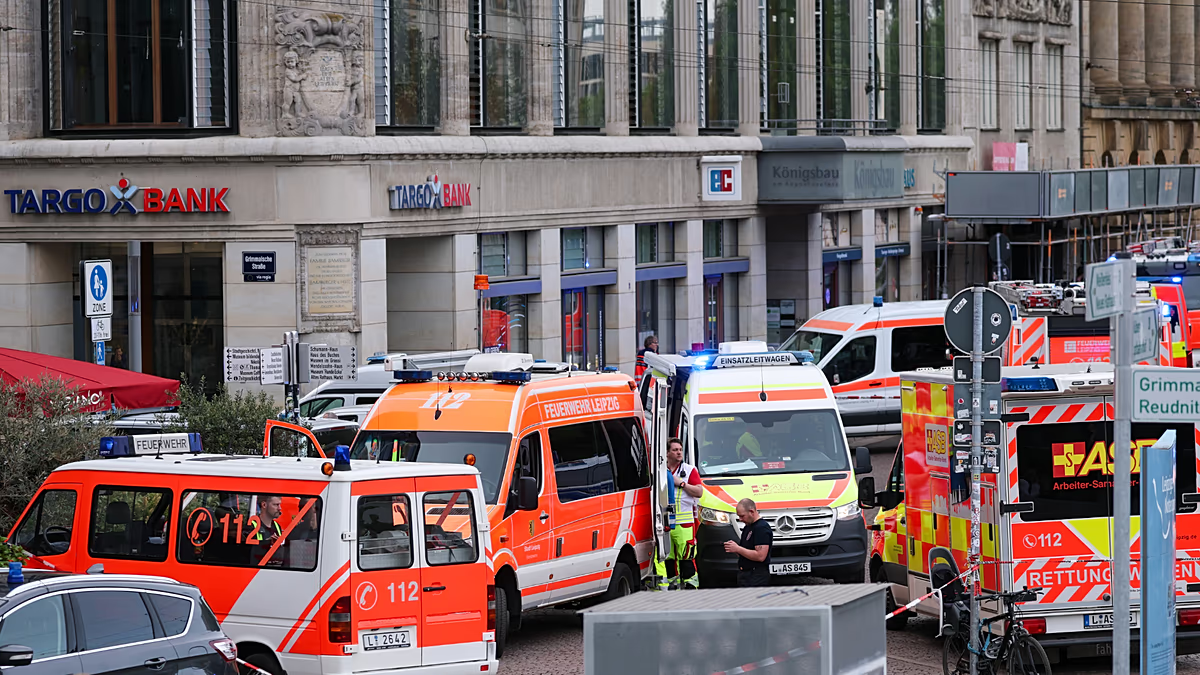
On a somber Monday in Leipzig, the vibrant heartbeat of this historic German city was replaced by a profound and collective grief. Residents gathered in the central square, not for the usual melodies of commerce and conversation, but to pay silent tribute. They came to honor the victims of a sudden and devastating car rampage that had, just hours before, shattered the ordinary rhythm of life, claiming two lives and leaving several others injured. The attack, targeting one of the city’s busy public areas, transformed a place of community into a scene of tragedy, sending shockwaves through Leipzig and beyond. This spontaneous gathering marked the beginning of the community’s arduous journey from shock toward remembrance, a first step in confronting the void left by senseless violence.
Throughout the day, a quiet pilgrimage unfolded at the site. The clinical glare of emergency vehicle lights, still present as authorities secured the area for investigation, was slowly softened by a growing sea of flickering candles and delicate bouquets. Video footage captured the poignant, wordless actions of mourners: a person kneeling to carefully place a single rose, another shielding a candle’s fragile flame from the wind, a child’s drawing left with a message of sympathy. This makeshift memorial, emerging organically from the people themselves, became a powerful testament to human solidarity in the face of dehumanizing chaos. Each flower represented a life interrupted, each candle a defiant stand against the darkness, and each handwritten note—addressed to strangers whose names they may never know—spoke of a shared vulnerability and a common compassion that binds a community together.
As the memorial grew, so did the space for shared reflection. Mourners paused not just to leave an offering, but to stand in quiet contemplation, to share a look of understanding with a neighbor, or to simply absorb the weight of the moment. This act of public grieving served a crucial purpose, transforming an anonymous crime scene back into a human space belonging to the citizens of Leipzig. It was a process of reclaiming their city centre, not by ignoring the pain, but by openly acknowledging it together. In the stillness between the candles, people processed the unimaginable, grappling with the frightening fragility of public safety and the random nature of the tragedy that had visited their doorstep.
Behind this moving display of civic heart, the meticulous and essential work of investigation continued unabated. While the public mourned, authorities worked to piece together the precise timeline of events, the motivations behind the act, and the full circumstances leading to the catastrophe. This parallel process—the emotional and the judicial—highlights the dual response required in the aftermath of such events. The community seeks meaning and connection through ritual and memorial, while the state seeks answers and accountability through evidence and procedure. Both are necessary for the long road toward healing and, ultimately, justice for the victims and their grieving families.
The tragedy in Leipzig is not an isolated footnote; it echoes a pattern of vehicle-ramming incidents that have struck European cities in recent years, from Berlin to Nice, London to Barcelona. Each event leaves a unique scar on its community, yet they collectively evoke a chilling familiarity—a confrontation with the vulnerability of our shared public spaces. In remembering the specific victims of Leipzig, we are also inevitably reminded of this broader context, which amplifies the sense of shock and raises urgent questions about security, societal tensions, and how to protect the open, pedestrian-friendly squares that are the lifeblood of urban culture.
Yet, in the face of this darkness, the human response, as seen so clearly in Leipzig’s central square, consistently leans toward light. The gathering was not a display of fear, but one of profound empathy and resilience. By choosing to come together, to create beauty amidst the wreckage, and to affirm the value of every life lost, the people of Leipzig demonstrated that while violence can inflict deep wounds, it cannot erase our fundamental capacity for care. This memorial, built from simple, everyday items, stands as the first chapter in the city’s healing—a promise to the victims that they will be remembered not for how they died, but for the community they were a part of, a community that now holds their memory in the gentlest of hands.