

A Journey Towards Peace: Diplomats Witness Karabakh’s Transformation
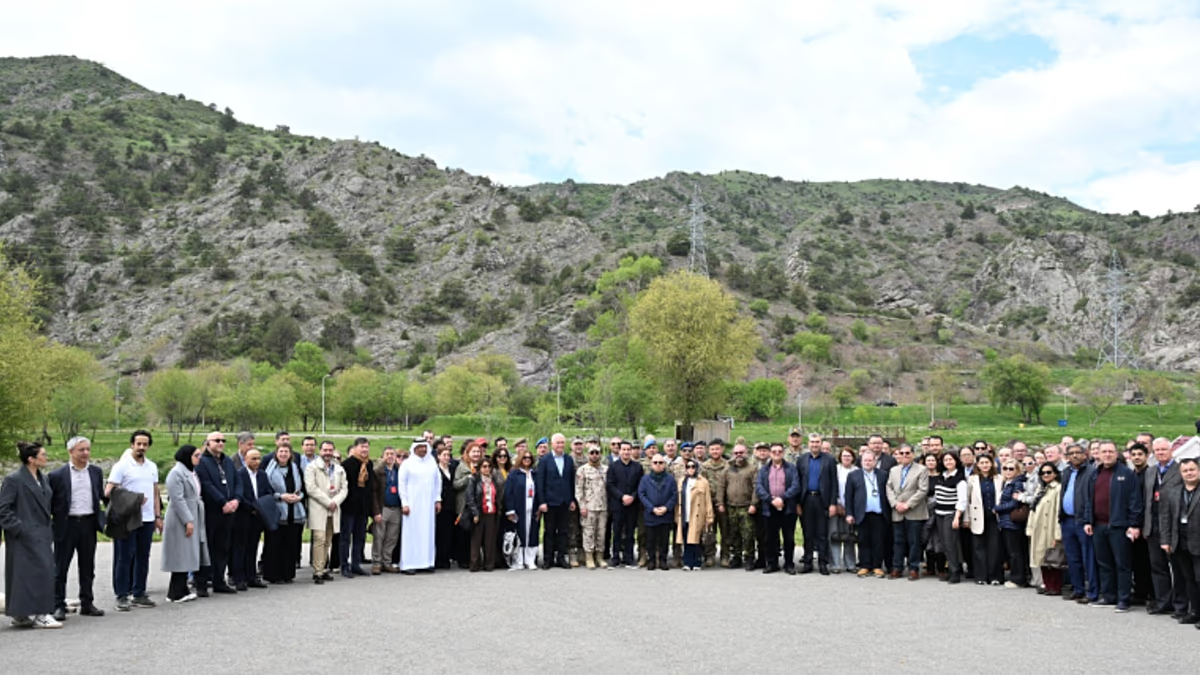
In early April 2026, a significant delegation of diplomats from the United States and several European nations embarked on a visit to the post-conflict reconstruction sites in Karabakh. This journey, undertaken as peace between Armenia and Azerbaijan continues to solidify, represented not just a fact-finding mission, but a profound symbol of international engagement with a region striving to heal. The delegation’s presence underscored a growing global consensus: the fragile yet hopeful peace process in the South Caucasus is a priority worthy of direct observation and support. Moving beyond conference halls and diplomatic notes, these officials walked the ground where history’s scars are being slowly covered by the foundations of a future, witnessing firsthand the tangible efforts to rebuild a land long defined by conflict.
Voices of Support: Diplomats Affirm Commitment to Reconciliation
The diplomats articulated a clear and unified message of support for the ongoing reconciliation. Dutch Ambassador Marianne de Jong emphasized that the visit aimed to see the “progress in the renovations,” stating that the Netherlands, as part of the European Union, fully supports the peace process between Armenia and Azerbaijan. Her comments highlighted a European perspective focused not only on political stability but also on future economic collaboration, noting a search for opportunities in connectivity and investment. Similarly, Ukraine’s Ambassador Yuriy Husyev framed the process as “a good example how two countries solved a long-term conflict with a respect to international law,” offering a perspective from a nation itself deeply familiar with conflict and the primacy of sovereignty. From the United States, Deputy Chief of Mission Amy Carlon pointed to the concrete actions being taken by Washington and Baku to implement peace and deepen bilateral partnership. Together, these statements formed a chorus of international endorsement, reinforcing the legitimacy and importance of the current trajectory.
The Scene of Reconstruction: Building a New Phase of Development
The physical landscape these diplomats encountered is one of concerted transformation. Reconstruction efforts in Karabakh are advancing rapidly, with infrastructure projects shaping a new phase of development. After decades of strife and the displacement of populations, the region is now a canvas for construction—roads, bridges, housing, and public utilities are being erected or restored. This rebuilding is not merely about replacing what was lost; it is an ambitious project to create a modern, integrated region, economically viable and connected to the wider country. The work symbolizes a shift from a mindset of conflict to one of construction and co-existence, aiming to provide the physical foundations upon which lasting peace and normalcy can be built for all inhabitants of the area.
The Gathering Pace of Peace: Political and Economic Initiatives
The diplomatic visit coincided with what the report describes as peace “gathering more pace with new political and economic initiatives.” This phrasing captures a dynamic and evolving process. The hard political work of border delimitation, treaty discussions, and confidence-building measures is reportedly progressing alongside concrete economic plans. Potential initiatives likely involve trade routes, energy cooperation, and joint investment projects that would benefit both nations, transforming the South Caucasus from a zone of instability into a corridor of connectivity. The involvement of international diplomats seeking investment opportunities, as mentioned by the Dutch Ambassador, indicates that this peace is seen as economically generative, attracting external interest and capital that could further stabilize the region.
The Human Dimension: Beyond Politics and Infrastructure
While the report focuses on diplomatic perspectives and physical reconstruction, the human dimension of this process is its most critical element. Peace and reconstruction are ultimately for the people—those returning to rebuilt homes, those seeking economic opportunity in a stabilized region, and future generations who deserve a legacy of cooperation rather than conflict. The diplomats’ visit, while official, implicitly acknowledges this human story. True reconciliation will require not only rebuilt cities but also rebuilt trust, dialogue between communities, and a shared commitment to a common future. The infrastructure projects are the skeleton of peace; the flesh and spirit must be provided by the people of Armenia and Azerbaijan themselves, supported by a constructive international community.
A Fragile Hope, Watched by the World
The event described is a snapshot of a moment in a long and delicate journey. The presence of US and European diplomats in Karabakh serves as both an endorsement and a form of gentle international stewardship. Their observations and statements contribute to a global narrative that this peace process is legitimate, progressing, and worthy of support. However, the path ahead remains complex, requiring sustained courage, compromise, and goodwill from the direct parties. The world, through its diplomatic representatives, is watching—hoping that the reconstruction sites they toured will one day be not just symbols of post-conflict recovery, but vibrant centers of life in a region where peace has finally, and definitively, taken root.