

Of course. Here is a humanized and expanded summary of the content, crafted into six paragraphs.
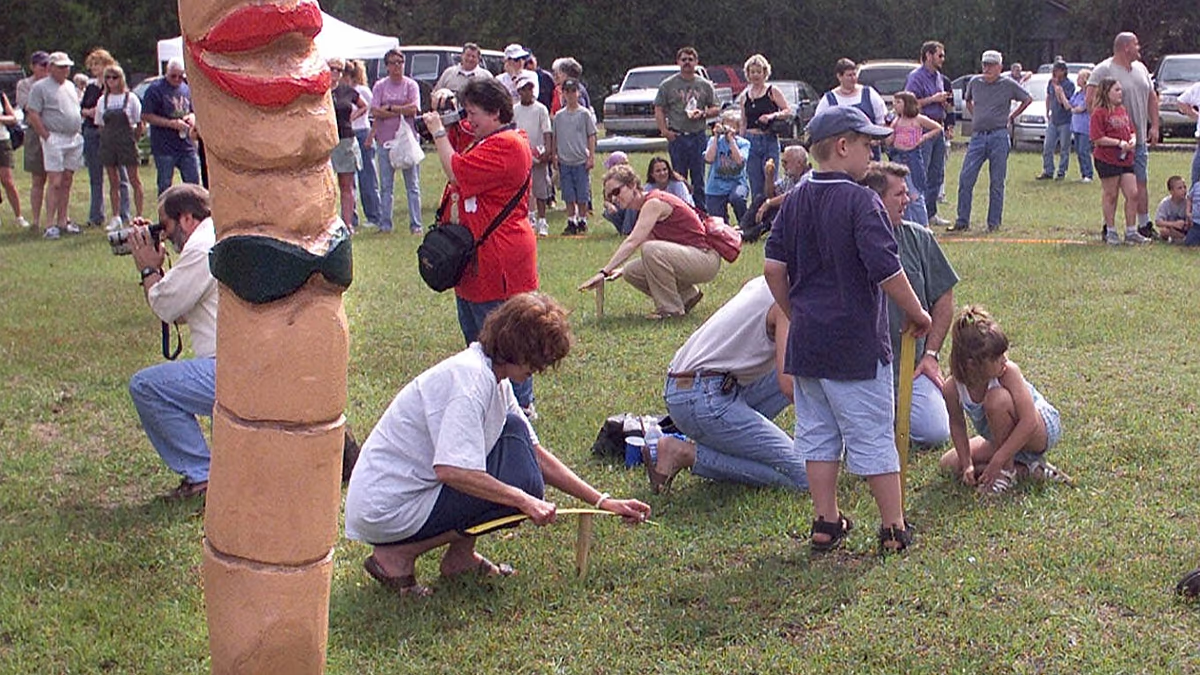
In the quaint and picturesque village of Blackawton, nestled in the rolling hills of southern England, a uniquely British tradition springs to life each year. This is not a typical village fete with cake stalls and tug-of-war ropes, but something wonderfully peculiar: the International Festival of Wormcharming. Here, participants from near and far gather with a singular, earnest goal: to coax as many earthworms as possible to the surface of a designated plot of earth within a strict twenty-minute timeframe. The air buzzes with a mix of focused determination and festive merriment, as competitors prepare their tools and strategies for this gentle, if unusual, sport.
The core of the competition is a fascinating blend of folklore, science, and sheer creativity. The rules are clear and designed with the worms’ well-being at their heart: no digging, no watering, and no harmful chemicals are permitted. Instead, contestants must rely on vibration, sound, and other ingenious, non-invasive techniques to mimic the sensations that signal to worms that it is safe—or perhaps urgent—to emerge. You might see individuals rhythmically tapping forks into the ground, playing musical instruments like harmonicas or recorders directly against the soil, or even using specially designed “worm charming” devices that send subtle tremors through the earth. It is a testament to human ingenuity, turning a simple patch of grass into a stage for a silent, subterranean summoning.
This delightful event traces its roots back to 1984, born from a blend of local whimsy and a friendly challenge. It has since grown from a quirky village novelty into an internationally recognized phenomenon, even inspiring similar contests elsewhere. Yet, it has never lost its charming, community-hearted spirit. The festival is about far more than just worm counts; it is a full-blown celebration. The grounds come alive with music, from local folk bands to impromptu performances. Participants and spectators alike often arrive in elaborate costumes, with themes ranging from garden gnomes to fantastical creatures of the soil, adding a layer of playful pageantry to the proceedings.
The atmosphere is one of inclusive joy and lighthearted competition. Families work as teams, children experiment with wide-eyed enthusiasm, and seasoned veterans share tips and tales of charms past. Visitors and competitors travel from across the region, drawn by the event’s reputation for good-natured fun and its embrace of the wonderfully absurd. It is a day where the simple act of encouraging a worm to peek above ground becomes a shared adventure, fostering laughter and camaraderie under the open sky. The festival grounds become a tapestry of community connection, woven together by this shared, slightly muddy purpose.
A fundamental and deeply respected principle underpins every aspect of the Wormcharming Festival: respect for the tiny creatures at its center. Organizers emphasize that this is a charm, not a harm. Once the twenty-minute frenzy concludes and the worms are carefully counted for the official tally—a process watched with bated breath and good-natured rivalry—the next step is crucial. Every single worm is gently and safely returned to the very patch of ground from which it emerged. This ethical stewardship ensures the local ecosystem remains undisturbed and the worm population thrives, reinforcing that the event is a celebration of nature, not an exploitation of it.
In conclusion, the International Festival of Wormcharming in Blackawton is far more than a quirky competition; it is a heartfelt celebration of community, creativity, and coexistence with the natural world. It represents a beautiful paradox: a gathering that is both utterly silly and profoundly respectful. It champions the idea that joy can be found in the simplest of interactions with our environment, and that tradition can be built around kindness and imagination. In a fast-paced world, this festival is a gentle, grounding reminder of the whimsy and wonder that can flourish when people come together to appreciate, and charmingly interact with, the humble earth beneath our feet.