

The Geopolitical Landscape Shifts: U.S. Troop Redeployment and European Unity in Focus
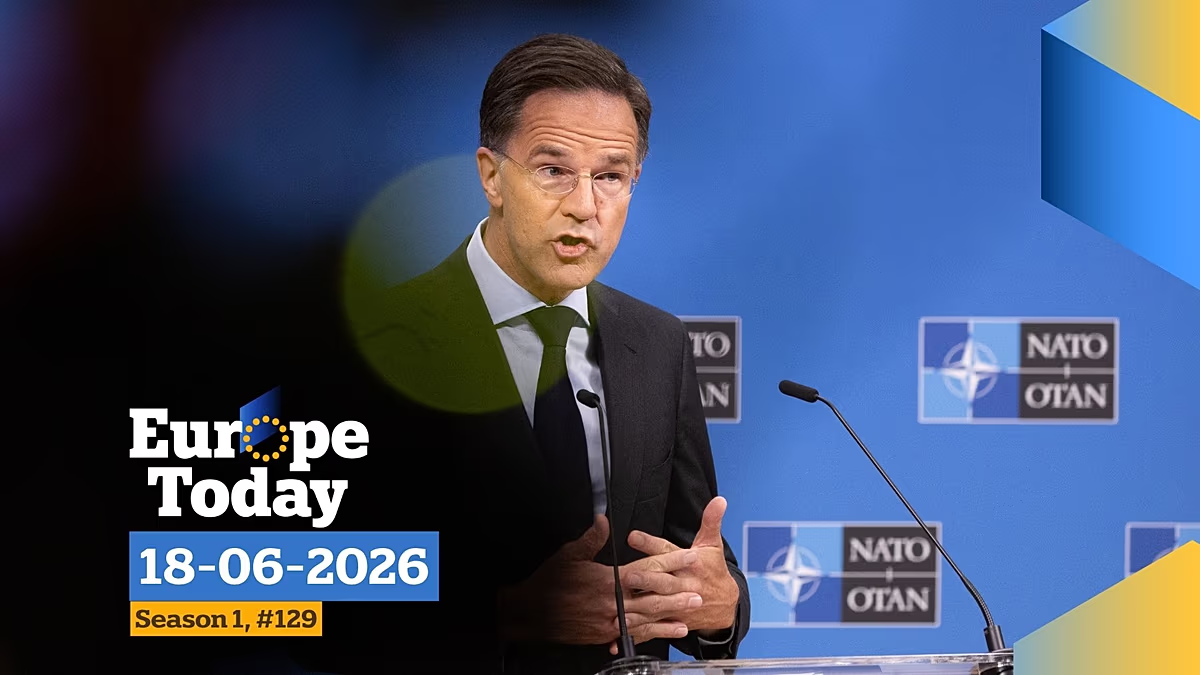
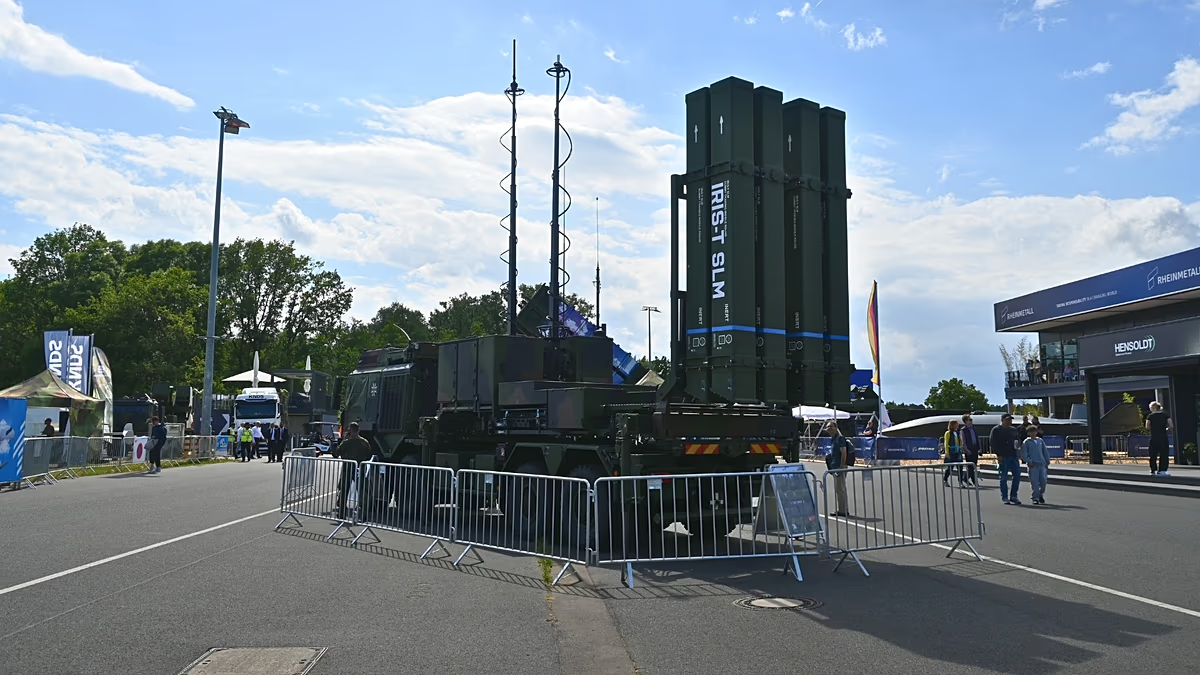
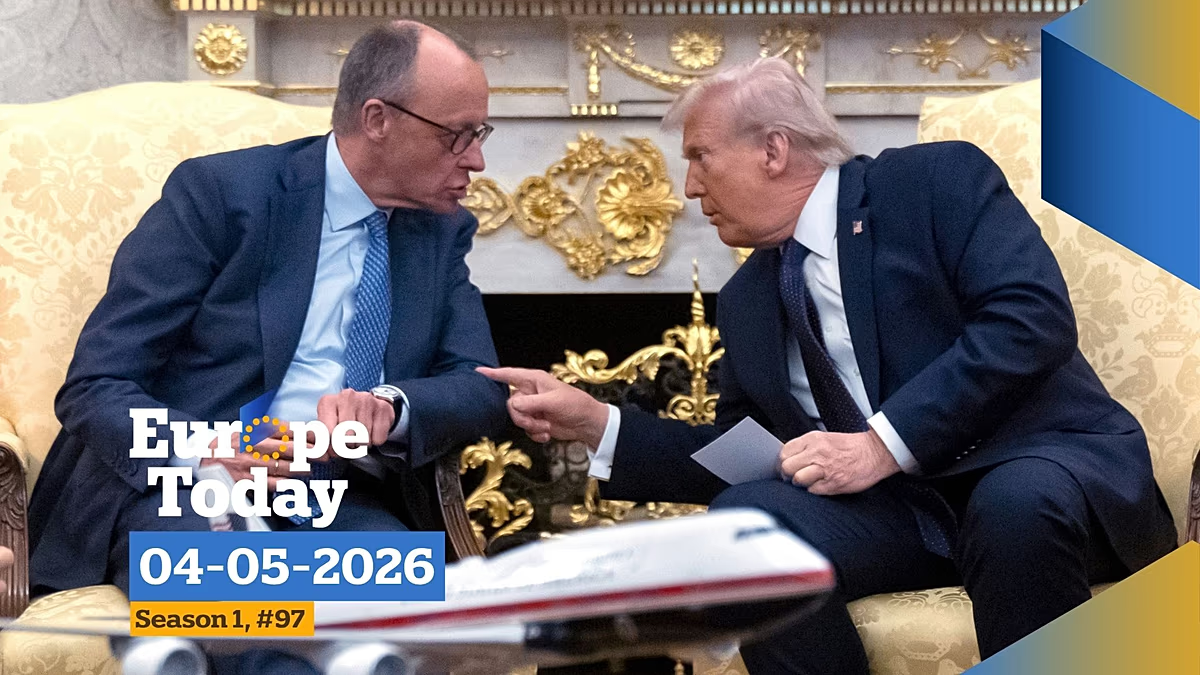
In a significant development for transatlantic relations, the flagship news program Europe Today, hosted by Mared Gwyn, led its broadcast with a major story: the ongoing withdrawal of U.S. troops from their long-standing bases in Germany. This strategic redeployment, as analyzed by Euronews correspondent Shona Murray, sends ripples far beyond a simple change in military posture. For decades, the substantial American presence in Germany has been more than a logistical arrangement; it has been the bedrock of NATO’s eastern flank and a potent, physical symbol of the United States’ security guarantee to Europe. The drawdown prompts urgent questions about the future burden-sharing within the Alliance and compels European nations to confront a new strategic reality where they must assume greater responsibility for their own continental defense. This move underscores a gradual but perceptible shift in American foreign policy priorities and challenges Europe to define its own security identity in an increasingly volatile world.
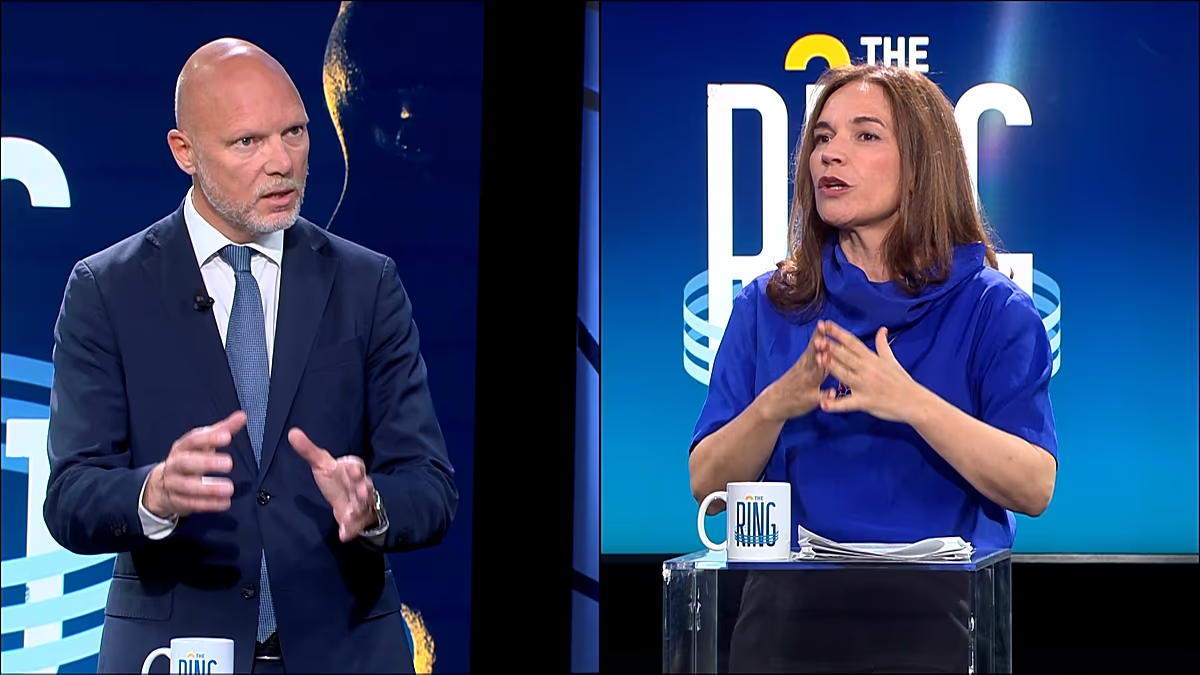
Amplifying this critical discussion, the show featured insights from Bernd Lange, a German Member of the European Parliament from the Socialists and Democrats group. From a European legislative perspective, Lange likely addressed the complex implications of the troop move, weighing the diplomatic sensitivities with Germany against the broader imperative for EU strategic autonomy. His analysis would bridge the gap between high-level NATO policy and the political realities within the European Union, where debates over a common defense fund and integrated military structures have gained fresh momentum. This segment would not simply report the news but would humanize the political calculus happening in Brussels and Strasbourg, as lawmakers grapple with turning a moment of uncertainty into an opportunity for a more cohesive and self-reliant European defense capability.
Shifting from the macro-level of geopolitics to the grounded challenges of governance, the program also included an interview with Roberto Gualtieri, the Mayor of Rome. While the connection to international security may seem less direct, this inclusion is profoundly telling. It highlights how pan-European issues—from energy crises and migration flows to economic instability—are ultimately felt and managed at the local level. Mayor Gualtieri’s perspective would bring the conversation down to earth, discussing how global tensions and EU policies translate into real-world challenges for city infrastructure, public services, and social cohesion. His voice serves as a crucial reminder that the grand projects of unions and alliances must deliver stability and prosperity to the everyday lives of citizens in cities like Rome, or they risk losing public support.
Parallel to these security and governance discussions, Euronews correspondent Sasha Vakulina provided a dispatch from a significant diplomatic gathering: the European Political Community (EPC) Summit in Armenia. This relatively new forum, bringing together nearly 50 leaders from across the European continent alongside Canada’s Prime Minister, Mark Carney, represents an ambitious experiment in political dialogue beyond the formal structures of the EU. The summit’s location in the South Caucasus is itself symbolic, extending Europe’s diplomatic engagement to its eastern periphery and addressing shared challenges like energy security, connectivity, and regional stability. The very existence of the EPC reflects a desire to foster a broader, more inclusive European conversation, creating a space for strategic discussion that includes both EU member states and neighboring partners like the United Kingdom, Ukraine, and the Balkan nations.
Intriguingly, the summit’s guest list sparked a fascinating explanatory segment from analyst Jakub Janas, who explored the provocative question: Could Canada join the European Political Community? While geographically distant, Canada’s participation underscores the community’s flexible, political—rather than geographic—nature. As a close NATO ally, a fellow liberal democracy, and a nation with deep historical and cultural ties to Europe, Canada’s involvement blurs traditional continental boundaries. Janas’s analysis would delve into the practicalities and symbolism of such membership, examining whether the EPC aims to be a strictly continental project or a wider circle of like-minded democracies united by shared values and security interests. This segment elevates the broadcast from pure reportage to thoughtful foresight, engaging viewers in the evolving definition of “European” cooperation in the 21st century.
Concluding with practical engagement, the program detailed its own revitalized format, now helmed by chief anchor Méabh Mc Mahon and EU editor Maria Tadeo. Their daily mission, as outlined, is to not only present the day’s key events but to provide the crucial context and analysis that helps audiences make sense of a complex news landscape. By emphasizing availability across TV, website, digital platforms, newsletter, and podcast, Europe Today embodies the modern media approach: meeting the audience wherever they are. This final note reinforces the show’s core promise—to be an accessible, trusted guide through the interconnected stories shaping the European Union and the wider world, from the movement of armies to the deliberations of mayors and the forging of new political communities.