


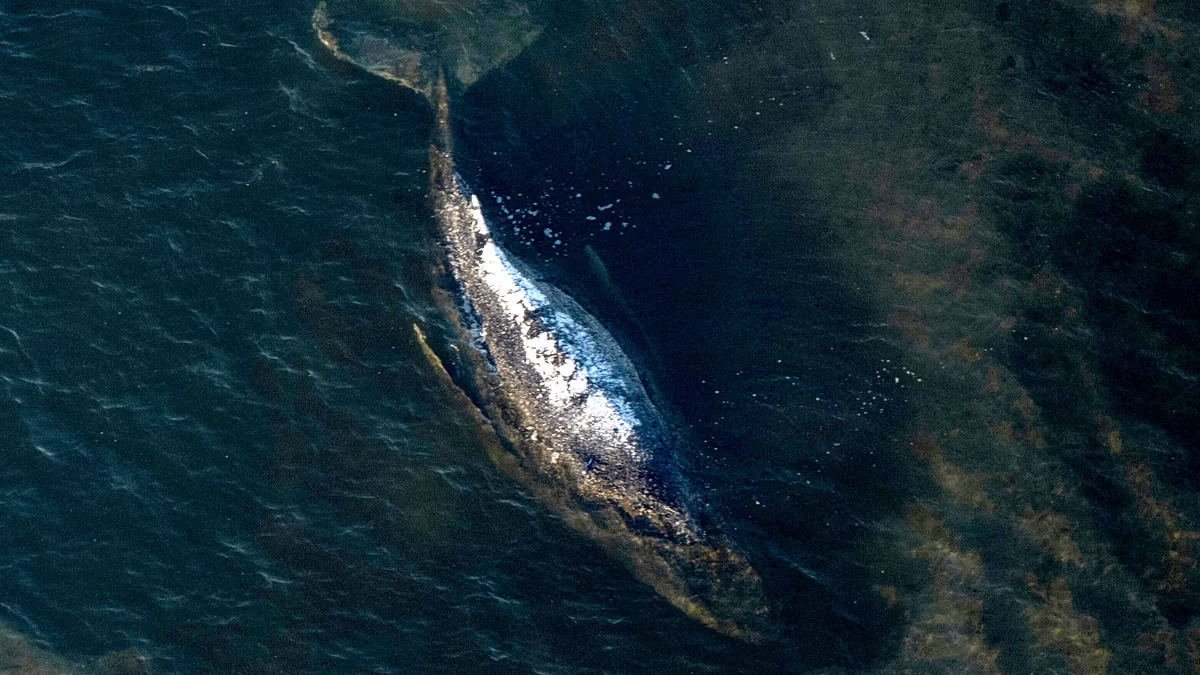
In a remarkable and prolonged rescue effort that has captured public attention, a humpback whale stranded in the shallow waters of a Baltic Sea bay near the German island of Poel has finally been returned to the ocean. After a complex and multi-day transport operation, the animal was released into the North Sea. The culmination of this delicate mission came at approximately 9:00 a.m., when Jens Schwarck of the private rescue initiative overseeing the operation confirmed to the German Press Agency (dpa) that the whale was no longer onboard the specialized transport barge that had carried it. This moment marked the hopeful end of an arduous journey for the young marine giant, which had been found disoriented and in distress far from its typical deep-water habitat.
The release, however, did not proceed entirely as planned by the rescuers, adding a layer of uncertainty to the story. Initial reports suggest the captain of the tugboat towing the barge made the decision to release the animal at a location approximately 70 kilometres north of Skagen, Denmark. This spot is notably different from the open-sea site originally intended by the rescue team, raising questions about the specific reasoning behind the change. The new location, while in the North Sea, may present different current and environmental conditions for the whale as it reorients itself to freedom. This unforeseen alteration in plans underscores the immense challenges and unpredictable variables inherent in managing such a large-scale wildlife rescue.
Compounding this uncertainty is a lack of immediate information about the whale’s health or whether it is being electronically monitored. Jens Schwarck noted that it was initially unclear if the animal had been fitted with a satellite transmitter prior to its release. Such a device would be crucial for scientists and rescuers to track the whale’s post-release movements, ensuring it is heading toward safer, deeper waters and not circling back toward dangerous coastlines. Without this data, the animal’s fate becomes a matter of anxious hope. The public and the dedicated rescue team are left wondering: Is the whale swimming strongly out to sea, or is it still vulnerable?
The journey to this point was fraught with peril and dramatic pauses, highlighting the sheer difficulty of the task. Just days before the successful release, the entire transport was forced to a standstill. As the convoy approached the turbulent transition zone between the North and Baltic Seas, it was met with challenging weather conditions. Winds gusting up to force 6 churned up waves of nearly 1.5 metres, creating conditions deemed too risky for the stable transport of the barge and its precious living cargo. Facing these tempestuous seas, the tugboat captain made the prudent decision to turn southward, seeking calmer waters and waiting for a safer window to proceed. This delay was a tense reminder of nature’s ultimate authority over even the best-laid human plans.
The breakthrough came on Friday evening, imbuing the operation with a sense of poetic agency from the whale itself. At around 7:20 p.m., observers reported that the humpback whale, perhaps sensing the shift in circumstances or the scent of open water, began to move purposefully within its temporary confinement. It actively approached the exit gate of the barge, a robust structure designed for a controlled release. This behavior was interpreted as a positive and encouraging sign, suggesting the animal retained its strength and natural instincts. After days of passive transport, this moment of deliberate action hinted at a readiness to return to the vastness of the ocean, fueling the team’s resolve to complete the mission at the next possible opportunity.
Now, as the story moves from the dramatic rescue to an uncertain future, a collective sense of cautious optimism prevails. The image of a young humpback whale, once trapped in a shallow bay, navigating the waves of the North Sea is a powerful testament to human compassion and perseverance. Yet, the unanswered questions—about its exact release point, its physical condition, and its onward journey—linger. The episode stands as a profound reminder of our connection to majestic marine life and the complexities of intervening in the natural world. The ultimate success of this extraordinary endeavor will be written not in the logbooks of the tugboat, but in the silent, deep-sea travels of the whale itself, as it hopefully reclaims its rightful place in the Atlantic’s expanse.