


Here is a humanized and expanded summary of the content, structured into six paragraphs as requested.
Paragraph 1: The Promise of a Holiday Shattered
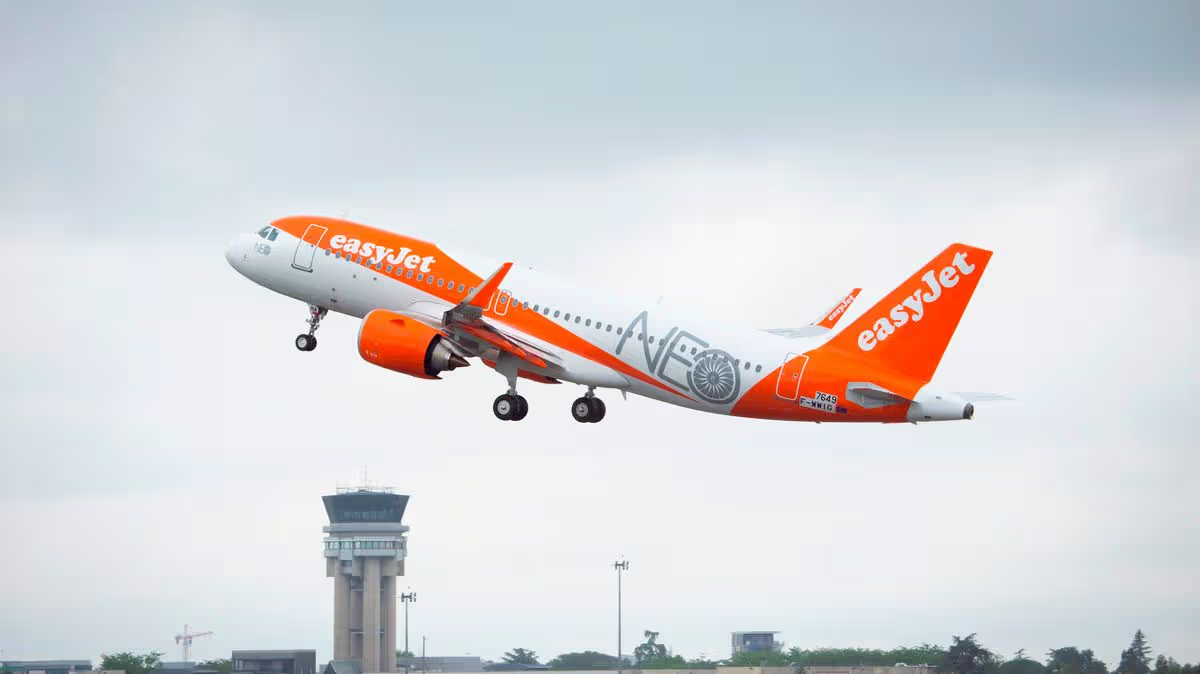
The expectation of a holiday flight is one of contained excitement—a liminal space between the familiar and the anticipated, filled with the gentle hum of engines and the quiet murmur of passengers settling in for a few hours of travel. For families and holidaymakers boarding an easyJet Airbus A320 at London’s Gatwick Airport, bound for the sunny Turkish coast of Antalya, this was the scene. However, the ordinary script of this journey was about to be violently torn up. What unfolded at 30,000 feet transformed the cabin from a vessel of leisure into a arena of fear and chaos, ultimately forcing the plane to make an unscheduled, emergency diversion. The catalyst for this mid-air nightmare was the profoundly anti-social and threatening behaviour of two intoxicated passengers, whose actions would leave hundreds of their fellow travellers shaken and delayed.
Paragraph 2: A Toxic Alliance and a Descent into Chaos
Reports indicate that the disruption originated with a man and a woman who, though not travelling together, struck up a rapport upon discovering they were both from Kent. What began as a flirtatious interaction rapidly deteriorated as they consumed alcohol, reportedly brought onboard, with witnesses claiming the woman was drinking vodka directly from a bottle. Their intoxication soon escalated from boisterousness to belligerence. The situation reached a critical flashpoint when the woman allegedly spat at another passenger, an act of deliberate contempt and aggression that served as a match to tinder. This vile provocation triggered an immediate confrontation, shattering any semblance of order within the confined cabin space.
Paragraph 3: Terror at 30,000 Feet
In the aftermath of the spitting incident, the atmosphere turned from one of disruption to genuine terror. The male companion reportedly began boasting about a past prison sentence, using his criminal history as a tool of intimidation, and issued direct threats to anyone who dared to complain or intervene. As cabin crew, trained primarily for safety and service, attempted to de-escalate the situation, they were met with defiance. Ordinary passengers, fearing for their own safety and that of others, felt compelled to step in, leading to scuffles and what one horrified traveller described as a “riot” ensuing in the aisles. Children, caught in the midst of the screaming and aggression, wept in panic. The scene was chillingly summarised by a passenger who told reporters, “It was a packed family jet but more like the Wild West.”
Paragraph 4: The Necessary Diversion and Its Aftermath
With the situation untenable and the safety of passengers and crew constituting the absolute highest priority, the flight’s captain made the only responsible decision: to divert the aircraft. The Airbus A320 altered its course for Kosovo, where it landed so that local law enforcement could board and physically remove the two disruptive individuals. This intervention by police finally restored calm, but the ordeal was far from over for the remaining passengers. They were left to process the distressing events while facing a significant delay, eventually arriving in Antalya approximately three hours late, their holiday spirits undoubtedly dampened by the ordeal. In a statement, easyJet reaffirmed its zero-tolerance policy towards such behaviour, emphasising that the safety and wellbeing of everyone onboard is paramount.
Paragraph 5: A Troubling Pattern and the Call for Consequences
This incident is not an isolated one but part of a disturbing pattern of unruly and often alcohol-fuelled behaviour on commercial flights. The article references a similarly shocking 2023 event where a heavily intoxicated passenger allegedly urinated in the cabin, forcing another dramatic diversion. In that case, as in this one, families were horrified, crew were overwhelmed, and fellow travellers were forced into the role of reluctant peacekeepers. These episodes highlight a growing challenge for the aviation industry, sparking calls from airlines and industry bodies for stronger measures. These include stricter enforcement of pre-boarding intoxication checks, stronger legal consequences, and the wider implementation of shared ban lists across airlines to prevent repeat offenders from flying.
Paragraph 6: The Broader Lesson on Collective Responsibility
Ultimately, these stories are more than mere tabloid fodder; they are stark reminders of our shared vulnerability and mutual responsibility in public spaces. An aircraft cabin is a unique, pressurised environment where there is literally no room for such dangerous misconduct. The actions of one or two individuals can compromise the safety, health, and mental wellbeing of hundreds, while incurring substantial costs and operational headaches for airlines. The swift response by easyJet to support its crew and the decisive action of the captain to divert serve as a necessary protocol. However, the true resolution lies in a cultural shift—a collective understanding that a ticket is not a license for chaos, but a contract for respectful coexistence, ensuring that the journey remains as safe and uneventful as the destination is inviting.