


A Global Gathering and a Medical Vigilance: Preparing for the 2026 World Cup
The upcoming 2026 FIFA World Cup, to be hosted across the United States, Canada, and Mexico, represents not just the pinnacle of international football but one of the largest and most complex mass migrations in modern sporting history. With an unprecedented 48 teams competing and over seven million international fans expected to converge on host cities, the event is a logistical marvel. However, for the healthcare systems in these nations, particularly in bustling metropolitan hubs like New York City, this influx also presents a profound and multifaceted public health challenge. Beyond the typical injuries associated with a major tournament, medical authorities are preparing for a spectrum of potential crises, from the spread of infectious diseases to mass-casualty events, viewing the World Cup as a test of resilience and international cooperation.
The core of this preparation lies in a sobering awareness born from recent global experience. Health officials explicitly cite the outbreaks of Ebola, COVID-19, and mpox as stark reminders that major international gatherings can serve as vectors for disease transmission. Consequently, they are proactively preparing for a range of threats, including cholera, SARS, tuberculosis, measles, and even highly infectious viruses like hantavirus. The concern is not merely hypothetical; it is grounded in the reality of millions of people traversing the globe, utilizing mass public transit, and congregating in dense stadiums and cities, creating conditions where pathogens could potentially spread. This preparation is described not as a local effort but as a “huge migration event,” placing host cities on the frontline of global health surveillance.
To meet this challenge, hospitals and agencies have embarked on an intensive, collaborative training regimen. A recent, landmark exercise involved 500 health providers from New York and New Jersey practicing a complex emergency air transport scenario. The drill simulated transporting mock patients with infectious diseases from Toronto—another host city—to LaGuardia Airport in Queens, and then to Bellevue Hospital in New York City. The central objective was to test the seamless handling of a portable bio-containment unit, a critical device for isolating and transporting patients with highly contagious illnesses. This drill, involving local, state, federal, and international partners, was hailed as the largest of its kind, underscoring the scale of the coordinated response being built.
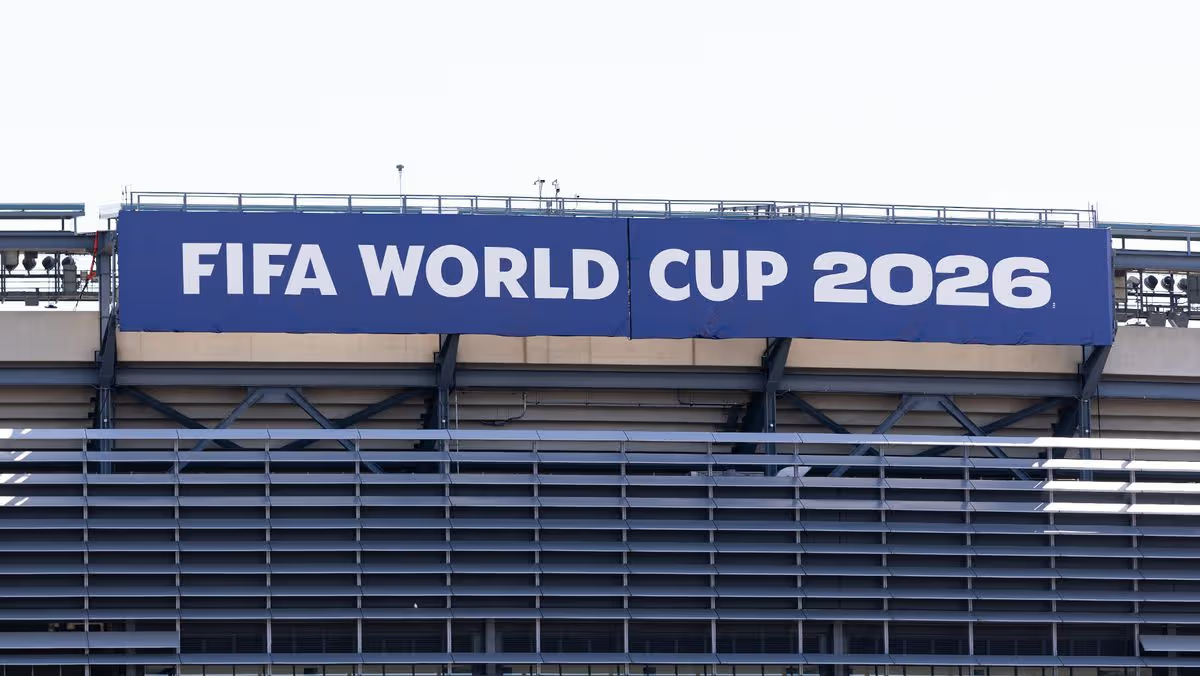
The readiness extends far beyond infectious disease control. Facilities like Hackensack Meridian Health in New Jersey, the closest Level 1 trauma center to MetLife Stadium—which will host eight matches including the final—are also preparing for potential trauma incidents. Their staff have been training for two years, drawing on experience from major NFL games, high-profile concerts, and other large-scale events. The message from front-line medical leaders like Dr. Gregory Sugalski is designed to reassure the public: “No fear.” This confidence is rooted in extensive drilling and a proven track record of handling major events, aiming to balance necessary vigilance with a welcoming atmosphere for fans.
The federal government has also mobilized, creating a dedicated FIFA task force led by Andrew Giuliani, reporting to the Department of Homeland Security. This task force is spearheading efforts to ensure the World Cup’s safety on a national scale. Meanwhile, across New Jersey, other major medical centers have undergone similar extensive training. However, amidst this vast logistical and security preparation, healthcare workers emphasize a fundamental, human priority. As Dr. Vikramjee Mukherjee of Bellevue Hospital notes, their “laser focus” is on protecting the safety of the healthcare workers themselves as they potentially enter “dangerous zones” to manage high-consequence diseases. This focus on caregiver safety is the bedrock of all other response plans.
Ultimately, the 2026 World Cup is a story of dual narratives: the unifying celebration of global sport and the silent, rigorous vigil of public health stewardship. As England’s team prepares to play in Dallas, Boston, and New York, and as fans worldwide anticipate the tournament, a parallel and critical operation is running behind the scenes. It is an operation built on lessons from past pandemics, on cross-border cooperation, and on the unwavering commitment of medical professionals to safeguard not only the visitors but the communities that host them. The goal is clear: to ensure that the biggest World Cup in history is also remembered as one of the safest and most resilient, a triumph of both athletic and human spirit.