



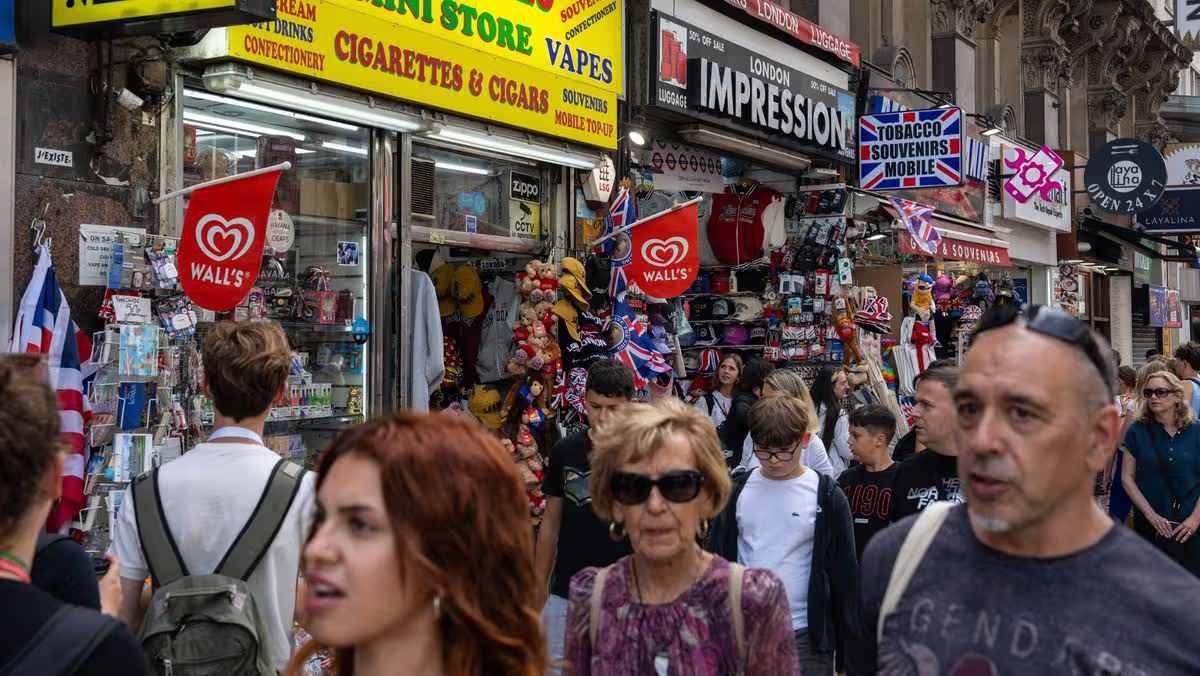
A startling new report has laid bare the deep and troubling infiltration of organised crime into Britain’s everyday high streets. According to the Chartered Trading Standards Institute (CTSI), half of all convenience stores and vape retailers in certain parts of the UK are now suspected of having links to criminal networks. This isn’t a matter of a few bad apples; the study, titled “Hidden In Plain Sight,” reveals a systemic issue where illicit activity operates brazenly behind shop counters. Trading Standards officers report that a staggering 97% of them are aware of suspected organised crime groups (OCGs) using retail premises as fronts in their local areas. This points to a national crisis hiding in plain sight, transforming familiar corners of our communities into hubs for serious criminal enterprise.
The problem is geographically concentrated, with three major cities emerging as significant hotspots: Birmingham, Liverpool, and London. They are followed by Bradford, Manchester, Leeds, Coventry, Sheffield, Huddersfield, and Brighton in the top ten. Within these areas, the scale is alarming; up to a third of so-called ‘American candy’ shops and one in four fast-food takeaways in the worst-hit regions are suspected fronts. Perhaps most telling is the “almost universal recognition” among officers—99%—that there has been a sharp rise in cash-intensive businesses opening since 2020, a trend that often serves to mask illicit financial flows. This proliferation has coincided with a dramatic weakening of the very agencies tasked with policing it.
The ability to confront this growing threat has been critically undermined by years of austerity. Trading Standards warns that local authority budgets for their services have been slashed by up to 50% over the past decade, with staff levels pared back to an absolute minimum. This resource crisis is shared by key partner agencies like the police, creating a perfect storm where complex criminal networks can spread rapidly with little fear of consequence. The report starkly notes that this erosion of enforcement capacity has directly coincided with the UK-wide explosion of these “dodgy shops.” The frontline officers feel this acutely, with 72% reporting that they have experienced intimidation or threats of violence while carrying out their duties, a testament to the brazen and dangerous nature of the groups they are up against.
The impact of these criminal enterprises extends far beyond the sale of counterfeit goods or illicit vapes. They have a “profound impact” on community safety and the viability of legitimate businesses struggling to compete with those who bypass taxes, regulations, and safety standards. More disturbingly, they bring with them a web of associated criminality that poisons neighbourhoods. This includes anti-social behaviour, theft, violent crime, and drug supply. In some of the most harrowing cases, the report highlights links to modern slavery and child sexual exploitation. One trading standards team in Dudley described an “epidemic” of serious crime linked to vape shops, where devices and illegal goods were allegedly exchanged with children for sexual favours. Raids on these premises have also repeatedly found products containing potential cancer-causing chemicals, putting the health of consumers, including young people, at direct risk.
In response to this mounting crisis, the CTSI has outlined a ten-point plan to “reclaim the UK’s high streets.” Central to this is a call for urgent and significant investment to rebuild decimated Trading Standards teams. The plan proposes making the sale of illegal goods a trigger for an immediate review of a business’s licence, providing a powerful tool to shut down rogue traders. It also specifically calls for an additional £20 million to bolster resources for ports and borders, aiming to stem the flow of illicit goods at the source. John Herriman, Chief Executive of CTSI, emphasised that while the government has shown focus on the issue, coordinated action and proper funding for all enforcement agencies are now critical to tackling what is a “widespread and growing national problem.”
This sentiment is echoed by legitimate retailers who operate responsibly. Ed Woodall, Chief Executive of the Association of Convenience Stores, stated that responsible shopkeepers are “extremely frustrated” with rogue traders operating with impunity. Their own research indicates that 85% of retailers believe illicit trading has increased in their local area. The call from both enforcement bodies and honest business owners is united and clear: tens of millions of pounds must be invested in local enforcement capacity. The goal is not only to shut down the criminal fronts blighting communities but also to protect the public and support the responsible retailers who form the backbone of our high streets. The choice is now between continued decline or a concerted effort to restore law, order, and safety to the heart of our communities.