


Paragraph 1: A Pop Culture Crossroads
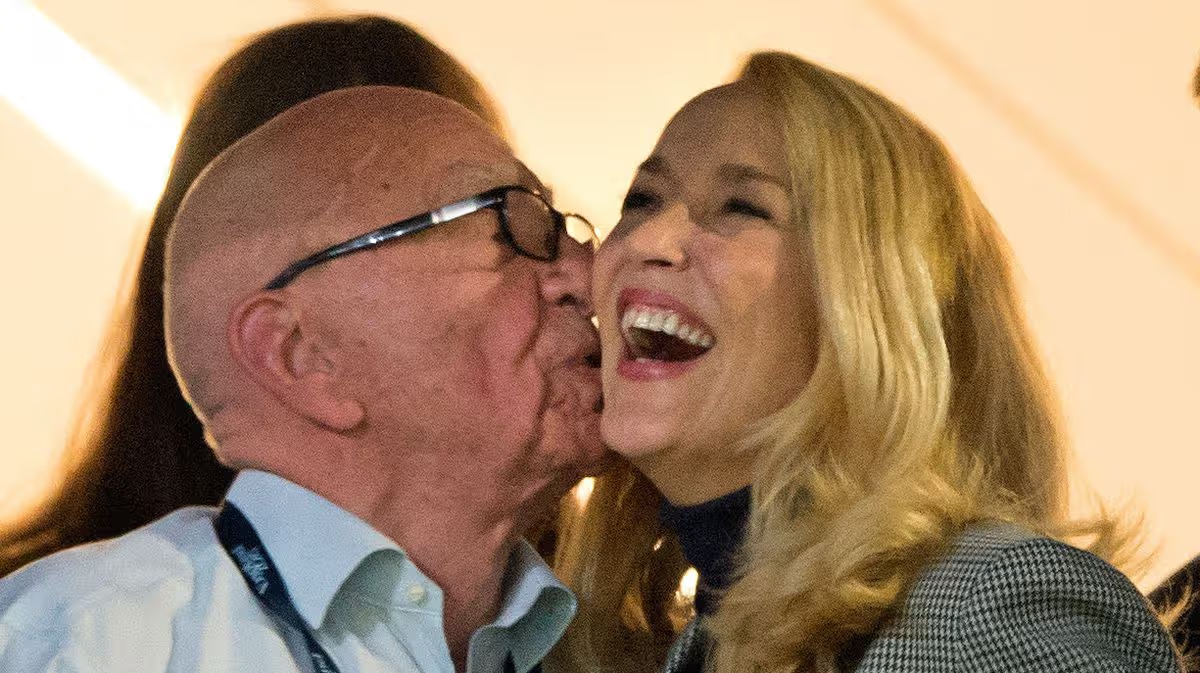
The recent announcement that former supermodel Jerry Hall will appear on the BBC’s “Celebrity Traitors” has prompted a fascinating dive into a pivotal moment in football history, one that nearly altered the destiny of one of the world’s most famous clubs. Hall, famously formerly married to media titan Rupert Murdoch, is linked to a staggering ‘what if’ scenario from 1998: Murdoch’s audacious attempt to purchase Manchester United for £623 million. This potential takeover, arriving on the eve of the club’s most legendary season, represented more than a simple change of ownership; it was a cultural flashpoint that threatened to redefine the relationship between football, its fans, and global media conglomerates. The revelation connects two seemingly disparate worlds—the glamour of celebrity reality TV and the fierce, tribal passion of English football—through a shared history of high-stakes deals and personal empire-building.
Paragraph 2: The Bid That Shook Football
In the summer of 1998, as Alex Ferguson’s Manchester United prepared for a season that would become immortal, the football world was rocked by news of Murdoch’s bid. Through his television company BSkyB, Murdoch had already revolutionized the sport’s broadcasting landscape, playing an instrumental role in crafting the commercial juggernaut of the Premier League. United, perfectly synchronized with this era, were blossoming into a global brand, expanding their reach with dedicated TV channels and retail outlets across Asia. The proposed merger seemed, to some, a logical next step: uniting the world’s most marketable club with the most powerful sports broadcaster. For BSkyB chief executive Mark Booth and United’s then-chief executive Martin Edwards, it was a strategic masterstroke. However, this boardroom logic completely disregarded the beating heart of the club—its manager and, most critically, its global legion of supporters.
Paragraph 3: A Manager in the Dark and a Fanbase in Revolt
Notably, Ferguson himself was largely sidelined from these initial talks, embroiled at the time in his own tensions with the Edwards-led board. The manager’s focus was on rebuilding his squad after a trophyless season, a mission that would famously culminate in the historic Treble. Meanwhile, the fan reaction to the announced deal was immediate and visceral. The formation of the Manchester United Supporters’ Trust (MUST) was a direct response to the takeover threat, galvanizing a movement founded on fear that their club would become a mere content asset in Murdoch’s vast portfolio. This anxiety was perfectly encapsulated by a telling moment in a BSkyB press conference, when a journalist—reportedly on the instruction of his editor, Piers Morgan—asked Booth to name United’s left-back. His inability to answer confirmed every fan’s suspicion: this was a cold corporate acquisition, devoid of the understanding and passion that fuels football.
Paragraph 4: The Battle Lines Are Drawn
Opposition swiftly solidified. Protests erupted inside and outside Old Trafford, with fans holding aloft banners that declared their club “Not For Sale.” The discontent spread beyond Manchester; supporters of rival clubs feared an unconscionable competitive advantage if Murdoch’s media empire owned the league’s premier team. The political sphere was inevitably drawn in, with the bid becoming a matter for the highest offices. As United progressed on the pitch through that unforgettable 1998/99 campaign, fighting dramatic battles in Europe and domestically, an equally intense fight was being waged off it. A monumental government report, stretching over 250 pages, was compiled to scrutinize the proposed merger’s impact on competition and the wider public interest, setting the stage for a definitive ruling.
Paragraph 5: The Block That Changed History
The culmination came in April 1999, on the eve of United’s epic FA Cup semi-final replay against Arsenal—a match that would be decided by Ryan Giggs’ iconic solo goal. The government, through the Monopolies and Mergers Commission, delivered its verdict: the takeover was blocked. The decision was framed as a necessity to preserve competition within both football and broadcasting. For BSkyB and Murdoch, it was a rare and frustrating defeat. For United’s supporters, it was an exhilarating victory, a testament to people power that preserved the club’s independent identity—at least for a few more years. The blocked bid left a void, one that would later be filled by a very different kind of owner.
Paragraph 6: An Alternative Path and Lasting Legacy
The failed Murdoch bid set Manchester United on an alternative historical path. Just five years later, the American Glazer family initiated their highly leveraged takeover, a move that would saddle the club with enormous debt and ignite a new, enduring era of fan protest. The Murdoch episode, therefore, stands as a profound fork in the road. It showcased the immense emotional and cultural value of a football club, values that cannot be captured on a balance sheet alone. The fan mobilization it sparked established a blueprint for organized supporter resistance that remains potent today. While Jerry Hall’s upcoming television appearance reminds us of Murdoch’s personal link to this saga, the legacy of 1998 is etched deeper into the identity of Manchester United itself—a story of how a united fanbase, against formidable odds, successfully fought to determine its own fate, if only for a time.