



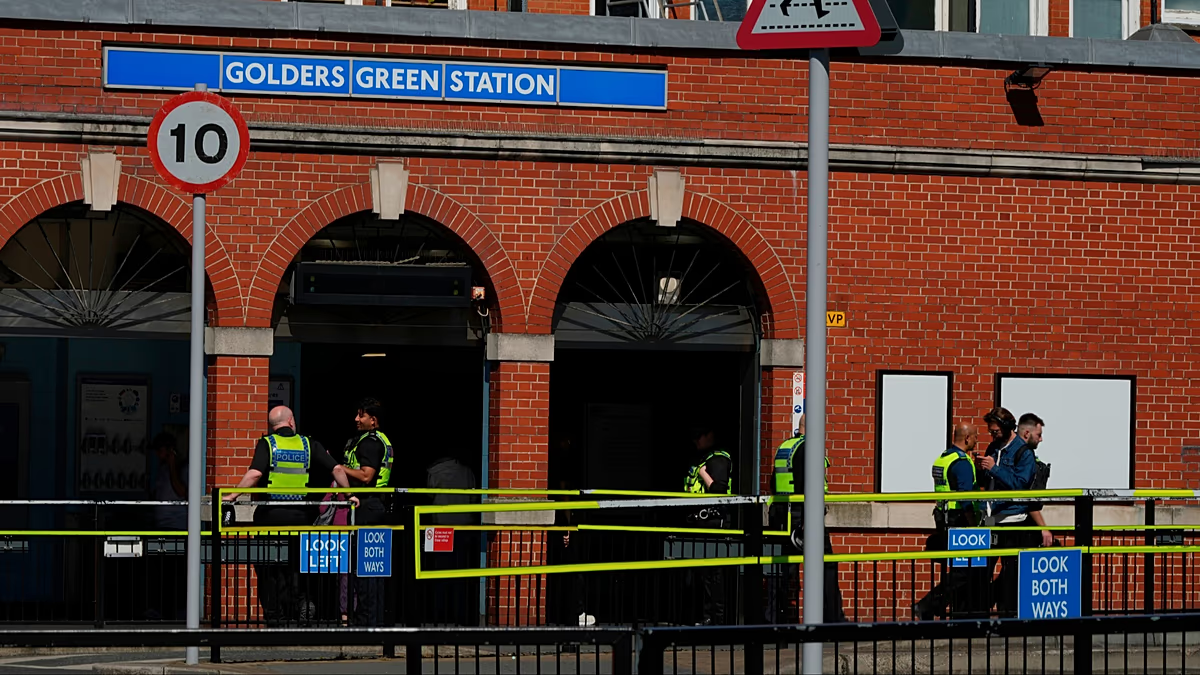
In a quiet corner of north London, the peace of Golders Green—long considered the heart of the capital’s Jewish community—was shattered this past Wednesday. A 45-year-old man, Essa Suleiman, stands accused of attempted murder in the stabbings of two Jewish men, aged 34 and 76, who were seriously injured while walking in their own neighborhood. The violence did not stop there; Suleiman also faces a third charge of attempted murder for an earlier, separate attack elsewhere in London that same day. While one victim has been discharged from hospital and the other remains in stable condition, the psychological wounds inflicted upon the community are far deeper. This attack is not an isolated incident; it follows a troubling wave of arson attacks targeting synagogues and Jewish sites across London in recent weeks, creating a palpable atmosphere of fear and vulnerability.
The response from British authorities was swift and grave. In the wake of the stabbings, the UK government formally raised the nation’s official terror threat level from “substantary” to “severe.” This designation, the second-highest on a five-point scale, signifies that intelligence agencies believe a terrorist attack is “highly likely” within the next six months. Officials clarified that the decision was not based solely on this single, horrific event, but was a response to a broader and escalating danger from both Islamist and extreme right-wing ideologies, often propagated by individuals or small groups operating within the UK. This elevated threat level underscores a national security environment that is increasingly tense and complex.
Prime Minister Keir Starmer addressed the attacks directly, pledging that his government would increase security for the Jewish community and “do everything in our power to stamp this hatred out.” His words were a necessary reassurance to a community feeling besieged, but they also highlighted a sobering reality: the promise of safety must now be actively enforced. The attacks in Golders Green represent more than criminal acts; they are stark manifestations of a resurgent antisemitism that requires a sustained, societal counter-offensive. The government’s commitment must translate into tangible resources, vigilance, and a unwavering stance against all forms of hate.
A disturbing detail emerged from the suspect’s background. London Metropolitan Police confirmed that Essa Suleiman, a Somalia-born British citizen, had been referred to the government’s Prevent programme in 2020. This initiative aims to identify and steer individuals away from extremism before they commit acts of violence. However, his file was closed later that same year, with no public explanation given for the referral or its dismissal. This revelation raises urgent questions about the efficacy of such preventative schemes. While the programme’s work is delicate and often confidential, a case like this forces a difficult public reckoning: how can early intervention systems be strengthened to better identify and manage potential threats, especially when those threats later materialize in such brutal fashion?
The human impact of these events extends far beyond the immediate victims. For Britain’s Jewish community, particularly in enclaves like Golders Green, the attacks are a traumatic reminder of historical persecutions and a violation of their sense of home and belonging. The increased terror threat level, while a macro-level security measure, filters down into daily life, altering routines, heightening anxieties, and challenging the very idea of communal security. The response must therefore be twofold: robust law enforcement and prosecution, coupled with profound and visible societal support. Solidarity from all corners of British society is essential to counter the isolation that such targeted hate seeks to create.
As Essa Suleiman faces his first court appearance, the legal process begins. Yet the broader story continues. This incident is a painful node in a wider pattern of escalating intolerance. It serves as a grim indicator that the ideologies of hatred—whether from Islamist extremism or the far-right—are not abstract threats but present and active dangers. For the UK, moving forward requires more than heightened security alerts; it demands a renewed, collective dedication to the principles of tolerance and protection. The stability of a multicultural society depends on its ability to safeguard every community, ensuring that no street, in no neighborhood, becomes a place of fear simply because of one’s faith or identity.