


Paragraph 1: A Firm Stance Against Appeasement
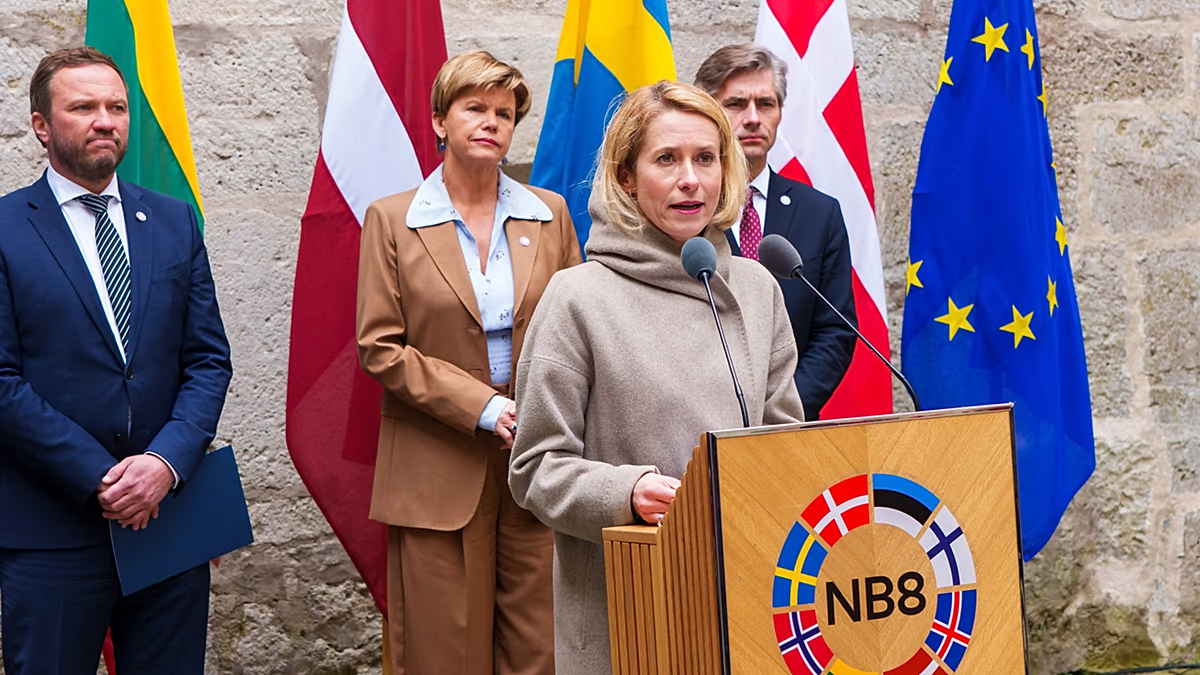
In a resolute address from Estonia, the European Union’s High Representative for Foreign Affairs, Kaja Kallas, has issued a stark warning to her fellow European leaders: the bloc must not degrade itself by desperately seeking direct negotiations with Russia to end the war in Ukraine. Kallas argues that Moscow has shown no genuine interest in dialogue, instead using the specter of talks as a trap to advance its own maximalist demands. She urges the EU to avoid the humiliating position of being the “demandeurs”—the supplicants begging for diplomacy. Instead, she advocates for a strategy of unwavering strength, aiming to create conditions so unfavorable for Russia that it is compelled to move from pretending to negotiate to engaging in actual, good-faith discussions. This foundational stance sets the tone for a critical debate scheduled for early May among EU foreign ministers.
Paragraph 2: The Imperative of Credible Deterrence and a Transformed Future
Kallas’s warnings extend beyond the immediate conflict to a long-term geopolitical confrontation. She asserts that Russia is actively preparing for a prolonged standoff with the West, and whether President Vladimir Putin eventually dares to challenge NATO directly hinges entirely on the alliance’s unity and resolve. “Deterrence works if it is credible,” she emphasized, framing any display of weakness as an open invitation for further aggression. Crucially, Kallas dismisses the notion of a simple return to the pre-2022 status quo. Even after hostilities in Ukraine cease, she insists, there can be no resumption of “business as usual” with a Russia that has fundamentally violated international law. The upcoming ministerial meeting in Cyprus will therefore focus not on concessions, but on defining the non-negotiable conditions—the “requests”—Russia must fulfill in any post-war settlement.
Paragraph 3: Diplomatic Maneuvers and a Transatlantic Divide
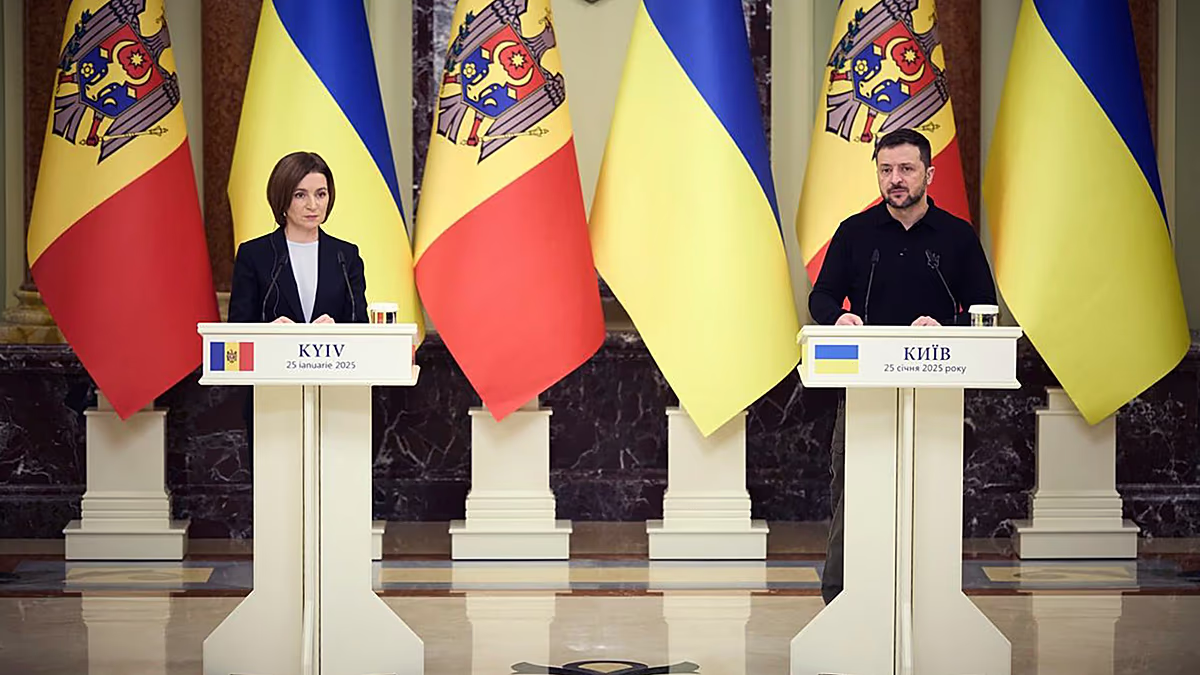
Kallas’s comments arrived amidst a flurry of high-stakes diplomacy that highlights a growing transatlantic rift. Just a day prior, U.S. President Donald Trump and Vladimir Putin held a lengthy phone call, during which the Russian leader proposed a brief ceasefire to coincide with Moscow’s scaled-back Victory Day celebrations—a move widely seen as tactical rather than sincere. Ukrainian President Volodymyr Zelenskyy responded cautiously, seeking clarity from Washington while reiterating Ukraine’s commitment to a “long-term ceasefire” and “lasting peace” achieved through dignified formats. Kallas expressed deep skepticism about these U.S.-brokered efforts, bluntly stating “there is nothing happening there.” She particularly criticized the American decision to grant Russia sanctions relief in response to global energy market disruptions, a move that starkly contrasts with the EU’s recent approval of a new sanctions package.
Paragraph 4: Internal EU Rifts and a Stalled Debate
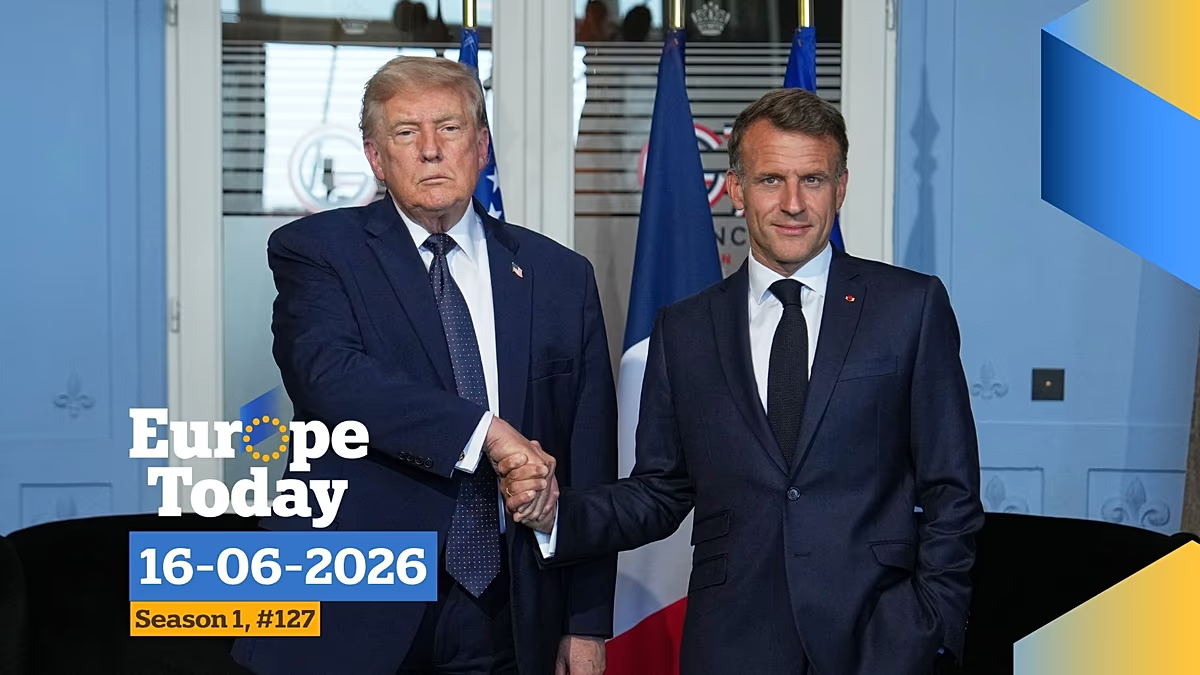
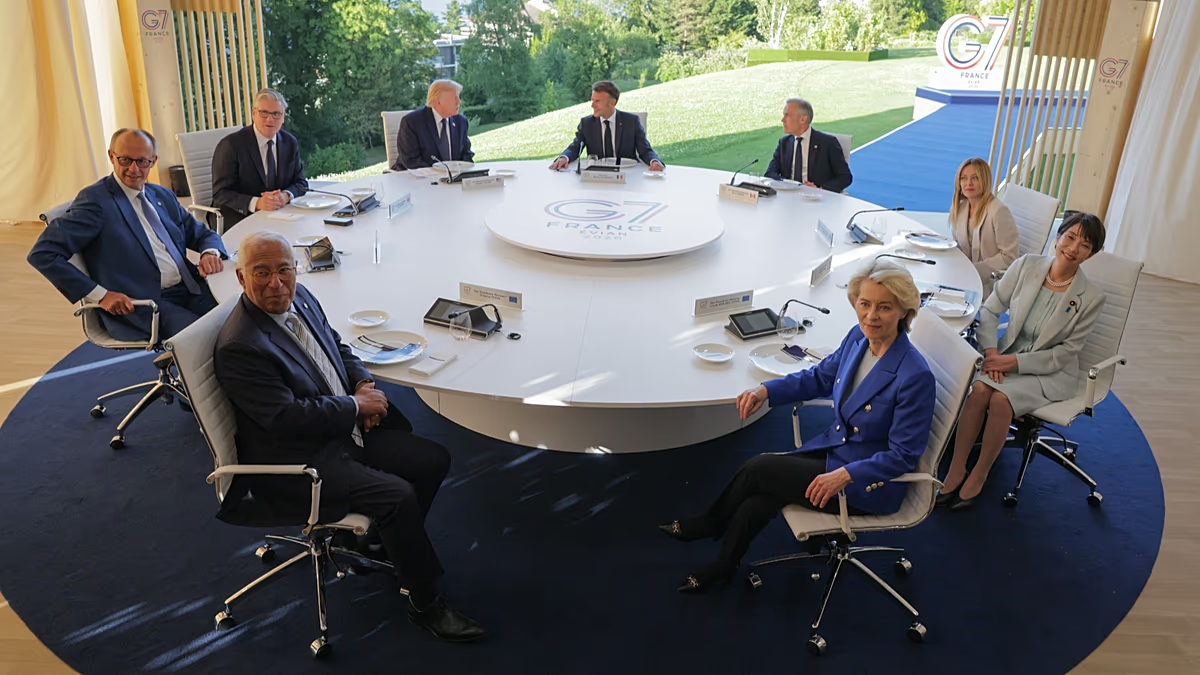
The question of whether to engage Russia directly is not just a transatlantic issue but a deeply divisive one within the European Union itself. Earlier this year, French President Emmanuel Macron and Italian Prime Minister Giorgia Meloni publicly advocated for such a strategy, reopening old wounds. This initiative splintered member states, with nations like Austria and Luxembourg expressing support, while Germany, Estonia, and Lithuania firmly opposed it. The debate, however, lost momentum as international attention pivoted to the crisis in the Middle East following strikes on Iran. Despite this, the issue remains unresolved and simmering. Recently, Belgian Prime Minister Bart De Wever claimed the idea of talks with Moscow has become “mainstream thinking” among many European leaders, driven by a humanitarian imperative to stop the slaughter. This internal conflict underscores the profound challenge of maintaining a unified front.
Paragraph 5: The Human Cost and the Strategic Dilemma
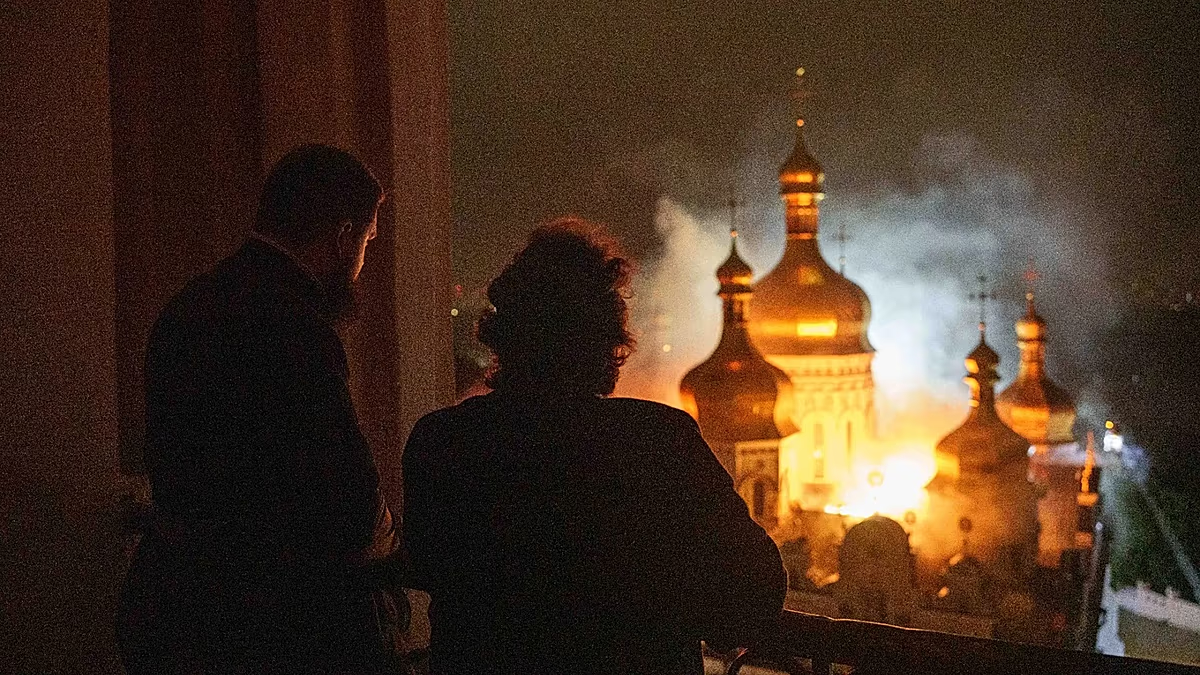
At the heart of this geopolitical struggle lies an unbearable human tragedy. Prime Minister De Wever’s plea—“We cannot let this war continue for years, with all the human suffering. People are being slaughtered for nothing”—echoes the moral anguish felt across the continent. This sentiment fuels the argument for pursuing any diplomatic avenue to stop the bloodshed. Yet, for leaders like Kallas, this understandable desperation plays directly into the Kremlin’s hands. She questions the logic of rewarding aggression with dialogue, especially when Russia continues to align itself with adversaries of the West, such as Iran. The strategic dilemma is agonizing: is pursuing talks an act of pragmatic statesmanship to save lives, or is it a perilous act of self-humiliation that would embolden future aggression and betray the principles for which Ukraine is fighting?
Paragraph 6: An Unresolved Crossroads
As the EU prepares for its May meeting, it stands at a critical crossroads. On one path lies the approach championed by Kallas: a steadfast, principled, and patient strategy built on military support for Ukraine, sustained economic pressure on Russia, and the avoidance of any diplomacy that could be construed as weakness. This path demands resilience and accepts a prolonged confrontation. On the other path is a growing, weariness-driven impulse to seek a negotiated off-ramp, even if it risks legitimizing Russian gains and undermining long-term security. The outcome of this internal European debate will significantly shape not only the future of Ukraine but also the EU’s credibility as a geopolitical actor. The bloc’s ultimate choice will reveal whether it is defined by the unity and strategic patience Kallas calls for, or by a fractured desperation that could reshape the security order of the continent for generations.