


Paragraph 1: A Lingering Tragedy and the Long Road to Justice
More than two decades after one of the most harrowing single losses for British forces in the Iraq War, the painful quest for justice and closure continues for six families. In June 2003, six Royal Military Police officers—affectionately known as Red Caps for their distinctive headgear—were killed in the town of Majar al-Kabir. They were Lance Corporal Ben Hyde, 23; Corporal Russell Aston, 30; Sergeant Simon Hamilton-Jewell, 41; Lance Corporal Tom Keys, 20; Corporal Paul Long, 24; and Corporal Simon Miller, 21. These men, with deep roots in communities across the UK from North Yorkshire to Tyne and Wear, were not on a front-line combat patrol. They were military trainers, working in a police station, when a mob of hundreds stormed the building. Their deaths sent shockwaves through the nation and began a 20-year ordeal for their loved ones, marked by grief, unanswered questions, and a relentless fight for accountability that now enters a new, uncertain chapter with an imminent retrial in Iraq.
Paragraph 2: Questions of Preparedness and a Family’s Crusade
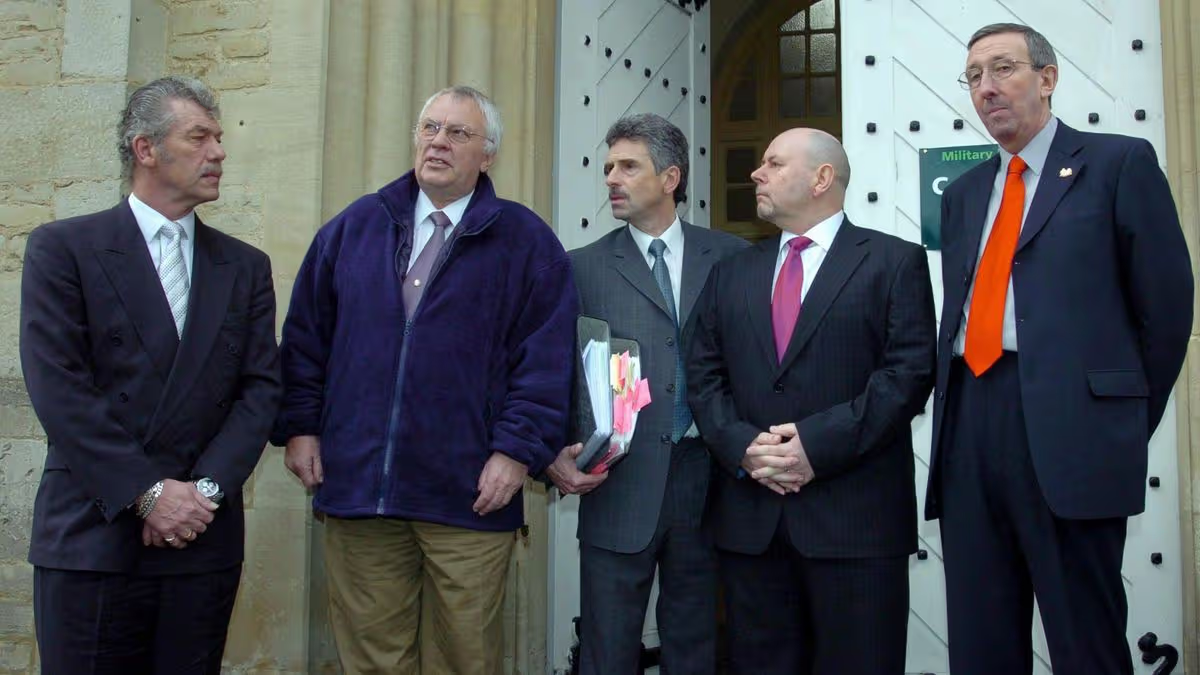
From the outset, the families of the fallen soldiers believed the tragedy was preventable. Their sons and husbands were left desperately vulnerable, equipped with only 50 rounds of ammunition each and without a satellite phone to call for urgent reinforcements when violence erupted. This belief fueled a decades-long campaign for a fuller public accounting. The families pursued every legal avenue, but their request for a second inquest was ultimately refused by the European Court of Human Rights in 2019. Leading this persistent crusade has been John Miller, father of Corporal Simon Miller. A former soldier himself, John has channeled his profound grief into action, becoming a tireless advocate, pressing the Ministry of Defence for answers and updates, and refusing to let his son’s death be forgotten amidst bureaucratic inertia or the passage of time.
Paragraph 3: A Mysterious Note and a Name from the Shadows
The pursuit of justice took a dramatic turn early on, not from official channels, but from a shadowy, anonymous source. Just months after the massacre, John Miller received a chilling piece of information at his home in Washington, Tyne and Wear. A black envelope was slipped through his letterbox, containing a note that named six individuals allegedly responsible for the attack. This anonymous act, which John interprets as someone’s guilty conscience seeking relief, provided a tangible focus for the families’ demands. However, for years, the path forward seemed blocked. Official responses cited the complexities of Iraqi identities and the challenges of investigation. That changed last year when an Iraqi court, trying a case in absentia, found a man named Alaa Jabbar Khodhair guilty of murder for his part in the mob. This verdict, delivered without the accused present, offered a glimmer of hope, however faint.
Paragraph 4: A Retrial and Deep-Seated Distrust
That glimmer has now dimmed for the families, replaced by weary skepticism. In a surprising development, Khodhair is understood to have handed himself in to Iraqi authorities in March, challenging the prior verdict and demanding a retrial, which is scheduled to begin on May 3rd. For John Miller and the other bereaved relatives, this new proceeding inspires little confidence. Their trust has been eroded by what they perceive as two decades of delays and ineffective prosecutions. John fears the retrial will be a “complete farce,” a scenario where witnesses may recant or evidence may dissolve, allowing the accused to evade true accountability. His heartbreak is compounded by the agonizing detail of his son’s final moments, making the prospect of another legal disappointment almost unbearable.
Paragraph 5: A Legacy Beyond the Courtroom: Insults and Enduring Service
The pain for these families is not confined to the courtroom; it is reopened by public remarks that feel dismissive of their profound sacrifice. John and his wife, Marilyn, were deeply wounded last year by comments from former U.S. President Donald Trump, who suggested British forces had “stayed back from the frontline” in Afghanistan. To John, a veteran himself, these words were like “being struck with a knife that twisted again,” a cruel insult to the 636 UK service personnel, including his son, who lost their lives in Iraq and Afghanistan. While a subsequent statement praised British bravery, the lack of a direct apology left the insult raw. Amid this public and private pain, the Miller family’s connection to service endures. Simon’s older brother, Jon, continues to serve with the military police, a poignant testament to the family’s dedication even in the shadow of profound loss.
Paragraph 6: A Hopeful Yet Cautious Stance from Officials
As the retrial date approaches, the official stance from the British government is one of hopeful support tempered by procedural reality. The Ministry of Defence has stated clearly that it wishes to see justice for the six Red Caps. However, it emphasizes that the trial falls under the sole jurisdiction of the Iraqi judicial system. While the UK has secured local legal representation in Iraq to observe the proceedings and has committed to providing updates to the families, it holds no direct role in the process. The ministry has also confirmed that the families, as next of kin, are entitled to have their own legal representation at the trial. This formal framework offers a structure, but for John Miller and the others, it provides little solace. They enter this latest phase not with hope, but with a heartbreaking resignation, braced for the possibility that the justice they have sought for over twenty years may remain forever out of reach, leaving only their memories and unwavering love for their lost soldiers as their lasting tribute.