


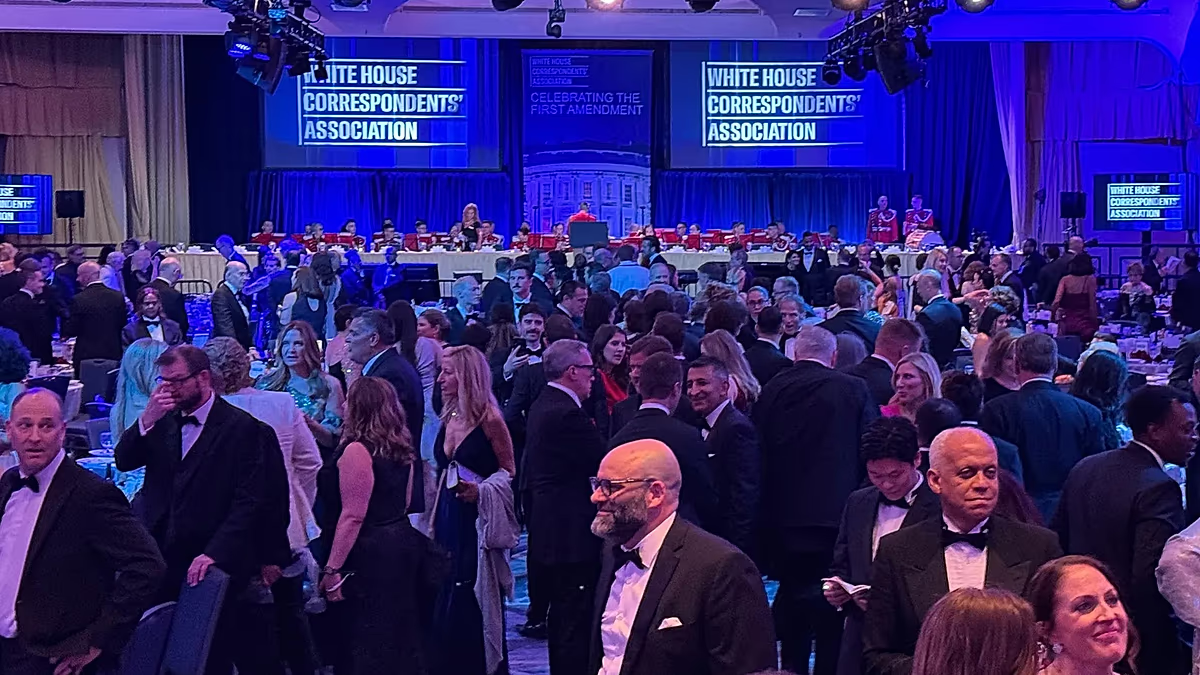
On April 30th, 2026, a legal proceeding unfolded that marked a sobering next chapter in a dramatic and violent event which had shaken Washington, D.C., just days prior. Cole Tomas Allen, the 31-year-old man accused of attempting to storm the White House Correspondents’ Association dinner with firearms and knives in an effort to assassinate former President Donald Trump, appeared before Magistrate Moxila Upadhyaya. During this brief hearing, Allen agreed to remain in jail while awaiting trial, though he did not enter a formal plea. The agreement to detention underscores the gravity of the charges, which include attempted assassination of a president and multiple firearms offenses, carrying a potential sentence of life imprisonment.
The government’s narrative, as presented by prosecutors, depicts a meticulously planned attack. Allegedly, Allen tracked Trump’s movements online for weeks prior to the annual dinner, one of the capital’s most high-profile social and political events. On the night of the incident, he approached the Washington Hilton hotel where the dinner was being held. According to court documents, he ran through a security magnetometer while holding a long gun, immediately disrupting the event and triggering a chaotic confrontation. Prosecutors detail that Allen was outfitted with an ammunition bag, a shoulder holster, and a sheathed knife, and even took a photograph of himself in his hotel room mere minutes before the attack. This preparation points to a deliberate, premeditated act.
The confrontation resulted in injuries, though not fatal ones. Allen was injured during the incident, though officials confirmed he was not shot. A Secret Service officer was shot in the chest but survived because he was wearing a bullet-resistant vest. The precise sequence of gunfire remains a critical point of investigation and legal debate. Prosecutors state they believe Allen fired his shotgun at least once in the direction of the officer, and that a Secret Service agent responded by firing five shots. They have recovered at least one fragment consistent with a buckshot pellet from the scene. However, they have not publicly confirmed that the pellet that struck the officer’s vest definitively came from Allen’s weapon.
This ambiguity forms the core of Allen’s defense team’s current strategy. In a letter to prosecutors and subsequent court filings, his lawyers have aggressively challenged the government’s case, arguing it is “based upon inferences drawn about Mr. Allen’s intent that raise more questions than answers.” They highlighted that a letter from acting Attorney General Todd Blanche indicated that some recovered ballistics evidence might be inconsistent with aspects of the government’s theory or witness statements. The defense seized on this, pressing for Allen’s release and contending that the evidence for the central charge—attempted assassination—is “built entirely upon speculation.”
A pivotal element in establishing motive lies in Allen’s own writings, sent to family members shortly before the attack. Authorities cite a message in which he referred to himself as a “Friendly Federal Assassin” and alluded obliquely to grievances over a range of actions from the Trump administration. However, his defense lawyers note a crucial omission: these writings never mentioned Trump by name. This, they argue, weakens the direct link between his stated grievances and the specific intent to kill the former president, further supporting their claim that the case is circumstantial.
The Justice Department, in its response, firmly rebutted these challenges. Prosecutors wrote that they are aware of “no physical evidence, digital video evidence, or witness statements that are inconsistent with the theory” that Allen fired his shotgun toward the officer or that the officer was shot in the chest. The case now moves forward, with Allen detained and facing the most serious charges imaginable. It stands as a stark reminder of the persistent threats faced by public figures and the complex, often contentious, judicial process that follows such alarming events, where every fragment of evidence and every written word becomes a point of fierce argument between defense and prosecution.