



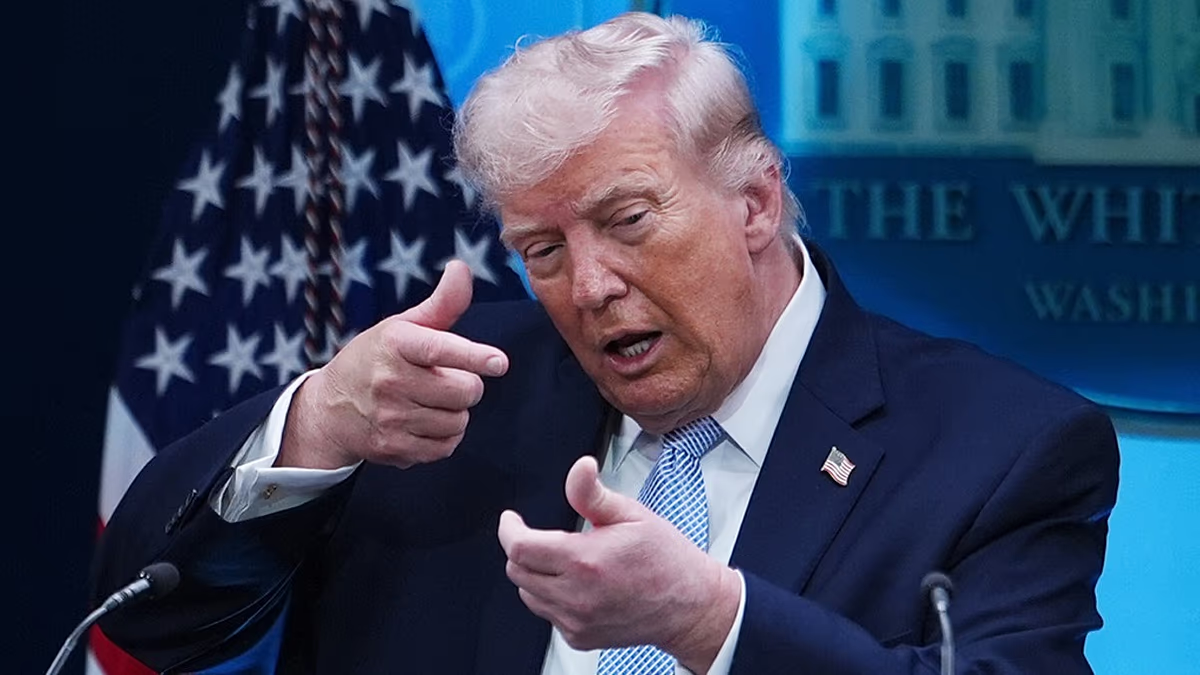
In a striking escalation of tensions with key European partners, United States President Donald Trump has declared he is actively considering a substantial withdrawal of American troops from NATO allies Spain and Italy. This unprecedented threat, made in early 2026, is directly tied to both nations’ continued opposition to the US-led war in Iran, a conflict that has now dragged into its third grueling month. The announcement did not emerge in isolation; it came merely a day after President Trump proposed a similar drawdown of forces from Germany, following critical remarks from Chancellor Friedrich Merz regarding Washington’s war strategy. Framing the conflict as a global necessity to eliminate a nuclear threat, Trump positioned the withdrawals as a justified response to allies he views as freeloading on American security guarantees while refusing to share in the burdens of a difficult fight. This move signals a profound crisis within the Atlantic Alliance, where foundational commitments are being openly bartered against support for a specific and deeply controversial military campaign.
The president’s rhetoric was characteristically blunt and dismissive. When questioned by reporters in the Oval Office about potentially pulling troops from the Iberian and Italian peninsulas, he responded, “Yeah, probably, I probably will. Why shouldn’t I?” He then offered a scathing assessment: “Italy has not been of any help to us and Spain has been horrible, absolutely horrible.” This language reduces complex diplomatic and strategic relationships to a simple transactional binary, where support for the Iran operation is the sole measure of an ally’s worth. The tangible impact of such a decision would be significant, affecting tens of thousands of American military personnel and their families. As of late 2025, the US maintained 12,662 troops in Italy and 3,814 in Spain, forces that are integral to NATO’s southern flank, Mediterranean security, and African contingency operations. While the exact scale of the proposed reductions remains unclear, media speculation suggests it could be a major strategic pullback, fundamentally altering the US military footprint in Europe.
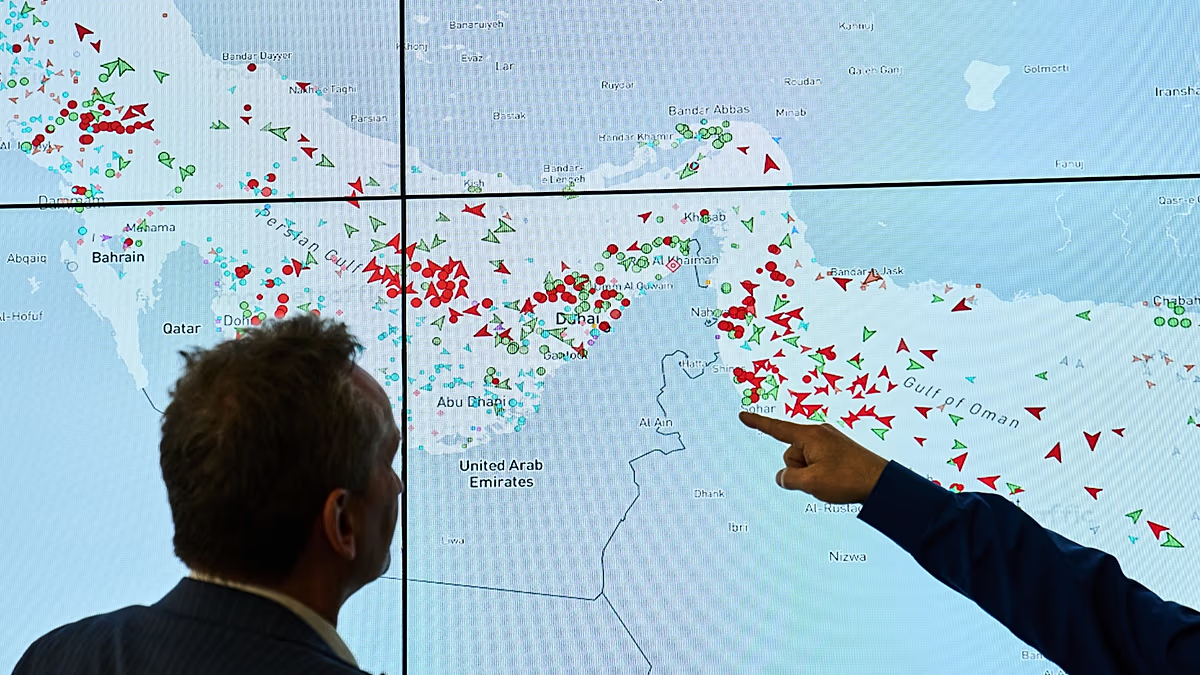
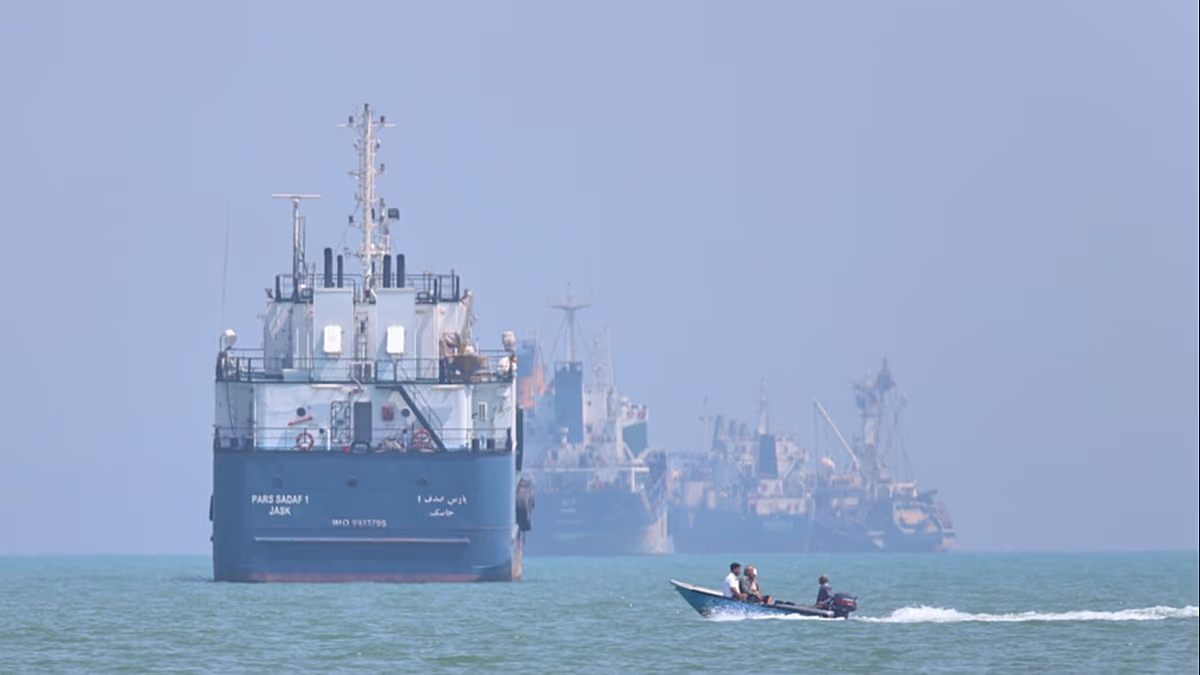
The rift with Italy is particularly notable given the previous political alignment between Trump and Italy’s right-wing Prime Minister, Giorgia Meloni. That alliance has now shattered. Following Meloni’s public criticisms of the war effort last month, Trump launched a surprise personal attack, accusing her of lacking the courage to withstand domestic political pressure and endorse the campaign. This episode illustrates how the president’s foreign policy is intensely personal, where former ideological compatriots can swiftly be recast as weak or disloyal based on a single point of disagreement. The core of Trump’s frustration, echoed in his complaints about Germany, is the perceived failure of European allies to contribute materially to the war effort or to the critical task of securing the Strait of Hormuz. This vital maritime chokepoint has been a flashpoint in the conflict, and keeping it open for global oil tankers has become a primary and costly US-Israeli undertaking.
The dispute with Spain, however, is older and even more layered, extending beyond the Iran war to encompass a series of accumulated grievances. Initial friction arose from Spain’s stance during the Israel-Hamas war in Gaza, which diverged from unwavering US support for Israel. The conflict deepened over defence spending. At the 2025 NATO summit in The Hague, President Trump successfully pressured all members to agree to increase their national defence expenditures to 5% of GDP—a dramatic jump from the longstanding 2% target. While other nations assented, Spanish Prime Minister Pedro Sánchez defiantly refused, stating he would only do what was beneficial for Spain and opting to keep spending levels unchanged. This act of resistance made Spain a singular outlier and a prime target for the Trump administration’s ire. In response, Washington has not only threatened Spain with trade cuts but has also openly called for its removal from the NATO alliance itself, a previously unthinkable notion.
Indeed, the ultimate sanction now appears to be on the table. Reports emerged last week that the US government is once again considering a push to suspend Spain from the NATO alliance entirely, a drastic measure precipitated solely by Madrid’s refusal to back the Iran war. This threat underscores the extent to which the conflict has become a litmus test for loyalty within the Trump-led Western bloc. The war’s consequences, meanwhile, continue to ripple across the globe. By upending the stability of the Middle East, it has triggered a massive surge in global oil prices. Brent crude, the international benchmark, closed at approximately $114 a barrel—a staggering increase from the pre-war price of around $70. This economic shockwave affects consumers and economies worldwide, adding a layer of global economic instability to the already severe political and humanitarian crises emanating from the conflict.
In summary, President Trump’s threats against Spain and Italy represent more than a simple diplomatic spat; they are a potentially tectonic shift in transatlantic relations. By explicitly linking the permanent stationing of US troops—long a cornerstone of European security—to immediate political support for a specific war, the administration is unraveling decades of strategic precedent. The personal vitriol aimed at leaders like Meloni and Sánchez, combined with the weaponization of NATO membership itself, reveals a framework where alliance solidarity is conditional and transactional. As the war in Iran grinds on, spiking energy costs and deepening regional chaos, these intra-alliance battles threaten to cripple the collective security structures of the West at a moment of profound global uncertainty. The Atlantic Alliance now faces a fundamental question: can it survive when its most powerful member demands not just shared burdens, but unquestioning adherence to its own foreign policy decisions?