



Of course, here is a summary and humanization of the provided content, expanded into six paragraphs.
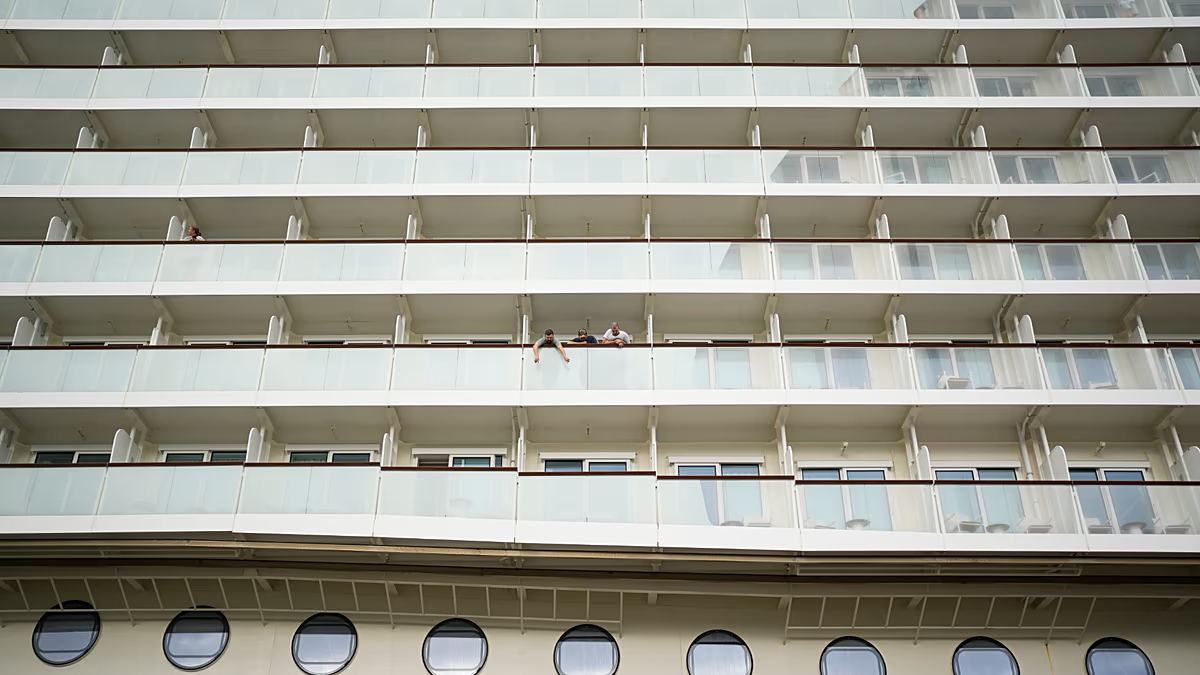
A tragic and concerning situation is unfolding aboard a cruise ship off the coast of Africa, casting a shadow over what was meant to be a journey of a lifetime. The Dutch-flagged ocean liner MV Hondius, which departed from Argentina three weeks ago on an itinerary that included Antarctica and the Falkland Islands, is now at the center of a disturbing health crisis. The voyage has been marred by the deaths of three passengers, with authorities attributing the cause to a rare and dangerous pathogen: hantavirus. Among the deceased are a 70-year-old Dutch man, who died upon the ship’s arrival at St. Helena, and his 69-year-old wife, who passed away after being evacuated to a hospital in Johannesburg, South Africa. A third man has also died, while a 69-year-old British passenger remains in intensive care, diagnosed with the same infection. The severity of the outbreak is further underscored by reports that two crew members are also ill, painting a picture of a vessel in the grip of a serious medical emergency.
In response to the crisis, the ship, currently carrying approximately 150 passengers and 70 crew members, has been moored off the island nation of Cape Verde. A strict quarantine has been imposed, with no one permitted to disembark as local health authorities have boarded the vessel to examine symptomatic individuals. This containment effort highlights the gravity with which officials are treating the outbreak, especially given the nature of the virus involved. Hantavirus, which can cause a severe and often fatal haemorrhagic fever, is typically spread to humans through contact with rodent urine, droppings, or saliva. It is not commonly known for spreading between people, making the cluster of cases on this confined ship particularly alarming and puzzling for infectious disease experts.
The unusual pattern of transmission has caught the attention of specialists like Australian virus researcher Paul Griffin. While he notes that global hantavirus infections number between 150,000 to 200,000 annually, he emphasized that person-to-person spread is “very rare.” This fact makes the events on the MV Hondius deeply suspicious. Griffin pointedly suggested that the unique environment of a cruise ship may be a contributing factor, stating, “On a boat, the environment is suitable for human-to-human transmission of infections because many people are in the same area for long periods of time.” His comments raise the troubling possibility that the virus may have found an unlikely route of transmission within the ship’s close-quarters community, a scenario that challenges conventional medical understanding of the pathogen.
Adding another layer of complexity to the mystery, Griffin observed that the outbreak is especially strange given the current global context. He remarked that hygiene habits have improved significantly across the travel and hospitality industries in the wake of the COVID-19 pandemic. One would assume that heightened sanitation and health awareness would create a less hospitable environment for any infectious agent to spread. This contradiction suggests that either a particularly potent strain is present, that there was a significant initial exposure from a rodent infestation on board or at a prior port, or that unknown environmental factors on the ship have facilitated the virus’s spread. The incident serves as a stark reminder that even in an era of advanced health protocols, nature can present unexpected and formidable challenges.
Behind the clinical reports and expert analysis lies a profound human tragedy. The passengers aboard the MV Hondius embarked on an adventure to some of the planet’s most remote and majestic landscapes, only to find themselves trapped in a nightmare of illness, grief, and fear. Families are mourning the loss of loved ones far from home, while others anxiously await news, hoping they or their family members are not the next to fall ill. The confinement, though medically necessary, adds a psychological burden to the physical threat, creating an atmosphere of uncertainty and dread. For the crew, tasked with caring for the sick and maintaining order under extreme duress, the strain is immense.
As investigations continue on board and health officials in multiple countries coordinate their response, the world watches a developing story that echoes familiar anxieties from recent years. The outbreak on the MV Hondius is a sobering lesson in vulnerability, demonstrating how a rare wildlife-borne virus can intrude upon the modern world of global travel with devastating consequences. It underscores the relentless need for vigilance in public health and the complex interplay between human activity, animal reservoirs, and infectious disease. The coming days will be critical in determining the full scope of the outbreak, understanding how the virus spread, and providing care and closure to all those affected by this tragic voyage.