


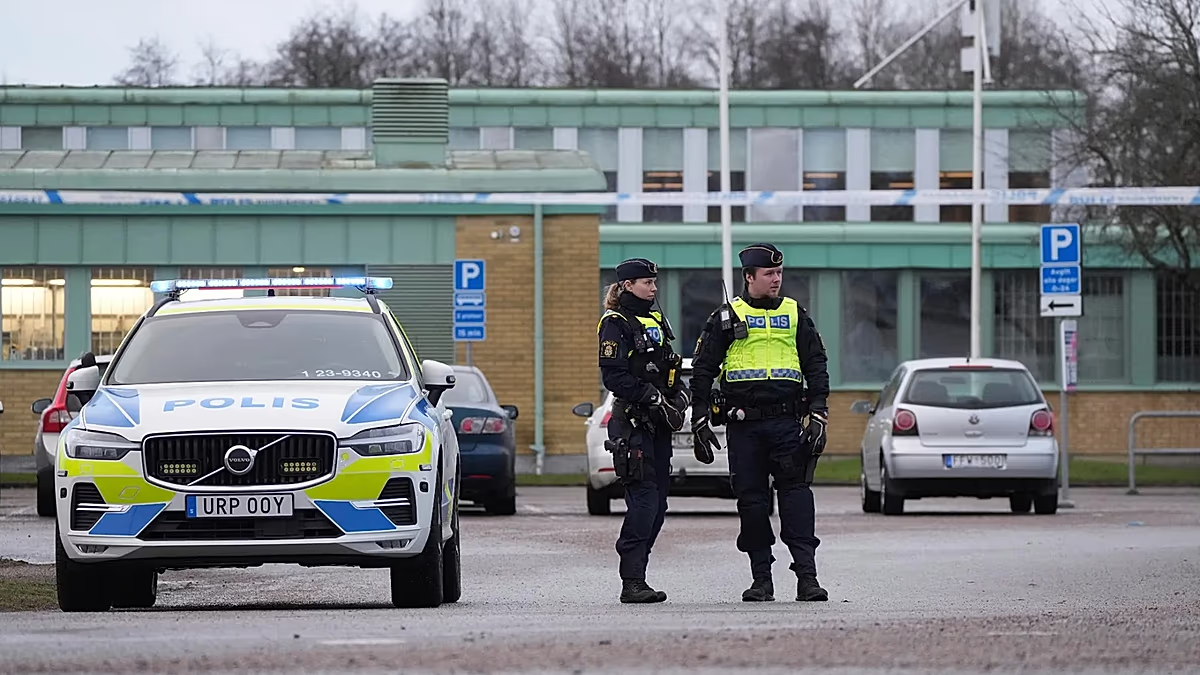
In recent years, Sweden has been confronting a stark and heartbreaking reality: the violence of its gang conflicts is spilling over into the lives of ordinary citizens. A sobering set of statistics released in early 2026 underscores this tragedy. Over the preceding three years, twenty-three innocent bystanders lost their lives, and thirty more were wounded, in shootings connected to gangland violence. These are not drug dealers or rival criminals; they are people struck by stray bullets, individuals mistakenly identified by a shooter, or even relatives of targeted gang members. This data illuminates a grim battle the nation has been fighting for more than a decade—a struggle to contain violence primarily stemming from territorial disputes over the drug market and revenge-fueled score-settling. The numbers transform abstract concerns about crime into a deeply human cost, representing lost parents, children, friends, and neighbors whose lives were shattered by violence they had no part in.
A key factor behind this alarming trend, as explained by police operations coordinator Alexander Wallenius, is the youth and inexperience of many perpetrators. The gangs are increasingly recruiting and employing very young individuals, often with no prior history of serious violent crime. This lack of experience and training translates directly into a greater risk for the public: these young shooters are more likely to miss their intended target or lose control of a situation, leading to bullets striking bystanders. It is a chilling dynamic where the gangs’ operational tactics directly endanger the surrounding community, turning public spaces into potential fields of fire.
These tactics are facilitated by modern technology. Swedish gangs actively use social media platforms and encrypted messaging apps to recruit teenagers, luring them into the criminal underworld. The recruits are often under the age of 15, which is Sweden’s current age of criminal responsibility. This legal threshold makes them uniquely valuable assets to the gangs; because they cannot be prosecuted under the criminal law, they fall under the purview of social services instead. This loophole allows gangs to employ minors for high-risk tasks, including shootings, with a layer of institutional protection. It creates a perverse incentive for criminal organizations to seek out the youngest and most vulnerable individuals, exploiting both the children and the legal system.
In response to this escalating crisis, the Swedish government has been pursuing a series of aggressive policy reforms. The minority right-wing coalition, supported by the far-right Sweden Democrats, has focused heavily on cracking down on crime and immigration ahead of a general election. Their proposals aim to dismantle the operational advantages currently enjoyed by the gangs. One significant announcement came just a week prior to the statistics release: a plan to introduce legislation requiring social media platforms, such as TikTok and Snapchat, to take down gangs’ recruitment posts and violent threats—termed “murder adverts”—within one hour. Failure to comply would result in hefty fines, placing direct responsibility on tech companies to curb the digital tools used for recruitment and intimidation.
Furthermore, the government intends to change the legal framework that makes minors so useful to gangs. They have announced plans to lower the age of criminal responsibility from 15 to 13 for serious crimes punishable by at least four years in prison. This move aims to remove the shield that currently protects teenage recruits from prosecution, thereby reducing their attractiveness as disposable operatives for the gangs. It represents a fundamental shift in how the state approaches juvenile involvement in severe criminal activity, prioritizing judicial accountability over welfare-based interventions in these extreme cases.
The released statistics, therefore, are not just a cold summary of past violence; they are a catalyst for ongoing and heated national action. They tell a story of a society grappling with the unintended, yet devastating, consequences of organized criminal conflict. Behind each number is a human life—a victim who was simply in the wrong place at a violent time. The government’s response, focusing on digital accountability and lowering the age of prosecution, reflects an attempt to adapt to the modern methods of gangs. Sweden’s battle is multifaceted: it is a fight against criminal organizations, a struggle to protect its youth from exploitation, and, most poignantly, a mission to safeguard the innocent bystanders who have become the tragic collateral damage in a war they never chose to join.