

A Gathering of Unease: The European Political Community Meets in Armenia
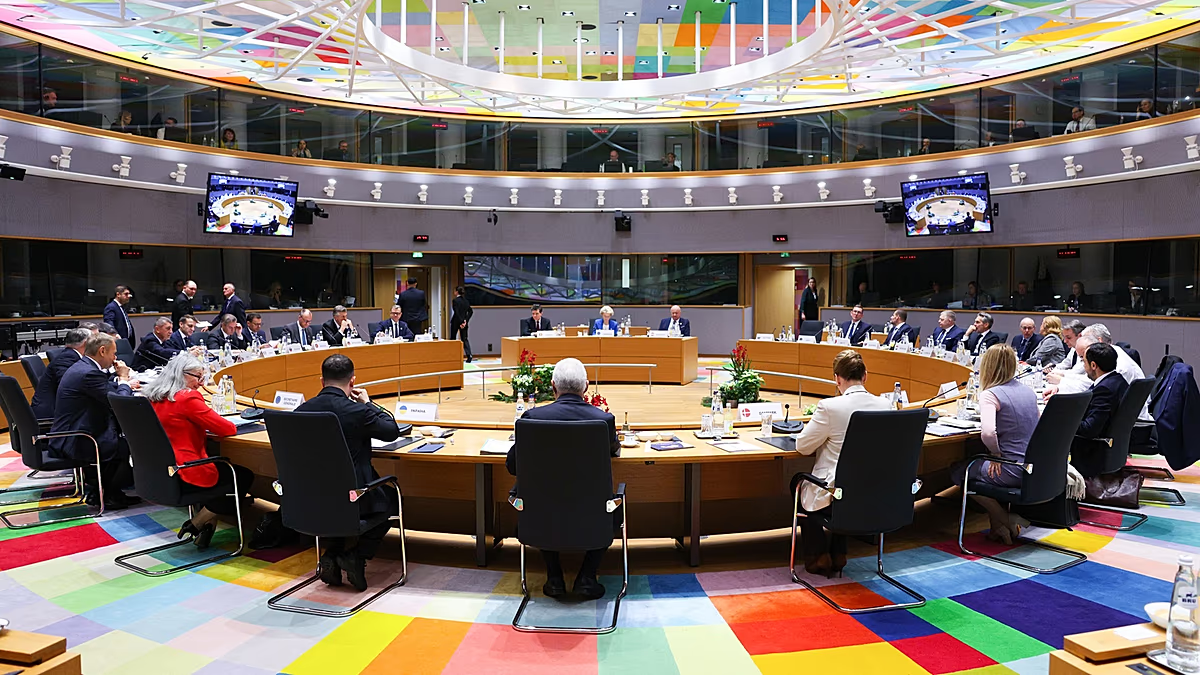
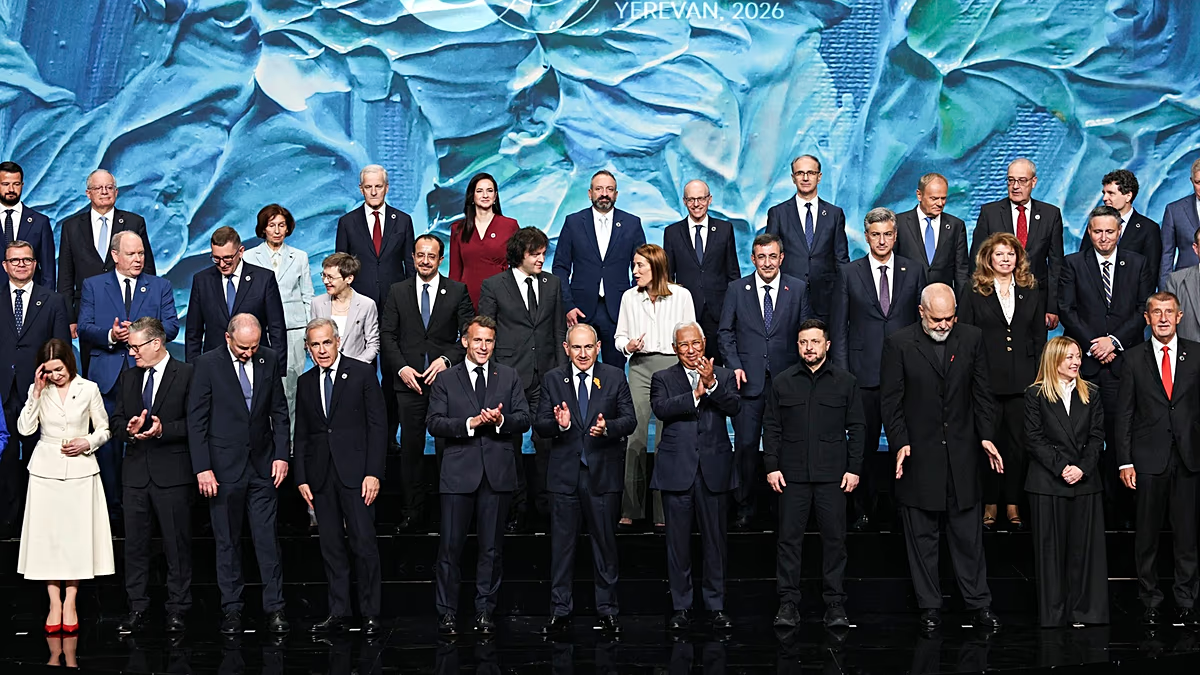
Armenia’s capital, Yerevan, recently provided the stage for the eighth meeting of the European Political Community (EPC). This unique forum, born in the shadow of Russia’s full-scale invasion of Ukraine, is deliberately informal. It produces no binding treaties or grand declarations. Instead, its currency is conversation—a space for European leaders to engage in candid bilateral talks and public diplomacy, often broadcast via carefully curated social media posts. While this gathering in the Caucasus featured its share of these symbolic moments, the underlying discussions revealed a continent grappling with profound turmoil and anxiety. The relaxed format could not mask the serious challenges pressing in from all sides, making this more than just another diplomatic photo opportunity.
The summit’s agenda was immediately shaped by a conspicuous absence. German Chancellor Friedrich Merz, a central figure in European geopolitics, was notably missing. His absence loomed large following a recent controversy sparked by his candid remarks on Iran “humiliating” the United States. The fallout was swift and severe, with US President Donald Trump responding by announcing the withdrawal of thousands of American troops from Germany and threatening punitive tariffs on EU cars. In Yerevan, leaders navigated this transatlantic rift with caution. Statements from officials like NATO’s Mark Rutte and the EU’s Kaja Kallas emphasized Europe’s readiness to bolster its own defense contributions, while carefully acknowledging the “surprise” and “disappointment” from Washington. The unspoken tension highlighted Europe’s precarious position, caught between its foundational alliance with the US and an increasingly unpredictable partner.
Into this vacuum of leadership stepped an unexpected figure: Canadian Prime Minister Mark Carney, the first non-European to attend an EPC meeting. His presence was met with notable enthusiasm, as leaders sought his counsel. Carney deftly positioned himself as a counterpoint to the transactional rhetoric emanating from Washington, delivering a robust defense of the rules-based international order built on democracy and pluralism. He argued passionately that Europe must be the cornerstone of rebuilding a cooperative global system, stating, “We have to actively take on the world as it is, not as we wish it to be.” His vision of a coalition of mid-sized powers, echoed from earlier speeches, offered a compelling, if challenging, alternative future for European foreign policy, one less dependent on a mercurial United States.
The war in Ukraine, the very catalyst for the EPC’s creation, remained a central and urgent topic. President Volodymyr Zelenskyy was a hive of diplomatic activity, meeting with leaders from Britain to the Baltics. His requests were direct: more military support, progress on EU membership talks, and a united front against any sanctions relief for Russia. Most significantly, he addressed the simmering debate within Europe about potential negotiations with the Kremlin. Zelenskyy called for a unified European voice at any future diplomatic table, underscoring that while Ukraine coordinates with the US, a coherent European strategy is essential. His appeal highlighted the delicate balance Kyiv must strike and the internal divisions Europe must overcome to present a solid front.
The polite atmosphere was briefly pierced by a moment of open discord during a virtual address by Azerbaijan’s President Ilham Aliyev. He launched a sharp critique of the European Parliament, accusing it of an “obsession” with his country through critical resolutions. The response from European Parliament President Roberta Metsola was swift and firm. She defended the Parliament’s democratic legitimacy, stating its resolutions reflect the will of a directly elected body and “we will never change the way we work.” This tense exchange stood in stark contrast to the surrounding camaraderie. Yet, symbolically, the mere fact that Aliyev addressed a summit hosted by Armenia—given their violent history—was also noted as a fragile sign of ongoing diplomatic engagement around a recent peace deal.
Beyond immediate conflicts, a deeper, more structural anxiety permeated the talks: the high cost of dependency. Leaders reflected on the painful lessons of reliance on Russian gas, now compounded by new energy market disruptions. European Commission President Ursula von der Leyen described over-dependence on fossil fuel imports as a critical “chokepoint” for the bloc. French President Emmanuel Macron broadened the warning to economic dependencies on China and, more daringly, to security dependency on the US, calling it “the elephant in the room.” The consensus was that “de-risking” through investment and solidarity is not about isolationism, but about building a resilient, outward-looking Europe capable of engaging with the world from a position of strength. This theme of reset extended to the UK, as sideline talks between von der Leyen and British Prime Minister Keir Starmer aimed to forge a new chapter post-Brexit, potentially through UK cooperation on EU funding for Ukraine. These nascent steps suggested that within the community’s shared anxiety, there also lies a seed of determination to forge a more independent and united path forward.