


A Layby of Sorrows: A Community Mourns an Unknown Man and His Faithful Companion
On a seemingly ordinary Friday afternoon, May 1st, the routine rhythm of the B3273 near St Austell, Cornwall, was irrevocably shattered. At approximately 3 p.m., what began as a quiet concern from vigilant members of the public transformed into a sombre police response. Devon and Cornwall Police were dispatched to a nondescript layby, a common feature of rural roads meant for momentary respite, only to uncover a scene of profound and silent tragedy. Inside a parked van, officers discovered the bodies of a man and his dog, both deceased. This immediate, stark finding marked the beginning of an investigation not into a crime, but into a deeply personal and isolating conclusion to two intertwined lives.
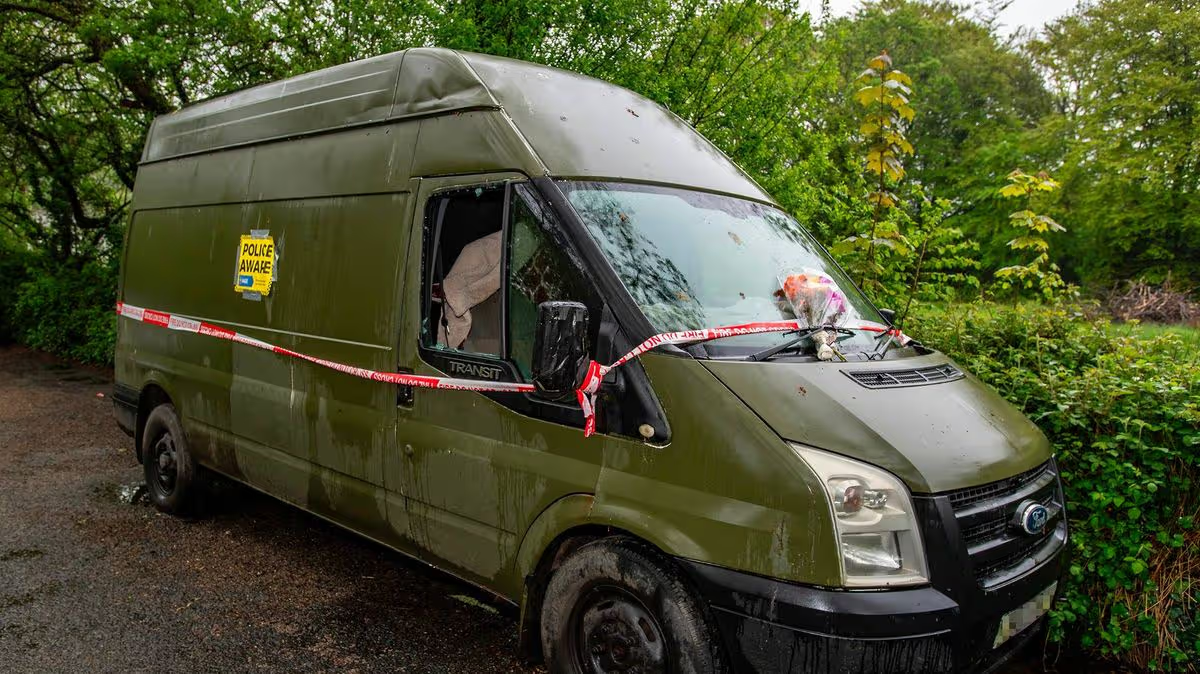
The visual remnants of the scene spoke volumes where words failed. Photographs from the layby showed the vehicle, now a vessel of grief, cordoned off with the stark yellow-and-black tape that has become a universal symbol of calamity. Yet, amidst this official demarcation, a more human and poignant gesture appeared: a single bouquet of flowers, carefully placed upon the van’s windscreen. This act, whether from a passerby moved by sorrow or someone who knew the occupant, served as a quiet, communal acknowledgment of the loss. It transformed the site from a mere point of police inquiry into a temporary memorial, a testament to the shared human impulse to offer dignity and respect in the face of unexplainable sadness.
In the aftermath, the procedural wheels of understanding began to turn with careful sensitivity. Authorities confirmed that the man’s next of kin had been traced and informed, a formal yet devastating duty that brings the abstract news of tragedy into the intimate sphere of a family’s life. Police spokespeople indicated that, based on their initial investigations, the circumstances were not being treated as suspicious. This crucial detail, while perhaps offering a modicum of relief from fears of violence, inevitably steers the collective thought toward themes of solitude, health, or unseen struggle. The case is now progressing along the necessary administrative path, with a file being prepared for the coroner, whose role will be to formally establish the facts surrounding these two deaths.
At the heart of this incident lies a narrative thread that resonates with particular poignancy: the bond between the man and his dog. The fact that they were found together speaks to a companionship that lasted to the very end. In life, such relationships are sources of unconditional loyalty and comfort; in death, their parallel fate feels doubly mournful. This detail captures the public imagination and deepens the sense of tragedy, hinting at a story of mutual reliance. It prompts us to wonder about their journeys, their shared quiet moments, and the invisible struggles that may have unfolded within the confines of that van, far from the support systems so many take for granted.
While the police investigation may have found no evidence of foul play, the event opens a broader, more reflective inquiry into the hidden crises of isolation and mental health that can occur in plain sight. A parked vehicle in a layby is a commonplace sight, often rendered invisible through its normality. This tragedy forces a uncomfortable recognition: that individuals can be in profound distress within steps of a bustling community, their silent crises unnoticed until it is too late. It underscores the vital importance of community vigilance and the courage to act on concern, as those initial members of the public did when they approached the van.
Ultimately, the story from the layby on the B3273 is more than a brief police bulletin; it is a sombre mirror held up to society. It reminds us of the fragility that exists alongside our daily commutes and the profound, often silent, battles individuals may face. As the coroner works to establish the clinical facts, the community is left with the human ones: a life ended, a faithful companion gone, and a bouquet of flowers against a windscreen. The true summation of this event lies not in the word count of a report, but in the weight of its quiet aftermath—a call for compassion, awareness, and a deeper attentiveness to the strangers who share our roads and our world, yet whose journeys we may never fully know.