



Paragraph 1
After a welcome burst of spring sunshine, the United Kingdom is set for a sharp and untimely return to winter-like conditions this week. According to the latest meteorological data and weather maps, a frigid mass of Arctic air is poised to sweep across the nation, heralding a significant cold snap. This abrupt change is scheduled to arrive in the early hours of Wednesday morning, with the chill expected to be widespread and keenly felt. The dramatic shift will follow a pleasant Monday, where temperatures in and around London, for instance, are enjoying a mild 18°C, making the impending plunge all the more noticeable. This serves as a stark reminder of spring’s unpredictable nature, capable of delivering sunshine and shivers in quick succession.
Paragraph 2
The core of this icy incursion will manifest in the early hours of Wednesday, with weather charts pinpointing 6 a.m. as the moment the cold truly begins to grip the country. Scotland is forecast to bear the brunt of this frosty assault, particularly in its northern and highland regions. Areas around Inverness could wake to temperatures as low as -3°C, a reading more akin to deep winter than early May. This deep freeze will not be confined to the far north; other major Scottish cities including Aberdeen, Dundee, Glasgow, Edinburgh, and Perth are also expected to see temperatures hovering around -1°C. For residents in these areas, it will mean scraping frost from car windscreens and reaching for winter coats once again.
Paragraph 3
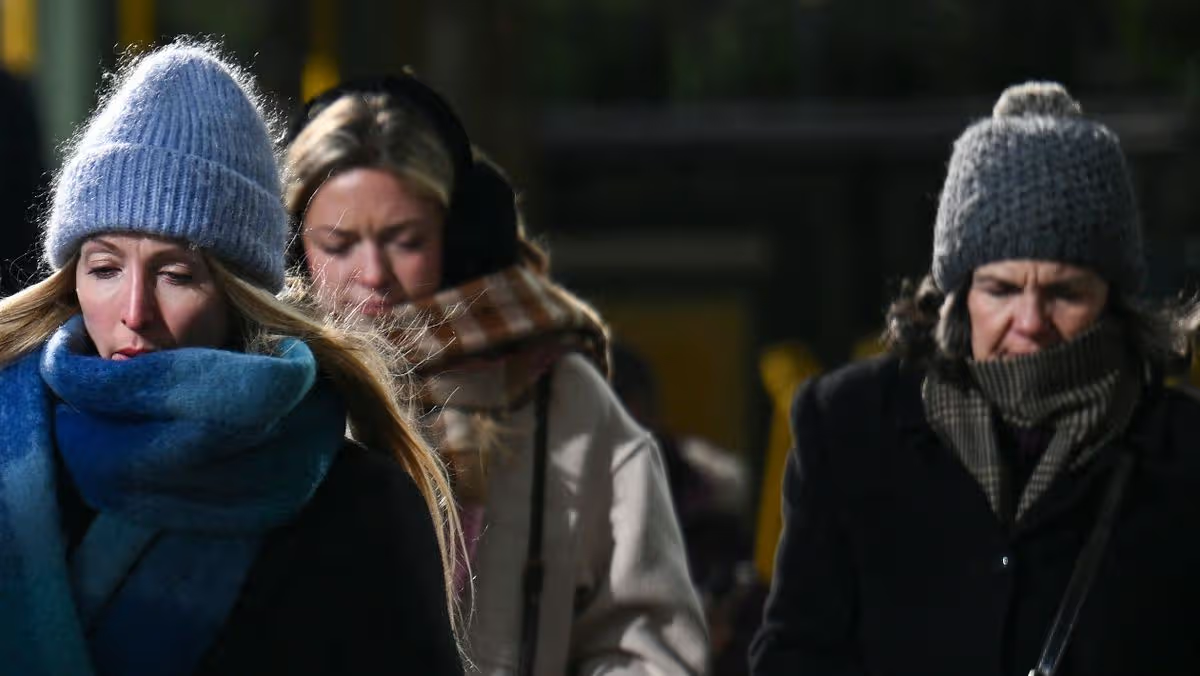
This chilling effect will extend far beyond Scotland, ensuring that no corner of the UK entirely escapes the nip in the air. Major urban centres in England will also see the mercury nosedive into single figures as Wednesday progresses. By the evening, cities like Manchester and Birmingham could be experiencing a brisk 2°C. Further south and east, including the capital London, along with Oxford, Gloucester, and Norwich, temperatures are predicted to drop to around 6°C. Even northern English cities such as Newcastle and York are looking at a frosty start, with lows of 0°C. The contrast to recent milder days will be palpable, transforming evening strolls into decidedly brisk affairs and prompting a rethink of outdoor plans.
Paragraph 4
The national forecast from the Met Office aligns with these detailed projections, confirming the broader picture of a cooler turn for all. They attribute the change to northerly winds establishing themselves across the UK, which will usher in the colder air mass. While the weekend’s more frequent showers are expected to become lighter and more scattered, they will be replaced by a stubborn blanket of cloud in many areas, carried in by the northerly and later north-easterly flow. This cloud cover will limit sunshine, making the air feel even colder than the thermometer suggests, though some sunny spells are still expected to break through intermittently.
Paragraph 5
Meteorologists are noting that this cold snap will place the UK’s daytime temperatures significantly below the seasonal average for early May. Nick Finnis of Netweather.tv highlighted that Wednesday is likely to be the coolest day of the week, with a north-easterly wind dragging in genuine Arctic air. He suggests that under the prevalent cloud, maximum temperatures may struggle to reach between 10°C and 15°C at best, which is unseasonably cold for this time of year. The conditions are expected to be felt across much of northern and western Europe, placing the UK’s experience within a broader continental weather pattern.
Paragraph 6
There is, however, a glimmer of hope for those longing for a return to milder spring weather. Current models suggest a shift may begin after mid-week. The winds are forecast to gradually swing to a southerly direction across southern parts of the UK, potentially drawing in warmer air. This transition is likely to be driven by an area of low pressure approaching from the northwest. While this could bring more substantial rain to the far northwest by Thursday, it may also initiate a slow moderation in temperatures, particularly for southern regions. Nevertheless, the north may continue to experience cooler conditions, underscoring the divide that often characterises the UK’s climate. For now, the message is clear: winter is making a brief, unwelcome comeback, so it’s time to dig out those layers once more.