



Paragraph 1: A Cruise Ship in Crisis
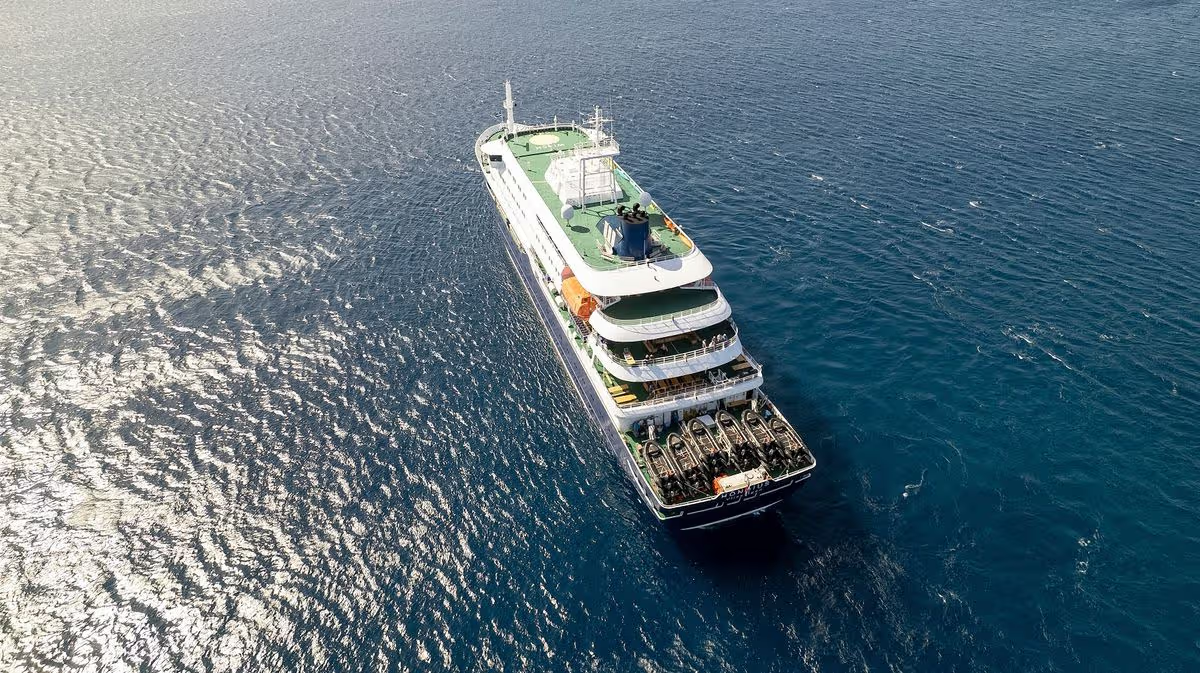
The expedition cruise ship MV Hondius, operated by Oceanwide Expeditions, has become the center of an international medical emergency. The vessel is currently anchored off the coast of Cape Verde, halted in its tracks by a severe and suspected outbreak of Hantavirus. This alarming situation has already claimed the lives of three Dutch passengers, including an elderly couple, and left several others in critical condition. Among them is a British tourist fighting for his life in a hospital in Johannesburg. The cruise operator has publicly acknowledged it is managing “a serious medical situation,” a phrase that underscores the gravity and complexity of the crisis unfolding both on board and in the coordination efforts with global health authorities.
Paragraph 2: The Human Toll and the Urgent Plea for Care
Beyond the tragic fatalities, the human cost continues to mount. Two crew members remain on the Hondius, requiring urgent medical attention that they cannot yet receive. Oceanwide Expeditions has stated that, despite ongoing efforts, they have not received authorization from Cape Verdean health authorities to disembark those needing care or to begin medical screening for others on board. This bureaucratic and logistical impasse leaves the sick in a dangerous limbo, isolated on the ship while their conditions may deteriorate. The company is caught in a tense waiting game, working to secure the necessary permissions to transfer the ailing individuals to proper medical facilities on land, a process fraught with diplomatic and health safety considerations.
Paragraph 3: Understanding the Threat: Hantavirus
The suspected culprit, Hantavirus, is a rare but potentially deadly disease that paints a stark picture of how humans can inadvertently intersect with hidden dangers in the environment. It is primarily contracted by people who inhale airborne particles contaminated with the urine, droppings, or saliva of infected rodents, such as mice and rats. While person-to-person transmission is exceedingly rare, the virus can lead to Hantavirus Pulmonary Syndrome (HPS), a severe respiratory illness that progresses rapidly to life-threatening respiratory failure. The disease gained public attention recently when Betsy Arakawa, the wife of acclaimed actor Gene Hackman, died from Hantavirus in early 2025 after exposure at their New Mexico property, highlighting that this is a real, albeit uncommon, threat.
Paragraph 4: Coordinating a Complex International Response
Faced with this outbreak, Oceanwide Expeditions is navigating a labyrinth of international coordination. They are working closely with a network of authorities, including the World Health Organization (WHO), the Dutch National Institute for Public Health and the Environment (RIVM), various embassies, and the Dutch Ministry of Foreign Affairs. A key plan involves a Dutch-led effort to repatriate the two symptomatic individuals from the ship directly to the Netherlands for specialized care, a mission that would also include the body of one of the deceased and a non-symptomatic companion. However, this entire delicate operation hinges on the approval and logistical support of Cape Verdean officials, making local cooperation the critical linchpin for any forward movement.
Paragraph 5: Life in Limbo for Passengers and Crew
For the remaining passengers and crew on the MV Hondius, the atmosphere is one of anxiety and uncertainty. A letter sent to those on board confirms they are effectively confined, anchored offshore and awaiting permission to disembark. Crew communications have admitted there is “no information regarding the timeline moving forward,” a statement that likely does little to assuage fears. This period of waiting is psychologically taxing, as healthy individuals are isolated alongside an ongoing medical emergency, unsure of when they will reach shore, when they will be screened, or what the full scope of the outbreak might be.
Paragraph 6: A Stark Reminder and the Path Forward
This incident on the MV Hondius serves as a stark reminder of the unpredictable challenges of remote expedition travel and the swift, devastating impact a rare pathogen can have. It underscores the immense importance of robust international medical and diplomatic protocols for handling health crises at sea. The priority for Oceanwide Expeditions and all involved agencies remains clear: to secure immediate medical care for the sick, ensure the safe repatriation of affected individuals, and conduct comprehensive health screenings for everyone else on board. The company has committed to establishing the full facts and providing updates, but for now, the resolution of this humanitarian and medical ordeal depends on a seamless, cooperative response across multiple national borders. The world watches as authorities work to bring a safe end to this tragic voyage.