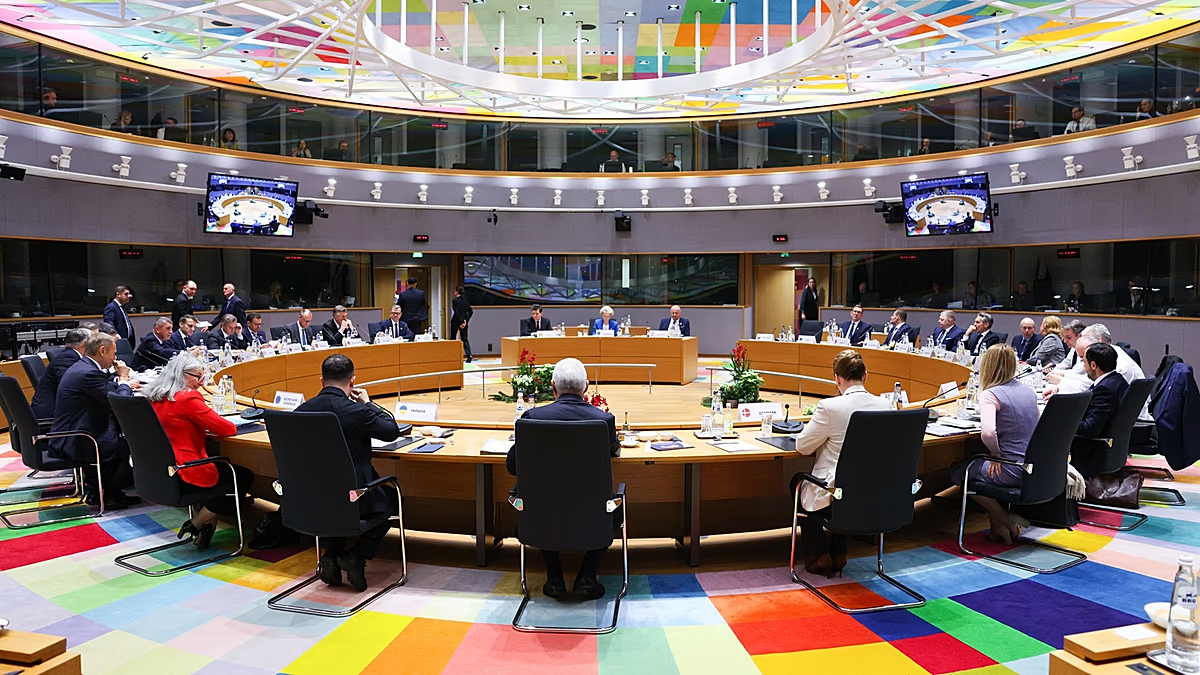


Under a bright Caucuses sun, the capital of Armenia prepared to host a gathering of rare diplomatic breadth this Sunday. The 8th meeting of the European Political Community (EPC), convened under the theme ‘Building the Future: Unity and Stability in Europe,’ saw leaders from nearly 50 nations descend upon Yerevan. This intergovernmental forum, born in the turbulent wake of Russia’s 2022 full-scale invasion of Ukraine, was designed as a space for strategic dialogue about the continent’s future. For Armenia, a nation of three million at the crossroads of Europe and Asia, serving as host was profoundly symbolic, signaling a deliberate pivot toward new partnerships at a moment of profound geopolitical recalibration for the region and the world.
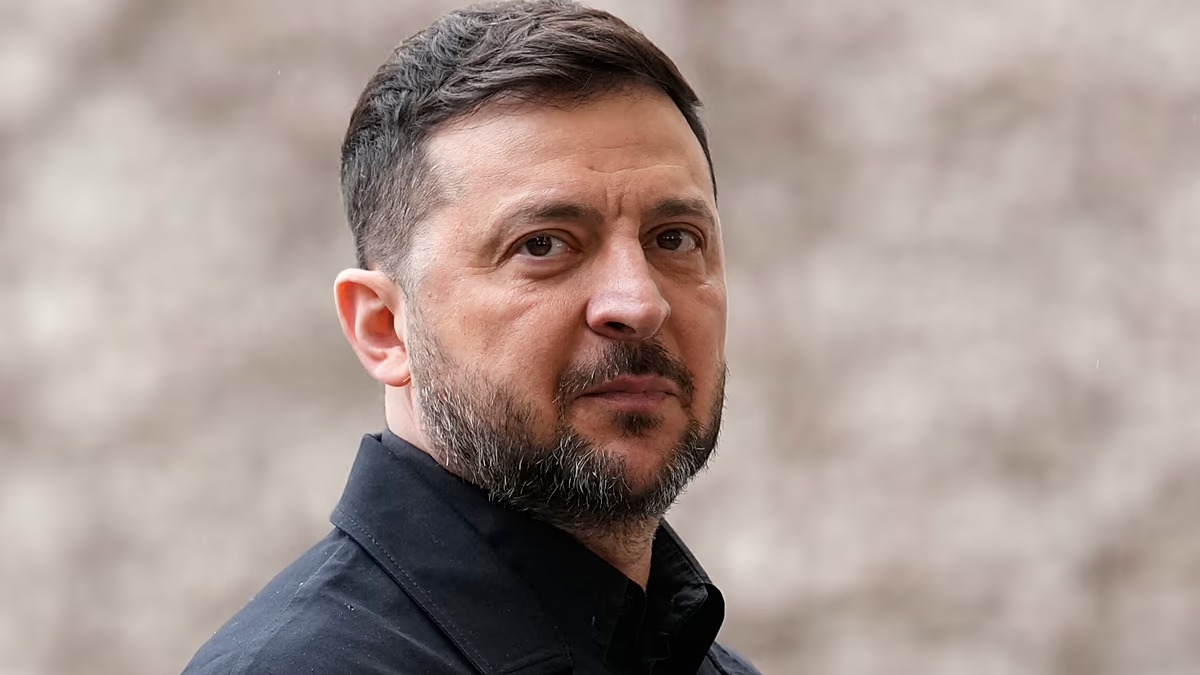
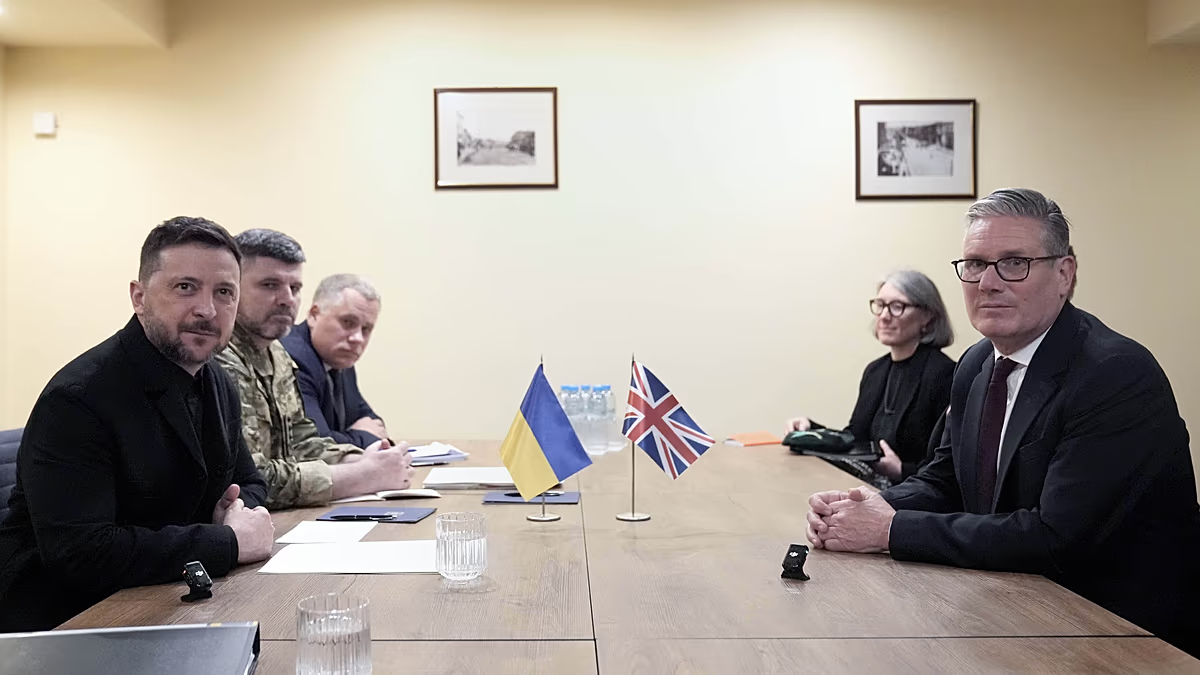
The arrivals hall at Yerevan’s airport became a tableau of contemporary European politics. British Prime Minister Sir Keir Starmer, fresh in his role, French President Emmanuel Macron, and Polish Prime Minister Donald Tusk were among the dignitaries touching down. The most closely watched arrival was that of Ukrainian President Volodymyr Zelenskyy, whose presence ensured that support for Kyiv against Russian aggression would remain a central, unifying tenet of the discussions. The summit was formally co-chaired by European Council President António Costa and Armenian Prime Minister Nikol Pashinyan, but the anticipated flurry of sideline meetings between leaders promised to be where urgent, face-to-face diplomacy on issues from security to energy would truly unfold.
A notable departure from the EPC’s European focus was the presence of Canadian Prime Minister Mark Carney as a special guest, marking the first participation of a non-European nation. This inclusion spoke volumes about the forum’s evolving purpose. As President Costa noted, “Europe and Canada are more than just like-minded partners — together we are building a global alliance to defend peace, shared prosperity and multilateralism.” Carney had previously identified a “rupture” in the US-led global order, arguing that middle powers must now rally to defend international norms. With political uncertainty surrounding the United States’ future foreign policy trajectory, the burgeoning closeness between Europe and Canada reflects a strategic hedging of bets and a collective move to reinforce a values-based alliance, independent of any single nation’s political winds.
For the host nation, this summit represented a historic opportunity, culminating in the first-ever EU-Armenia summit held on its soil. Armenia’s journey has been one of difficult reassessment; historically within Russia’s sphere of influence, the country has watched with alarm as its traditional security guarantor appeared either unable or unwilling to intervene during recent conflicts with Azerbaijan. Under Prime Minister Pashinyan, this has crystallized into a formal policy of “diversification.” While in theory maintaining ties East and West, in practice, as analyst Olesya Vartanyan put it, this summit was about Armenia telling the European Union “we are here and we are ready.” From a comprehensive partnership agreement signed in 2017 to last year’s law declaring an intent to apply for EU membership, Yerevan’s courtship of Brussels has become increasingly overt and determined.
This Armenian overture occurs within a delicate and hopeful regional context. The EPC meeting follows a historic peace agreement between Armenia and Azerbaijan, with both nations now tentatively embarking on what has been termed a “pro-European course.” The EU, through its Enlargement Commissioner, has reciprocated the warmth, declaring during a recent visit that “Armenia and the EU have never been closer.” For Armenia, deeper integration with Europe offers a promise of economic development, institutional resilience, and a rebalancing of its geopolitical anchors. It is a painstaking and risky recalibration, a bid to shape its own destiny by weaving new threads of partnership and dependency with the West, while navigating the complex realities of its geography and history.
In essence, the gathering in Yerevan was more than a routine diplomatic meeting. It was a microcosm of a world in transition. Within the conference halls, leaders grappled with the immediate fires of war and regional tension, while simultaneously laying the groundwork for new, resilient alliances in the face of global instability. On the sidelines, a small nation hosted the world, actively scripting a new chapter for its own future. The European Political Community, through this summit, demonstrated its role as both a crisis-management forum and a incubator for a potential new European architecture—one that is slowly expanding its circle to include like-minded global partners and nations, like Armenia, who are standing at a crossroads and choosing a path toward a different kind of unity.