


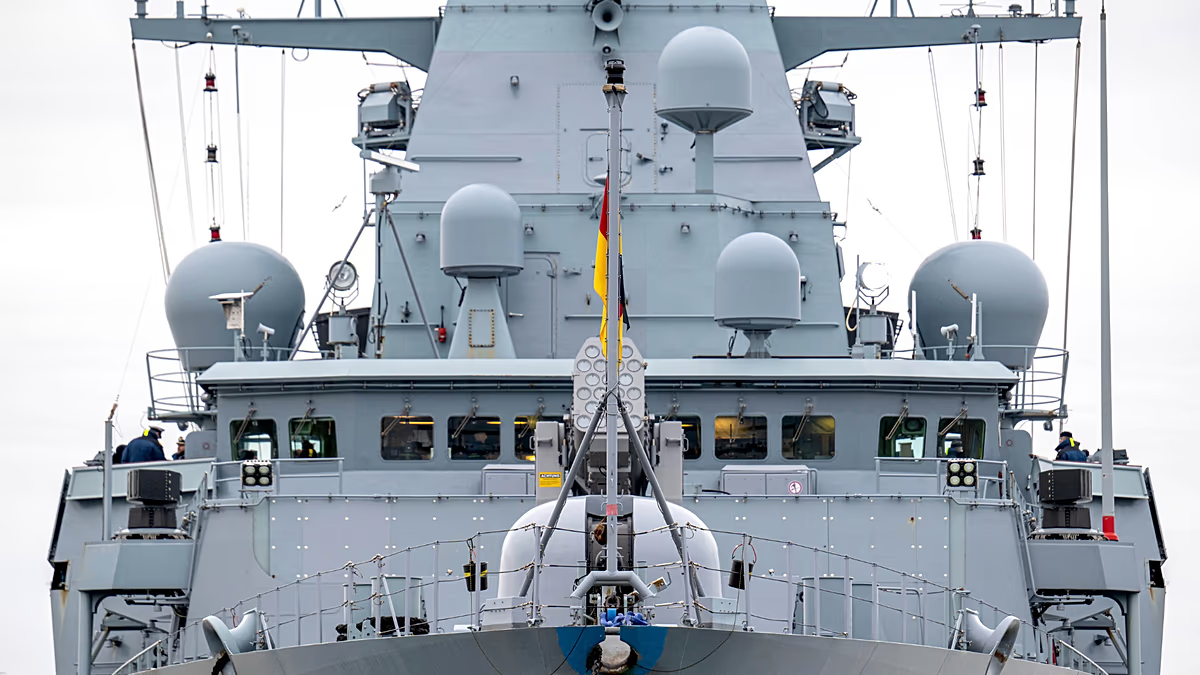
The German Navy minehunter Fulda slipped its moorings at the Kiel-Wik naval base on Monday, embarking on a journey southward into the Mediterranean Sea. This departure, however, is more than a routine training exercise; it unfolds against a backdrop of serious diplomatic and military discussions regarding a potential future mission in one of the world’s most critical and tense waterways: the Strait of Hormuz. The image of the specialized vessel, its crew methodically preparing on deck as it left its home port, serves as a tangible, physical manifestation of geopolitical calculations happening far away in government offices. The Fulda, carrying a complement of up to 45 sailors, is initially slated for a period of approximately two weeks at sea, a timeframe that suggests readiness and flexibility rather than an immediate combat deployment. This movement is a cautious, preparatory step, placing a key asset within strategic reach while political deliberations continue.
The focus of those deliberations is the narrow Strait of Hormuz, the vital chokepoint through which a significant portion of the world’s seaborne oil trade must pass. Maritime security in this region has been under sustained pressure for years, with incidents involving tanker seizures, attacks, and persistent tensions between state and non-state actors creating a volatile environment that threatens global energy stability and freedom of navigation. The mere discussion of deploying a German minehunter to these waters is a direct response to this protracted instability. It signals a growing concern among European partners about the risks to commercial shipping and a recognition that preserving open sea lanes is a collective security interest. The Fulda’s expertise in locating and neutralizing underwater mines would be a highly relevant capability in such an environment, where the threat of covert, deniable mining operations is a persistent fear for commercial captains and naval planners alike.
However, the path from the calm of the Kiel fjord to the heated waters of the Hormuz is not a simple one. German officials have been emphatic in stating that any such operational deployment would require a robust and legitimate political foundation. This means explicit approval from the Bundestag, Germany’s federal parliament, underscoring a deep-seated national commitment to democratic oversight of military affairs, a principle shaped profoundly by historical experience. Furthermore, Berlin insists on a secure legal basis for any mission, which would ideally include a mandate from the United Nations Security Council. This cautious, procedure-oriented approach reflects Germany’s broader foreign policy stance, which prioritizes multilateralism and international law. The government is navigating a complex dilemma: how to contribute to allied stability efforts and protect economic interests while remaining faithful to a post-war strategic culture that is deeply cautious about proactive military engagements abroad, especially in distant conflict zones.
The crew of the Fulda, therefore, sails into the Mediterranean with their immediate future clear but their medium-term mission uncertain. Theirs is a profession defined by patience and precision, tasked with the slow, dangerous work of clearing historic and modern explosives from the sea. As they conduct their drills and transit south, they are also, in effect, standing by. They are the human element of a diplomatic process, their vessel a chess piece moved forward on the board, awaiting a decision from political leaders in Berlin and debates among lawmakers. Their two-week timeline is a snapshot; it could be extended, or their orders could change, based on developments that extend far beyond the bridge of their ship. They represent the interface where policy becomes practice, where parliamentary resolutions translate into the lived experience of sailors on watch in a far-off sea.
This potential deployment does not occur in a vacuum. It is a thread in the larger tapestry of international efforts to ensure stability in the Middle East’s maritime domains, where numerous navies from different nations already operate. A German presence would be a significant step, indicating a willingness to share more of the practical burden. Yet, it also raises delicate questions of coordination with allies, navigation of regional sensitivities, and the avoidance of any action that could be seen as an escalation. The mission’s very nature—minehunting—is defensive and protective of civilian shipping, a fact Berlin would likely emphasize to distinguish its contribution from more confrontational postures. The goal would not be to challenge any state directly but to help preserve the sea as a common global artery, deterring covert threats through presence and expertise.
Ultimately, the departure of the Fulda is a study in calibrated motion. It is a deliberate, visible action that communicates readiness and concern without crossing the threshold into a committed operation. The ship moves, the crew trains, and the government talks. For now, the vessel’s destination is the Mediterranean, but its shadow already stretches toward the Gulf. The coming weeks will determine whether this shadow solidifies into a presence, dependent on the intricate interplay of international diplomacy, parliamentary debate, and the ongoing assessment of risk in a region where calm waters are never to be taken for granted. The journey of this single minehunter encapsulates the modern challenges of maritime security: a blend of technology, strategy, law, and human judgment, all navigating the unpredictable currents of global politics.