


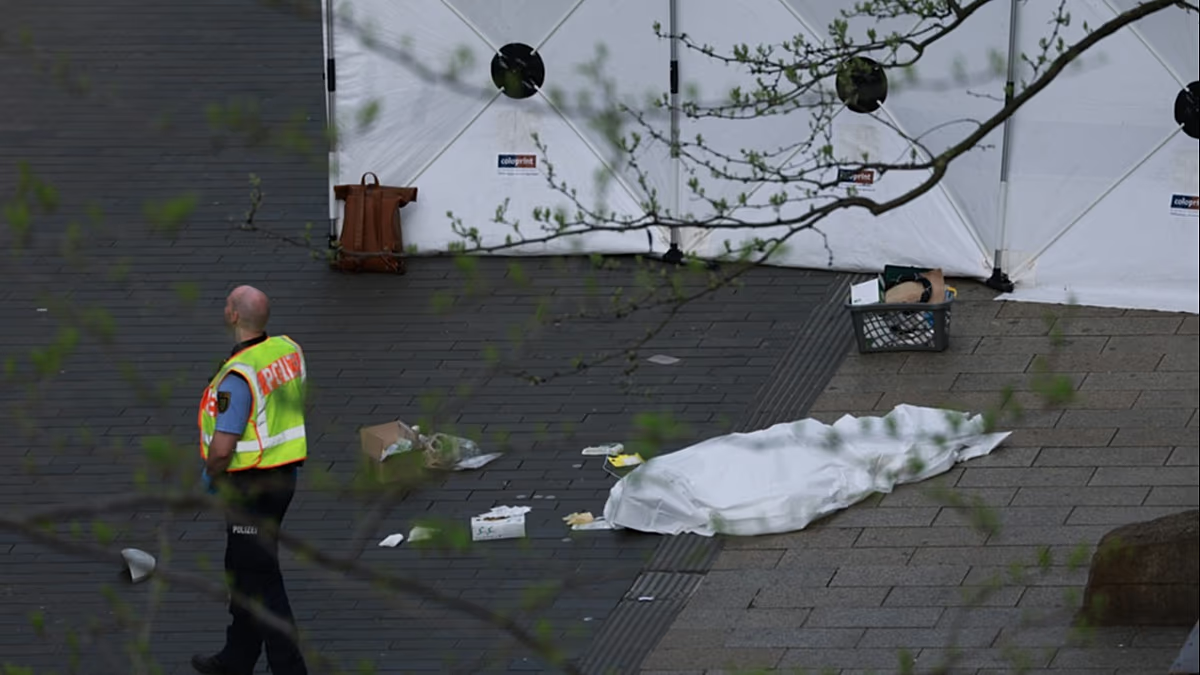
On a Monday afternoon in the historic city of Leipzig, a place typically filled with the gentle hum of daily life, a sudden and violent act shattered the peace. Just after 5 p.m., as people browsed shops and enjoyed the early evening in the bustling pedestrian zone, a vehicle accelerated from the major Augustusplatz square and tore down Grimmaische Strasse, a central shopping thoroughfare. The deliberate trajectory of the car turned a scene of mundane errands and casual strolls into one of chaos, terror, and profound loss. When the vehicle finally came to a stop, the horrific result was clear: two innocent lives were tragically cut short, and three other individuals were left with critical, life-threatening injuries. An unspecified number of additional people suffered less serious wounds, their physical and psychological scars a testament to the brutality of the attack. The immediate aftermath was captured in stark, disturbing photos—a car with a crumpled front and a windshield webbed with cracks, sitting silently as an incongruous monument to the violence that had just erupted.
Authorities moved swiftly to secure the scene and apprehend the driver, ensuring the public that there was no continuing threat. The man detained inside the vehicle was identified as a 33-year-old German citizen, born in the Leipzig area. He remains in police custody, where he is being formally investigated on suspicion of murder and attempted murder. While the investigation is in its early stages, officials have been clear in their preliminary assessment: this was a deliberate ramming attack. Saxony’s Interior Minister, Armin Schuster, stated that investigators believe the man acted alone, an assessment that, while narrowing the scope of the threat, does little to alleviate the profound sense of violation felt by the community. Minister Schuster cautiously noted that rage and “psychological instability” are often factors in such devastating, isolated acts, though he refrained from definitively applying that to this specific case, awaiting the findings of a thorough investigation.
The human toll of such an event extends far beyond the casualty count, sending waves of grief and anxiety through the city and the nation. Saxony’s State Governor, Michael Kretschmer, expressed his deep condolences to the families of the victims, capturing a collective sense of stunned sorrow. “An act like this leaves us speechless,” he stated, “and it makes us determined.” His words, reported by the German news agency dpa, reflect a dual response of mourning and resolve—a commitment to supporting the victims and their families while pursuing justice and answers. For the residents of Leipzig, a major cultural hub and one of the largest cities in eastern Germany with over 630,000 people, the attack strikes at the heart of their sense of security. Pedestrian zones like Grimmaische Strasse are designed to be safe havens from traffic, communal spaces where life unfolds at a human pace. This violation of that sanctuary makes the event feel particularly shocking and personal.
As the legal process begins, the focus turns to the meticulous work of the police and prosecutors, who are tasked with building a complete picture of the tragedy. The suspect is now at the centre of this intense scrutiny, as investigators piece together his background, his motivations, and the precise sequence of events that led to that fatal Monday afternoon. The charges of murder and attempted murder carry the utmost gravity, underscoring the intentional nature of the act as currently understood by authorities. Every detail, from the suspect’s personal history to his actions in the hours before the attack, will be examined to understand not just the “how,” but the “why” behind a act that officials have rightly labelled a “terrible tragedy.” This pursuit of clarity is a crucial part of the societal response, a necessary step in the long journey toward accountability and, eventually, some form of closure.
In the wake of the attack, the people of Leipzig, and Germany as a whole, are left to grapple with the unsettling reality that such violence can erupt without warning in the most ordinary of settings. While authorities assure the public that the lone suspect poses no further danger, the psychological aftermath is pervasive. Incidents like these inevitably prompt difficult conversations about public safety, mental health, and the fragile nature of civic peace. The community’s resilience is now being tested, as it must find a way to mourn its lost members, support the injured through their recoveries, and eventually reclaim the spaces that were violated. The determination expressed by leaders like Governor Kretschmer will need to be mirrored in the collective spirit of Leipzig’s citizens as they navigate the days ahead.
Ultimately, this summary of events, drawn from official reports, cannot capture the full human dimension of the loss—the individual stories of the victims, the courage of first responders, and the quiet grief of a city in mourning. The facts outline a timeline: an afternoon in May, a car veering into a crowd, a suspect in custody. But between those lines lies a profound human tragedy. The incident in Leipzig is a stark reminder of how quickly normalcy can be shattered, and how communities must often find strength they did not know they possessed in order to heal, remember, and move forward with both sorrow and resolve. The pursuit of justice will continue through the legal system, but the deeper healing will unfold in the hearts and streets of Leipzig for a long time to come.