



In a sharp rebuke of escalating transatlantic tensions, European Commission President Ursula von der Leyen has forcefully responded to a sudden tariff threat from former U.S. President Donald Trump. The controversy erupted when Trump, in a social media post, declared his intention to raise tariffs on European Union-made cars from the current 15% to a staggering 25%, accusing the bloc of non-compliance with existing agreements. This move sent shockwaves through European capitals, particularly in automotive powerhouse Germany, and prompted an immediate and unified response from the EU’s top leadership. Von der Leyen’s statement underscores a fundamental European principle: that international agreements are binding and form the bedrock of predictable, rules-based trade.
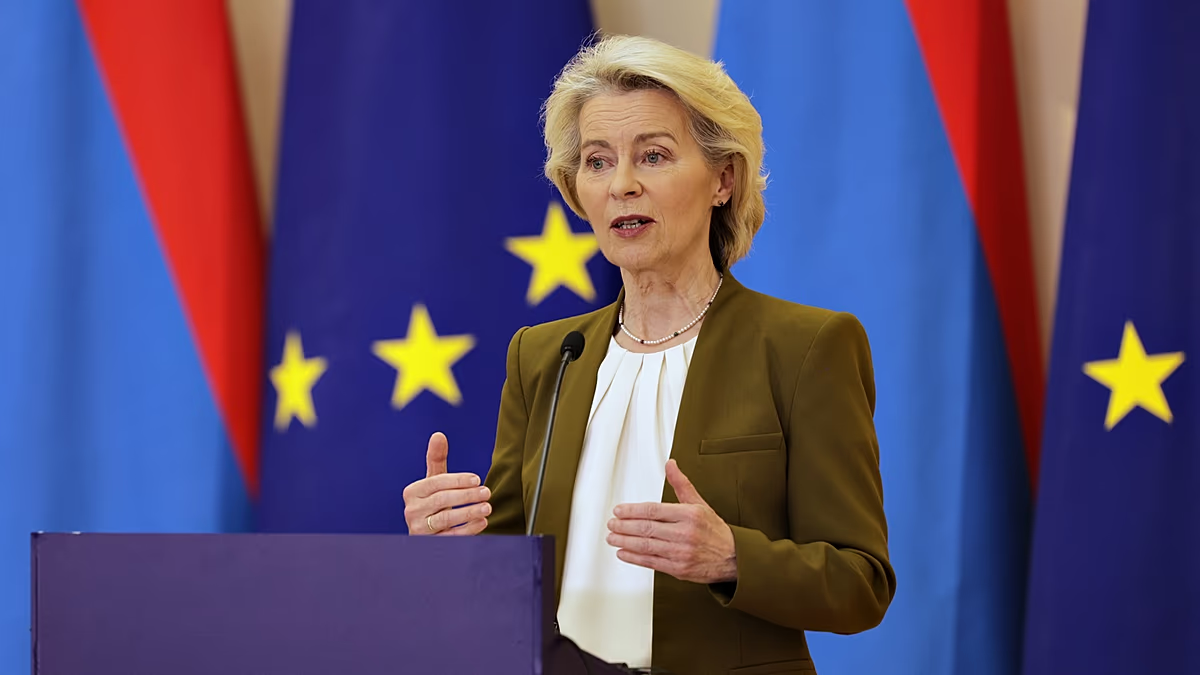
Speaking from Armenia on Tuesday, von der Leyen anchored her defense in a previously negotiated deal between Brussels and Washington. “A deal is a deal, and we have a deal,” she stated emphatically. “And the essence of this deal is prosperity, common rules and reliability.” She was referring to the critical understanding that the United States committed to an all-inclusive cap of 15% on EU goods, a measure designed specifically to prevent the very kind of escalating, additional duties Trump is now threatening. The Commission President pointedly noted that this “alignment with the agreed ceiling is still outstanding,” framing the threat not just as an economic provocation but as a breach of a solemn international commitment that undermines mutual trust.
The context of this dispute is a complex and unfinished piece of joint legislation, a key pillar of the broader EU-U.S. trade deal intended to eliminate tariffs on a wide range of products. Von der Leyen revealed that the EU is “in the final stages” of implementing its side of this bargain. However, the process has been politically fraught. The legislation has faced delays in the European Parliament, where lawmakers, still mindful of Trump’s earlier, forceful attempt to purchase Greenland from Denmark, have amended the text to bolster safeguards. Crucially, von der Leyen highlighted that according to the original joint statement, the U.S. obligation to lower its car tariffs was triggered by the introduction of this legislation in the EU, not its final ratification, adding another layer to the dispute over who is failing to uphold their end of the bargain.
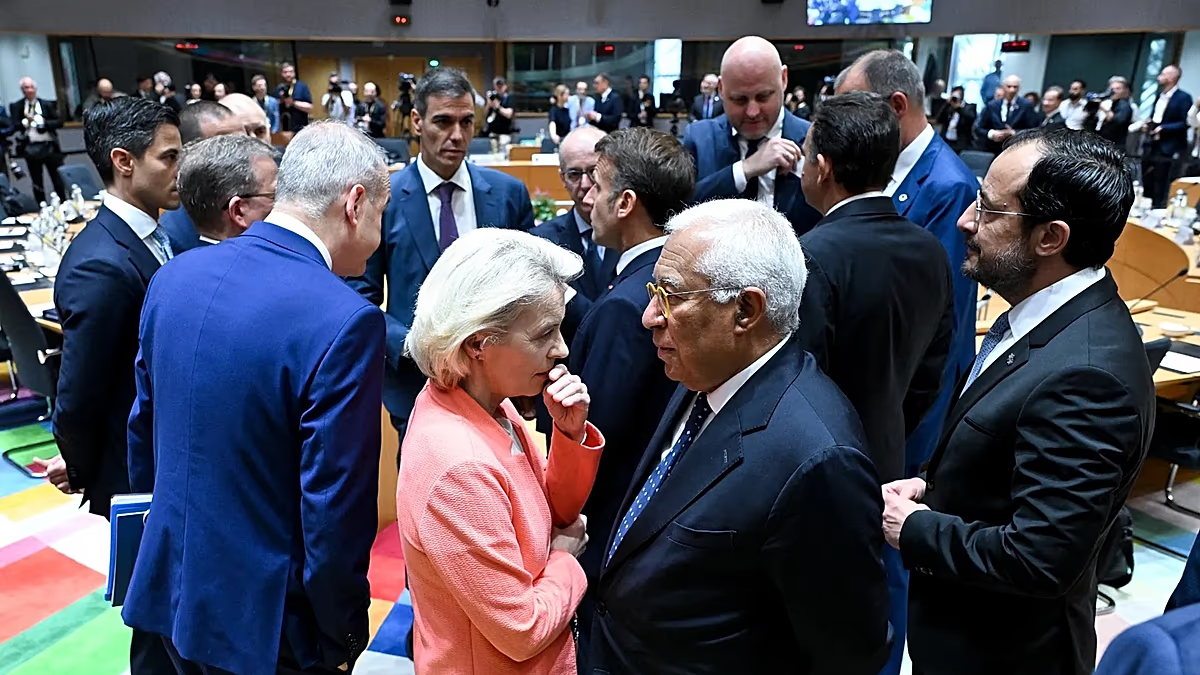
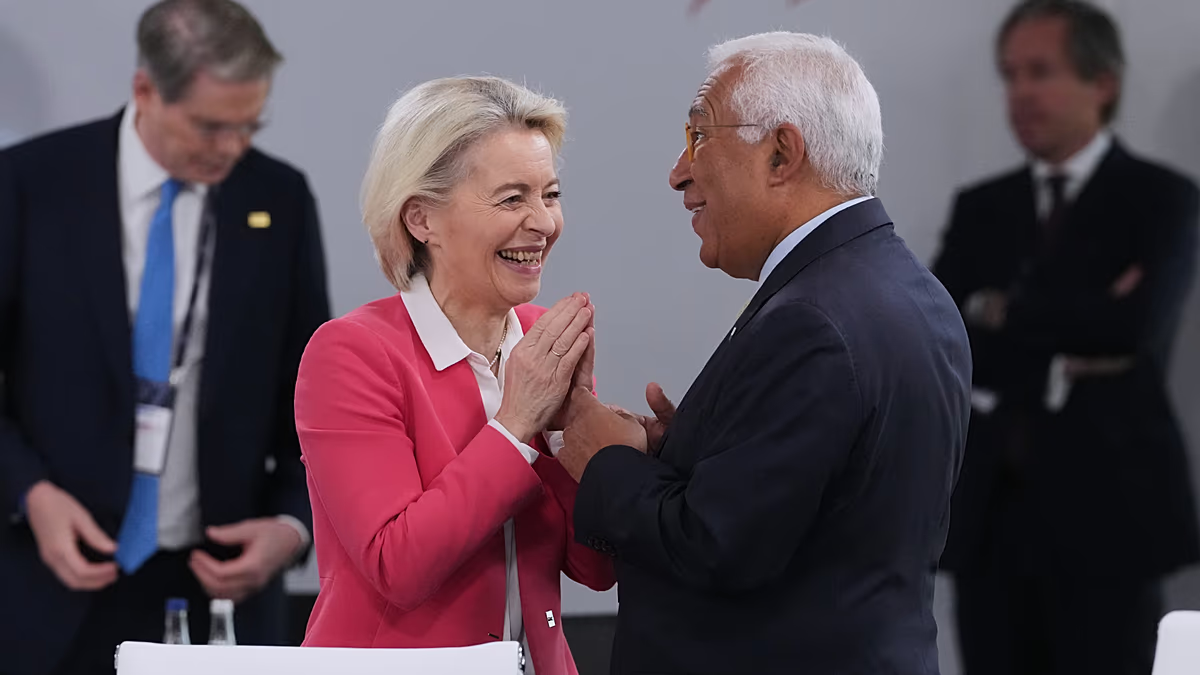
Standing in solidarity with von der Leyen, European Council President António Costa affirmed that the EU’s 27 national leaders “fully” support the Commission’s stance and its president. This show of unity is pivotal, demonstrating that Europe is prepared to speak with one voice in this confrontation. Behind the scenes, Brussels has been actively seeking “clarity” from Washington regarding the rationale for Trump’s announcement while simultaneously signaling its readiness to retaliate if necessary. The diplomatic channels are hot, with European Commissioner for Trade Maroš Šefčovič scheduled to meet directly with U.S. Trade Representative Jamieson Lee Greer on the sidelines of a G7 meeting in Paris. This face-to-face discussion will be a critical first test of whether this clash can be de-escalated through dialogue or is destined for a tit-for-tat trade war.
Complicating the situation are swirling political undercurrents that suggest the tariff threat may be about more than automobiles. Analysts have linked Trump’s announcement to recent comments by German Chancellor Friedrich Merz, who stated that Iran had “humiliated” the United States in a geopolitical context. Given that Germany is Europe’s largest car manufacturer and a massive exporter to the U.S., any punitive trade measures disproportionately target Berlin. While Merz has denied any connection between his remarks and the tariff hike, the timing has fueled suspicions that the move is a form of political retribution, using economic leverage to punish a key European nation for perceived diplomatic disloyalty. This intertwining of trade policy with geopolitics and personal diplomacy makes the crisis particularly volatile.
Ultimately, von der Leyen’s response, balancing a firm insistence on respecting signed agreements with a call for “mutual gain, cooperation and reliability,” defines the stakes of this confrontation. By reminding the United States of its own contractual commitments and the existence of a hard cap on tariffs, she is drawing a legal and procedural line in the sand. Her concluding remark—that the EU is “prepared for every scenario”—is a clear, though calibrated, warning that the bloc will not hesitate to enact retaliatory measures if pushed. This episode is more than a simple trade spat; it is a struggle over whether long-established international rules will be honored or discarded in favor of unilateral, unpredictable power politics, with the future stability of the Western economic alliance hanging in the balance.