



Studio Ghibli, the beloved Japanese animation studio founded by the visionary trio of Hayao Miyazaki, Isao Takahata, and Toshio Suzuki in 1985, has been honoured with Spain’s prestigious 2026 Princess of Asturias Award for Communication and Humanities. This accolade, one of the highest recognitions in the Spanish-speaking world, celebrates the studio’s profound global impact, extending far beyond mere entertainment. The award specifically acknowledges Ghibli’s unparalleled role in disseminating universal values through the art of film, cementing its status not just as an animation powerhouse, but as a vital cultural ambassador. By building what the award jury called a “cultural bridge,” Ghibli’s films have consistently transcended generational and geographical divides, speaking a visual and emotional language understood by audiences from Tokyo to Toronto, from Madrid to Mumbai. This honour reflects a deep appreciation for how the studio has woven threads of shared human experience into its work, making its stories feel both intimately personal and globally resonant.
At the heart of Studio Ghibli’s magic lies a unique and unwavering artistic philosophy: a commitment to hand-crafted animation and a profound reverence for the natural world. In an era increasingly dominated by computer-generated imagery, Ghibli has remained a bastion of meticulous, painterly detail, where each frame is infused with a tangible, human touch. This “handcrafted” quality, as noted by the jury, is fundamental to its charm, creating worlds that feel lush, lived-in, and wondrously real. More importantly, the studio’s filmography is built upon a deep ecological and humanistic consciousness. Its narratives are profound reflections on the fragile, often fraught relationship between humanity and nature, advocating for balance, respect, and tolerance. From the serene forests in My Neighbor Totoro to the embattled wilderness in Princess Mononoke, nature is never merely a backdrop; it is a central, breathing character, embodying themes of environmental stewardship and spiritual interconnectedness that grow more urgent with each passing year.
Equally revolutionary has been Ghibli’s approach to character, particularly its portrayal of young women and girls. The studio has consistently moved away from traditional fairy-tale archetypes, offering instead a gallery of complex, strong, and emotionally authentic female protagonists. These characters are not passive princesses awaiting rescue; they are resilient, curious, and morally active agents of their own stories. Whether it is Chihiro’s arduous journey to maturity in Spirited Away, Kiki’s entrepreneurial struggle in Kiki’s Delivery Service, or San’s fierce protectiveness in Princess Mononoke, Ghibli’s heroines navigate challenges with courage, empathy, and a capacity for growth that mirrors our own. They feel joy, fear, anger, and uncertainty, embodying a spectrum of human dignity that has inspired audiences worldwide. This focus on nuanced character development ensures that the studio’s universal values—empathy, friendship, and self-discovery—are felt, not just preached.
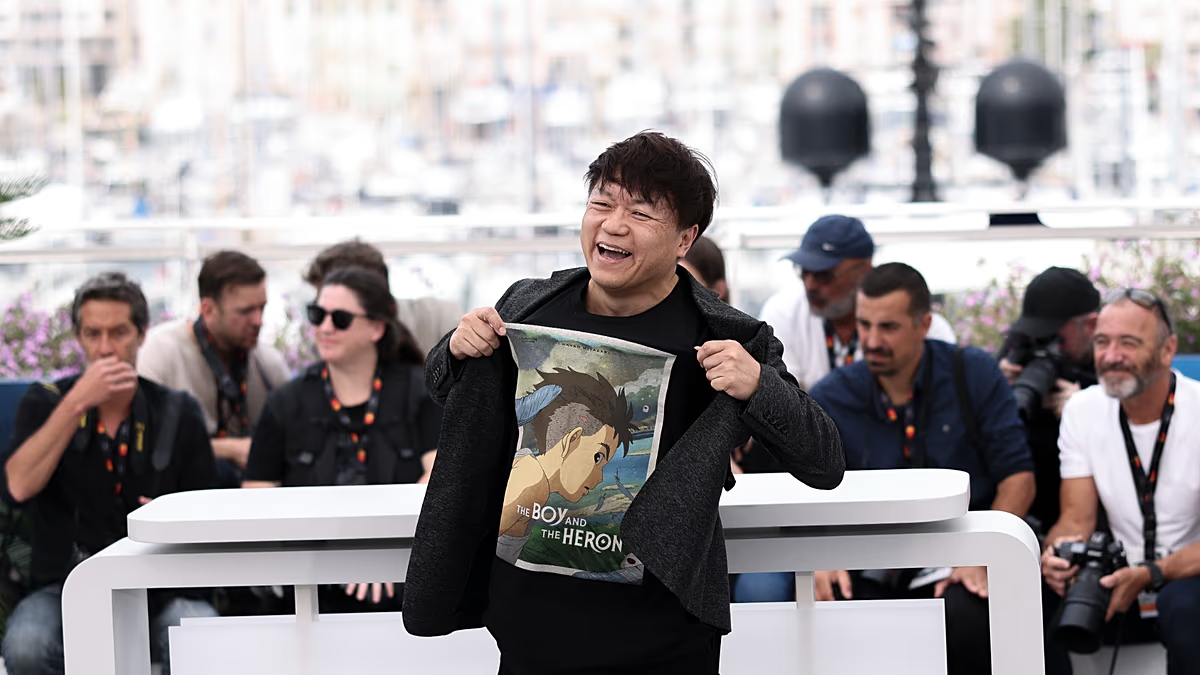
The global recognition of Ghibli’s artistry is perhaps most symbolically captured by its Oscar triumphs. The studio’s monumental masterpiece, Spirited Away, won the Academy Award for Best Animated Feature in 2003, a victory that introduced its exquisite storytelling to millions of new viewers and cemented its reputation as a pinnacle of contemporary cinema. Decades later, the studio proved its enduring relevance and creative vitality when Hayao Miyazaki’s semi-autobiographical and deeply philosophical film, The Boy and the Heron, claimed the same Oscar in 2023. These bookend awards highlight a career of sustained excellence, demonstrating that Ghibli’s voice remains as powerful and necessary now as it was at its inception. The Princess of Asturias jury rightly connected these achievements to the studio’s unique narrative rhythm, which embraces “moments of silence and contemplation” as essential elements, allowing emotion and atmosphere to flourish in ways seldom seen in mainstream animation.
Ultimately, the Princess of Asturias Award celebrates the specific and potent alchemy that defines Studio Ghibli: its genius for finding profound beauty in the simple, everyday moments of life. This is a studio that can make the act of waiting for a bus, the stirring of a pot of soup, or the rustle of wind through grass feel sacred and awe-inspiring. It finds wonder not only in soaring dragons and magical spirits, but in the quiet resilience of ordinary people, the comfort of a home, and the cycles of the natural world. This celebration of the mundane elevates its stories, grounding even the most fantastical tales in a bedrock of authentic human emotion. It is this quality that forges such a deep, lasting bond with viewers, as Ghibli’s films remind us to see the extraordinary woven into the fabric of our own daily existence.
In bestowing the Princess of Asturias Award for Communication and Humanities upon Studio Ghibli, the jury honours more than a catalog of beloved films. They recognize a transformative body of work that has shaped the global imagination, championed humanistic and environmental values, and elevated animation to the level of fine art. For over four decades, Ghibli has been a gentle, guiding voice, offering stories that console the heart, challenge the mind, and awaken a sense of wonder about the world and our place within it. This prestigious award is a fitting tribute to a studio whose legacy is not merely in the awards it has won, but in the indelible mark of beauty, empathy, and contemplation it has left on the souls of generations of viewers around the world.