


Of course. Here is a humanized and expanded summary of the content, structured into six paragraphs.
In the fiercely independent world of underground hip-hop, few acts embody the spirit of provocative, politically-charged art quite like Belfast’s Kneecap. The Irish trio, who rap primarily in Irish Gaelic, have built a reputation on a potent mix of irreverent humor, sharp social commentary, and unapologetic republicanism. Their journey is often a public dance with controversy, a fact recently highlighted when member Mo Chara faced—and ultimately defeated—legal charges brought by the UK government. This victory against institutional pushback seemed to underscore their role as rebellious underdogs. Yet, Kneecap insists on being judged not just by their headlines but by their musical craft. Their new album, ‘Fenian,’ released on May 1st, stands as their most audacious artistic statement yet, receiving critical acclaim for being both engrossingly catchy and masterfully constructed. It’s an album that demands to be heard, and more importantly, seen. However, getting London to look at it has proven to be the latest battleground.
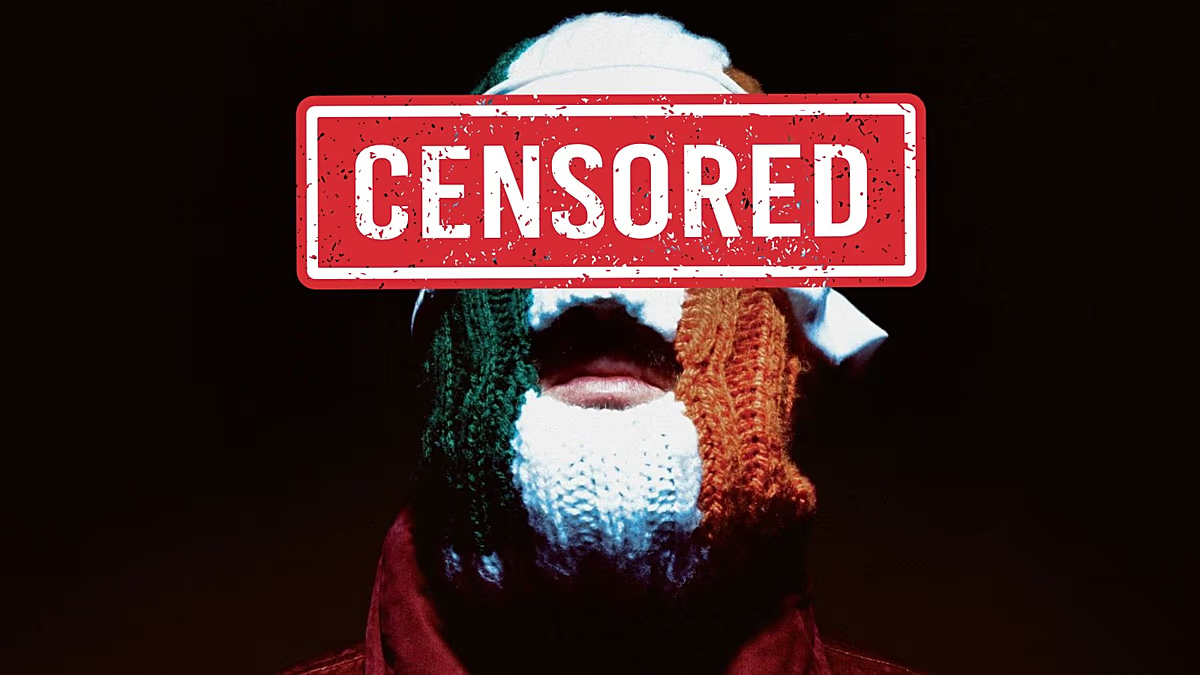
The conflict centers on the album’s promotional posters, destined for the London Underground. The original design featured the stark album artwork, the title ‘Fenian’ in bold lettering, and pull quotes from reviews—including a particularly ironic one from UK Prime Minister Keir Starmer, who once branded the band “completely intolerable.” According to the band’s manager, Daniel Lambert, Transport for London (TfL), the body governing the city’s transport network, rejected this version. Lambert claims the band was forced to submit a censored alternative where both the word “Fenian” and Keir Starmer’s name were redacted, appearing as blanked-out boxes. TfL, in a statement to the Belfast Telegraph, presented a different sequence of events, stating they only ever received and approved the redacted version and did not request the changes themselves. Lambert countered this narrative by sharing email evidence in which an advertising partner explicitly stated, “TFL will not allow the word FENIAN to be displayed unfortunately,” citing a policy of required impartiality.
This bureaucratic tussle over a single word begs the question: what power does “Fenian” hold that it warrants such censorship? The term is deeply rooted in Irish history, originally referring to the 19th-century Fenian revolutionaries who fought for an independent Irish republic free from British rule. Over time, particularly in Northern Ireland, it was weaponized as a sectarian slur against Irish nationalists. In titling their album ‘Fenian,’ Kneecap executes a deliberate act of reclamation. They transform a historical insult into a badge of defiant pride. The band’s own liner notes, described as informative and foul-mouthed, explain the evolution: from an ancient Irish people, to revolutionary fighters, to their modern, tongue-in-cheek definition: “Member of a secret socialist society of sound cunts active globally.” The album itself is this reclamation in sonic form, making TfL’s apparent discomfort with the word a tacit acknowledgment of its enduring political charge.
This incident is not an isolated one for Kneecap in London. Just last year, the group reported that another of their posters was banned from the Underground network. That image featured their iconic logo of a balaclava-clad figure. TfL judged it as “likely to cause widespread or serious offence to reasonable members of the public.” The band, long-time and vocal supporters of Palestine, suggested at the time that this censorship was linked to their outspoken criticism of the Israeli government’s actions in Gaza. They pointedly contrasted their experience with the reception they believe other figures receive, stating, “Join the IOF… murder kids, fly to London and nothing happens – you’ll be welcomed and applauded.” This pattern frames the ‘Fenian’ poster dispute not as a one-off administrative hurdle, but as part of an ongoing struggle between the band’s radical expression and the perceived boundaries of acceptable public discourse in the UK capital.
Despite these clashes with authority, the art at the center of the storm, the ‘Fenian’ album, has emerged triumphant on its own terms. Critics have praised it as “incredibly catchy” and “a masterful album,” noting that it proves the group possesses the musical range to fully back up their confrontational verve. They rap about international law, provoke tabloid fury, and craft irresistible beats, all while displaying a clear, strategic intelligence about their place in the cultural landscape. The controversy with TfL, rather than stifling their message, has inadvertently amplified it, illustrating the very tensions between expression and control that their music often explores. The attempt to blank out the word “Fenian” on a poster ultimately underscores the word’s power and the album’s central thesis: that language, history, and identity cannot be so easily silenced.
In conclusion, Kneecap’s journey with the ‘Fenian’ album rollout is a microcosm of their entire project. It is a story of reclamation—of a word, of a narrative, of a space for dissenting Irish voices in a global music scene. Their skirmishes with Transport for London, whether over a historical term or a balaclava logo, highlight the uneasy relationship between provocative art and public advertising guidelines. These guidelines, often designed to maintain neutrality, can sometimes render historical and political context invisible. Yet, each attempt to censor or redact Kneecap’s imagery seems only to validate the urgency and relevance of their message. The band continues to channel these conflicts into their creative output, ensuring that the conversation continues far beyond the advertising spaces they are denied, solidifying their role as uncompromising storytellers for a new generation.