



Of course. Here is a summarized and humanized version of the content, expanded to six paragraphs.
Paragraph 1: The Breach of Quiet
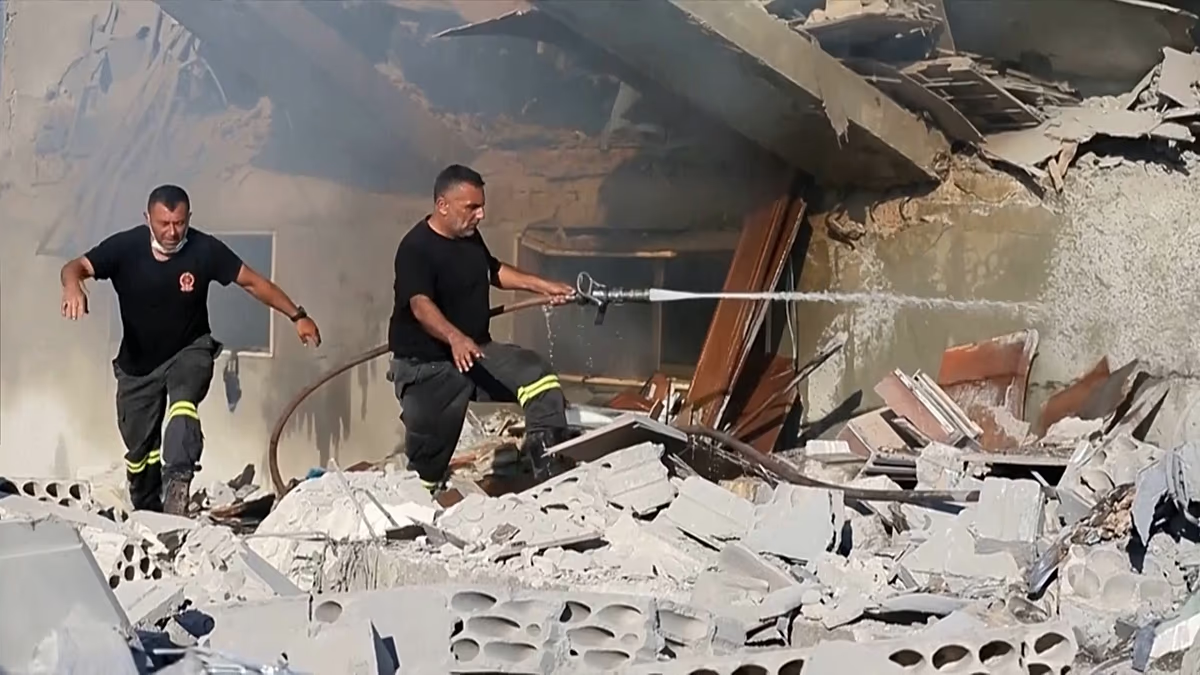
The fragile calm that had begun to settle over southern Lebanon was shattered on May 6th by the roar of jets and the concussive blast of an airstrike. In the coastal village of Saksakieh, a residential building was pulverized, transforming a home into a tomb of dust and rubble in an instant. The attack, which Lebanese authorities attributed to Israel, starkly violated a ceasefire that had been in place for less than three weeks—a tense pause agreed upon on April 16th after a devastating period of cross-border fighting. That earlier conflict had exacted a horrifying human cost, leaving over 2,000 people dead and displacing more than a million Lebanese from their homes, creating a profound crisis of survival and uncertainty.
Paragraph 2: The Human Toll Emerges
In the aftermath, the human scale of the tragedy quickly became apparent. Four lives were lost, and thirty-three people were wounded, their bodies bearing the immediate brunt of the violence. Rescue teams, embodying a desperate kind of hope, labored through the evening and into the night, sifting through shattered concrete and twisted rebar in search of survivors, their efforts illuminated by generator-powered lights. Officials somberly warned that the casualty count might still rise, as families awaited news of missing loved ones. The strike in Saksakieh was not an isolated event that day; Lebanese media also reported Israeli airstrikes near the city of Nabatieh and surrounding villages, signaling a concerning resumption of military activity across the region.
Paragraph 3: A Truce on Unsteady Ground
This violence erupted despite the existence of the April ceasefire, revealing its critical instability. A major source of this fragility is that Hezbollah, the powerful Lebanese militant group that had been engaged in the intense fighting with Israel, was not a formal signatory to the agreement. In the wake of the Saksakieh strike, Hezbollah issued a stark warning that it would respond to any violations, directly threatening to retaliate and potentially trigger a renewed cycle of attack and counterattack. Meanwhile, Israel stated its troops would remain deployed in parts of southern Lebanon during the ceasefire period, a presence viewed by many Lebanese as a continued occupation and a potential flashpoint. The truce, therefore, existed not as a durable peace, but as a tense interval policed by threats and military positioning.
Paragraph 4: The Lingering Scars of Displacement
Beyond the headlines of airstrikes and political rhetoric, the conflict’s deep wounds are etched into the lives of ordinary civilians. As a precarious quiet allowed some measure of normalcy to return—with schools and businesses tentatively reopening—residents began filtering back to border towns. What they found was not home as they remembered it, but landscapes scarred by destruction and atmospheres thick with anxiety. The physical damage to buildings is a visible testament to their ordeal, but the deeper injury is the pervasive uncertainty that now governs daily life. People are left to wonder if the ceasefire will hold, if the sound of a low-flying aircraft presages another disaster, and if rebuilding is even wise when everything could be lost again in an instant. This psychological toll is the conflict’s enduring legacy.
Paragraph 5: The Diplomatic Race Against Time
Recognizing the severe risk of a full-scale regional relapse, international mediators have been engaged in a relentless diplomatic effort to shore up the shaky ceasefire. Led by the United States, these efforts involve intense shuttle diplomacy and pressure on all parties to exercise restraint and commit to the terms of the calm. The mediating powers are acutely aware that another major strike or retaliation could unravel the agreement entirely, plunging the Israel-Lebanon border back into a war that would have catastrophic humanitarian consequences and could easily spill over into a broader regional conflict. Their work is a race against time to transform a temporary lull in fighting into a more permanent political understanding before another incident provides the spark for renewed conflagration.
Paragraph 6: The Precarious Path Forward
The strike on Saksakieh serves as a grim reminder that in conflicts marked by deep-seated hostility and non-state actors, a ceasefire on paper is a vastly different reality than peace on the ground. It underscores how quickly meticulously negotiated pauses can fracture, returning communities from a state of fragile recovery to one of fresh terror and mourning. The path forward is shrouded in mistrust. For true stability to take root, it would require not just the silence of guns, but committed dialogue, tangible steps toward de-escalation, and ultimately, addressing the underlying grievances that fuel the cycle of violence. Until then, the people of southern Lebanon and northern Israel remain caught in a devastating limbo, where the memory of past wars and the fear of future ones make the simple act of living an act of courage.