



Summary and Humanization:
As dawn broke across Britain on a crisp May morning, the familiar ritual of democracy unfolded once more. From the bustling streets of London to the villages of Wales and the towns of Scotland, polling stations opened their doors, inviting citizens to shape their local communities and national devolved governments. This was no ordinary set of elections; it was a profound snapshot of a nation in a state of political flux, where traditional loyalties were being tested and new forces were aggressively competing for the public’s trust. The contests for thousands of local council seats, the Welsh Senedd, and the Scottish Parliament represented more than just administrative choices—they were a barometer of the national mood after years of economic strain and political upheaval.
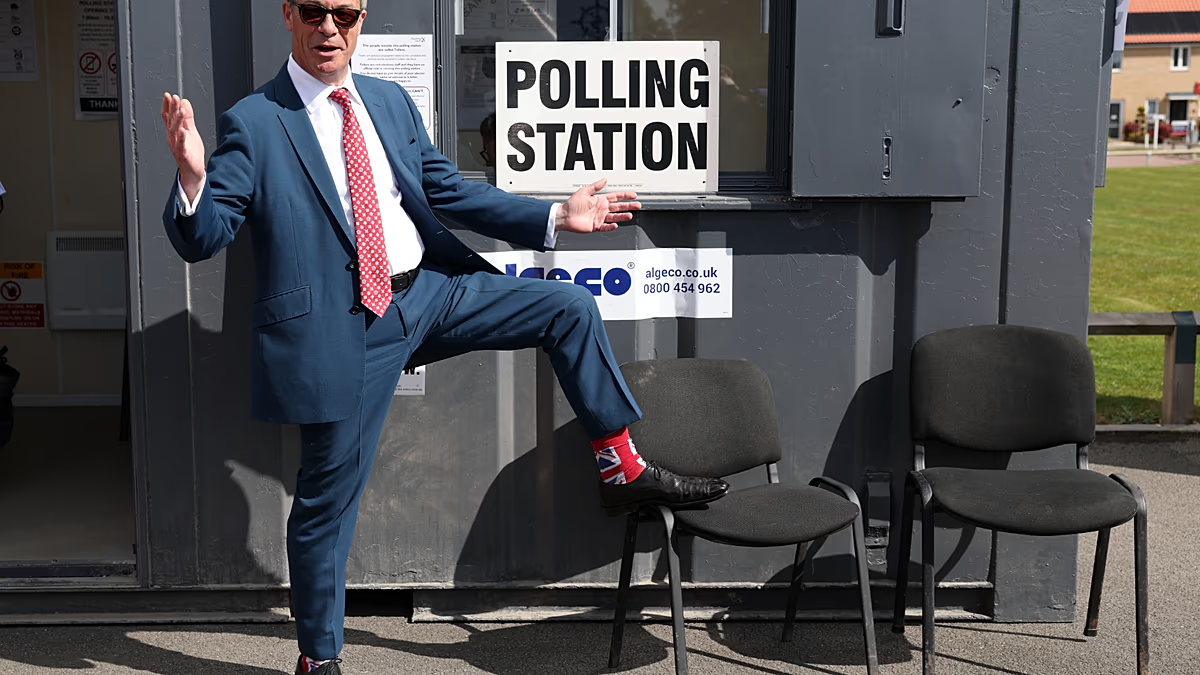
The day began with the symbolic act of voting, a quiet moment of civic duty before the storm of results. Labour leader Keir Starmer, accompanied by his wife Victoria, cast his ballot in London, keenly aware that this day would be a crucial test of his leadership ahead of an impending general election. Elsewhere, figures like Nigel Farage of Reform UK and Plaid Cymru’s Rhun ap Iorwerth also voted early, embodying the diverse political currents at play. These simple images of leaders at polling stations belied the high-stakes tension simmering beneath the surface, as the outcomes would send powerful signals about the direction of the United Kingdom.
Beneath the procedural calm, a narrative of widespread public frustration was driving the electoral dynamics. Opinion polls and analysts pointed to a electorate deeply discontented, grappling with a corrosive cost-of-living crisis, concerns over immigration levels, and a sense of stagnant economic opportunity. This potent mix of anxieties was creating fertile ground for political change. Traditional two-party dominance, a feature of British politics for generations, appeared to be under unprecedented threat. Voters, feeling unheard by the established Westminster pillars, were increasingly looking to alternative voices to channel their grievances and hopes.
This shift was most vividly illustrated in the projected rise of two parties on seemingly opposite flanks. On one side, Reform UK, reinvigorated under the campaign prowess of Nigel Farage, was making significant inroads by focusing squarely on immigration and the perceived strain on public services. Their message resonated powerfully in many communities, with forecasts suggesting they could secure over a thousand local council seats—a remarkable feat for a relatively new political force. Simultaneously, the Green Party was anticipating strong gains, capitalizing on environmental concerns but also tapping into a broader desire for a different kind of politics. Meanwhile, in the devolved nations, the political landscapes were shifting distinctly. In Wales, Labour faced the real possibility of losing its governing majority in the Senedd for the first time since devolution began 27 years ago, a symbolic blow that would shake the party’s foundations. In Scotland, the Scottish National Party was expected to hold its ground, maintaining a focus on independence even amidst its own internal challenges.
As polling stations closed and the mammoth task of counting began, the nation awaited results that would trickle in overnight and throughout the following day. Each declaration from a local council or devolved constituency would piece together a broader mosaic of Britain’s new political reality. For Keir Starmer, the pressure was particularly acute; a poor Labour performance in its traditional heartlands, especially in Wales and key English councils, would raise serious questions about his appeal and strategy just as a national campaign looms. The elections served as a dramatic preview, a final rehearsal with the curtain about to rise on a potentially transformative general election.
Ultimately, this election day was about more than seats won and lost. It was a clear signal from the British public that the old political order is being challenged. The predicted gains for Reform UK and the Greens, coupled with the potential upheaval in Wales, indicate a fractured and multi-party system emerging. This represents a fundamental reshaping of the balance of power, moving away from decades of straightforward Labour-Conservative competition. The results promise to redefine the conversation, setting new battle lines and compelling all parties to listen more intently to a diverse and dissatisfied electorate seeking substantive change in how they are governed and represented.