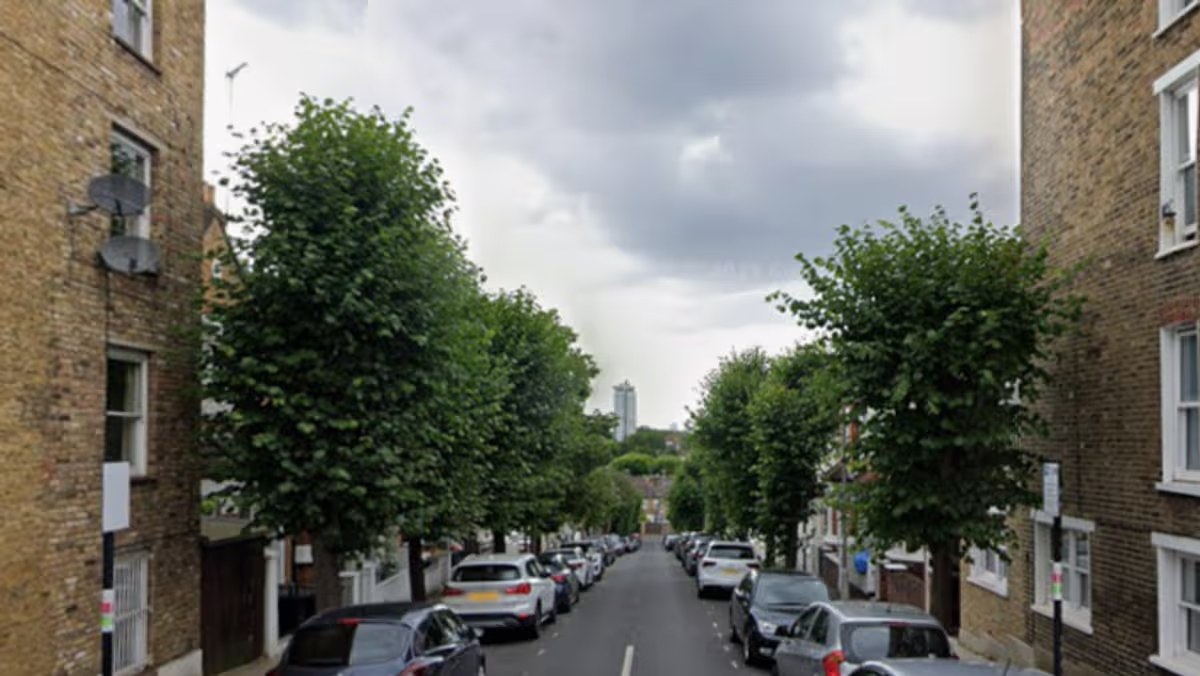




On a seemingly ordinary Thursday morning in early May, the quiet residential street of Platt Lane in Fallowfield, Manchester, was shattered by a profound and heartbreaking tragedy. Emergency vehicles, their sirens cutting through the spring air, converged on the area in a sudden and alarming swarm. The scene was one of urgent, focused chaos: police cars, ambulances, and even an air ambulance landing nearby, transforming the familiar neighbourhood into a cordoned-off tableau of crisis. For residents stepping out to begin their days, the sight was both incomprehensible and deeply unsettling. The very presence of so many responders signaled something grave, an intuition that was soon confirmed with the devastating news that a baby had died following an incident at a home. This loss, so profound and tender, cast an immediate pall over the community, marking May 7th, 2026, as a day of shared sorrow.
The human element of the emergency was etched into the memories of those who witnessed it. One neighbour, her voice likely still trembling in recollection, described the terrifying moment she saw a paramedic emerge from a property, carefully cradling a baby in their arms. That image—a symbol of both desperate hope and frantic effort—captured the raw vulnerability at the heart of the incident. Another resident spoke of the sheer volume of the response, noting multiple police vehicles and two ambulances clustered near the junction with Yew Tree Road, and overhearing the chilling mention of a child. These fragments of experience, shared in hushed tones, paint a picture of a community abruptly thrust into the periphery of a nightmare. The normal sounds of life were replaced by the static of police radios and the hushed, urgent conversations of professionals tasked with confronting the unthinkable.
As the initial flurry of medical urgency subsided, a different, more methodical phase began—one aimed at understanding. Detectives and forensic officers, clad in white suits, arrived to begin their meticulous work at the scene. Their presence introduced a solemn, investigative silence, a stark contrast to the earlier mobilization. An officer’s knock on a neighbour’s door, a simple request for any detail heard or seen, underscored the early stages of a process seeking answers where none could ease the foundational grief. The authorities were careful, providing only the barest of details: there had been an incident. The North West Ambulance Service, while confirming paramedics had attended a private address, respectfully declined to elaborate further, acknowledging the sensitivity of the situation. At this earliest stage, the central, agonizing question—whether the death was being treated as suspicious—remained unanswered, hanging heavily over the inquiry.
What remains, unequivocally, is the staggering weight of the loss. A young life, with its infinite potential and unlived futures, was tragically cut short. The death of a child is a unique cataclysm, reverberating far beyond the immediate family to touch all who hear of it. It prompts a collective pause, a moment of reflection on the fragility that underlies our everyday existence. For the parents and family, this is the beginning of an unimaginable journey of grief, a pain that words from outsiders can scarcely touch. For the community of Fallowfield, it is a shared trauma; the street where children play and neighbours chat has become the site of a profound sadness that will linger long after the police tape is gone.
In the wake of such events, a community’s character is often revealed through its silent solidarity. Neighbours, though they may not know the family directly, will feel this loss in the very fabric of their street. There will be shared glances of sympathy, unspoken understandings in the queue at the local shop, and a collective desire to offer support while respecting the overwhelming need for privacy. This instinct to gather, even metaphorically, around those in deepest mourning is a fundamental human response. It represents a recognition that some burdens, though borne personally, are too heavy not to be acknowledged communally.
As official investigations continue quietly behind the scenes, the priority now is compassion. The focus must rest on supporting the bereaved family through this darkest of times and allowing the proper authorities the space and time to conduct their necessary work. The story here is not one of sensational detail, but of a profound, simple, and devastating fact: a baby has died. From this point, the path forward is paved with grief for a family, sympathy from a city, and a poignant reminder of the preciousness and vulnerability of every single life. The rest, for now, is a private matter, shrouded in a sorrow that demands our utmost respect and quiet empathy.