



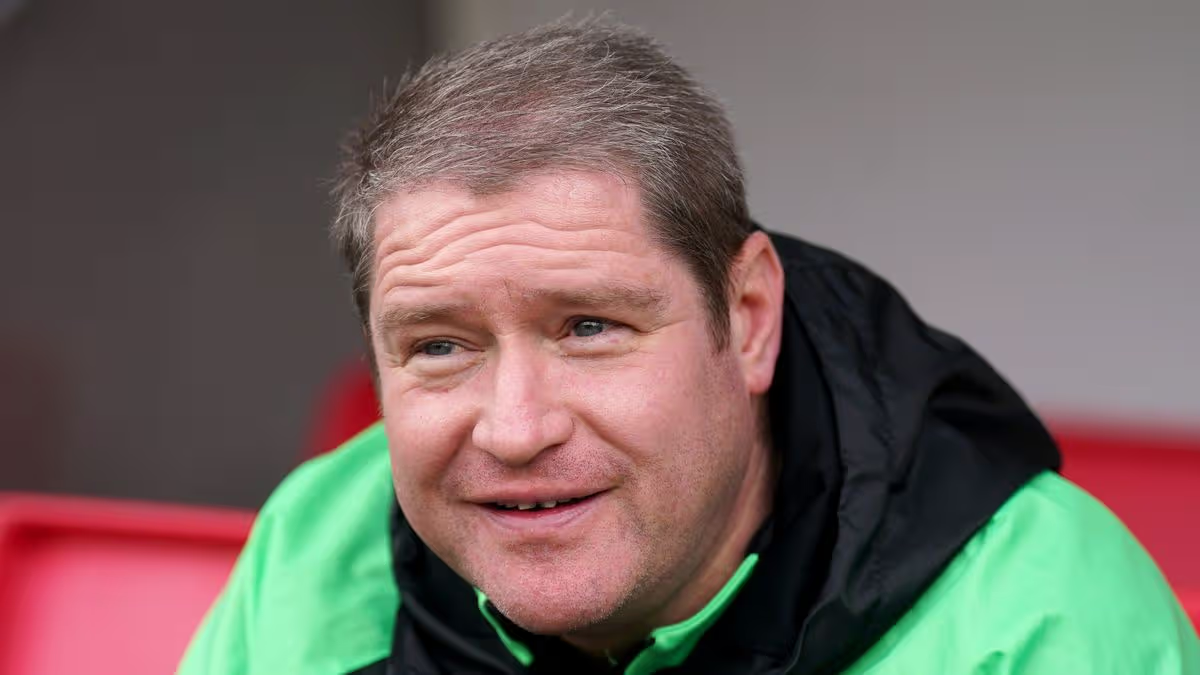
The football world was united in grief in September 2025 upon learning of the untimely death of Matt Beard, the respected manager who had led Liverpool Women to back-to-back Women’s Super League titles a decade prior. His passing at just 47 years old prompted an outpouring of tributes from across the sport, honoring a man remembered not only for his tactical acumen but for his character and profound impact on women’s football. However, behind the public mourning, a deeply personal and tragic story was unfolding for his family, one they believe is inextricably linked to his final professional chapter at Burnley FC Women. A pre-inquest review held in May 2026 brought these painful family concerns into a legal setting, revealing allegations that his treatment at the club contributed to a devastating decline in his mental health.
At the hearing in Ruthin, it was revealed that Matt Beard died on September 20, 2025, at the Countess of Chester Hospital from a hypoxic brain injury caused by suspension by ligature. He had resigned from his position as head coach of Burnley FC Women just a month earlier, in August. His family stated unequivocally that this departure was not a stepping stone to a new role, but a desperate escape from a situation that had become unbearable for him. They directly linked his exit from Burnley to a severe deterioration in his wellbeing, with his wife, Debbie Beard, providing powerful and heartbreaking testimony. “Matt left Burnley not to go to another job, he left Burnley because he wasn’t happy there,” she told the coroner. “Basically, they didn’t allow him to move on. I feel like they bullied him, to be honest.”
These allegations prompted Senior Coroner John Gittins to formally invite Burnley FC to become an “interested person” in the upcoming full inquest, a status afforded to any party whose acts or omissions may have caused or contributed to the death. The coroner also indicated he would seek further evidence from football agent Curtis Dawes and the League Managers Association (LMA), organizations Mr. Beard had reportedly consulted regarding his treatment at the club. Furthermore, Mr. Beard’s stepson, Scott Beard, raised concerns about the timing of social media posts he described as “quite damaging” to the manager. These statements painted a picture of a respected professional feeling isolated, pressured, and ultimately broken by his experiences at his last club.
The contrast between this private anguish and the public’s esteem for Matt Beard could not have been more stark. His funeral at Liverpool Metropolitan Cathedral was attended by approximately 600 people, a testament to his standing within the game. Mourners included Liverpool legend Ian Rush and former England internationals Casey Stoney, Lianne Sanderson, and Fara Williams, all paying their respects to a figure who had shaped the landscape of English women’s football. His career, which included management roles at Millwall, Chelsea, and West Ham, was crowned by his historic success at Liverpool, making the circumstances of his final months all the more poignant and troubling for those who knew him.
In response to the allegations raised at the pre-inquest review, a spokesman for Burnley FC stated, “Burnley FC is aware of an ongoing legal process and will not be making any comment at this time.” With the inquest adjourned to a future date, the football community is left awaiting answers. The proceedings aim to establish the facts surrounding his death, but they have already cast a sobering light on the immense pressures within professional sport and the critical importance of mental health support. The case underscores that behind the headlines and trophies, coaches and players navigate immense personal challenges, and the systems meant to support them must be robust and compassionate.
As the legal process continues, the legacy of Matt Beard remains multifaceted. He is celebrated as a title-winning pioneer who helped elevate women’s football, and deeply mourned as a devoted father-of-two from Hawarden, North Wales. His story, now at the center of a coroner’s investigation, has become a tragic catalyst for broader conversations about duty of care, workplace culture in football, and the silent struggles that can be hidden behind a public persona. The full inquest will seek to provide his family and the public with clarity, but its very existence is a solemn reminder of the human cost that can sometimes accompany life in the high-stakes world of professional sport.