


Paragraph 1
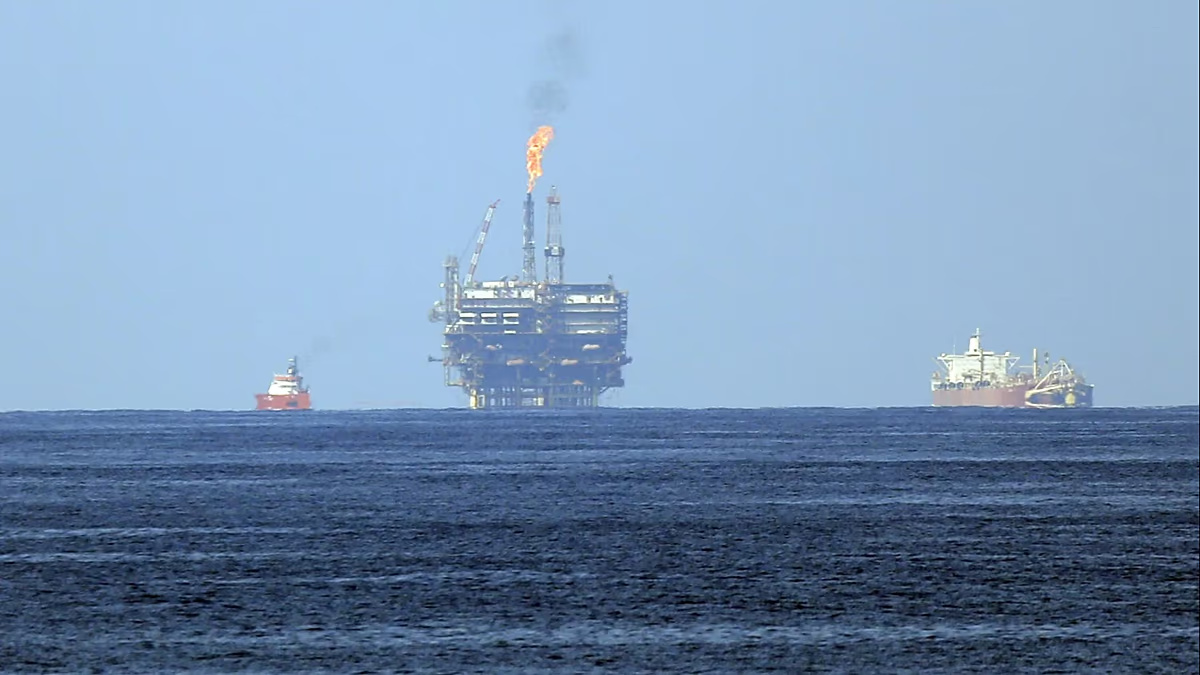
In early May 2026, a remarkable piece of engineering embarked on a journey from the Italian port of Ravenna toward the Libyan coast. This towering structure, an offshore module standing 45 meters tall and weighing over 5,200 tonnes, is bound for Libya’s Bouri oil field, situated roughly 170 kilometers offshore. More than just an industrial component, this module represents a meaningful step toward reducing energy waste and environmental impact in the Mediterranean. Its mission: to capture natural gas that is typically burned off or released during oil extraction—a common but environmentally costly practice known as flaring.
Paragraph 2
What makes this project especially noteworthy is its distinctly Italian signature. From conception to completion, it showcases Italy’s advanced capabilities in the energy sector. The module was designed and built by the Italian company Rosetti Marino at its Ravenna shipyard, under the direction of Mellitah Oil & Gas—a joint venture between Italy’s Eni and Libya’s National Oil Corporation. Specialized engineers, technicians, and laborers spent countless hours bringing the structure to life, supporting local employment and preserving high-value skills in Italy’s industrial supply chain. The installation itself will be handled by Saipem, another Italian firm, using one of the world’s largest crane vessels. This end-to-end Italian involvement reinforces the country’s reputation as a reliable and innovative partner in complex offshore energy projects.
Paragraph 3
Beyond engineering achievement, this initiative carries significant environmental promise. Flaring is a major source of avoidable carbon emissions worldwide, with vast amounts of usable gas literally going up in flames during oil production. The new module will capture that gas, process it, and reintroduce it into the energy system—effectively turning waste into a valuable resource. For Libya, this supports a national goal of eliminating routine flaring by 2030, reducing pollution and improving operational efficiency at the critically important Bouri field. In an era of growing climate awareness, such projects demonstrate how oil and gas operations can evolve to align with broader environmental objectives.
Paragraph 4
The project also reflects a deeper geopolitical and economic partnership between Italy and Libya. Italy’s Eni has long been a key player in Libya’s energy sector, and this collaboration reinforces Rome’s role as one of Tripoli’s closest European partners. In a region marked by instability, cooperation on energy infrastructure helps strengthen diplomatic ties and promotes mutual economic interests. For Europe, increased gas production capacity in Libya—a relatively nearby supplier—contributes to energy security and diversification, especially amid ongoing shifts in global energy flows. The Mediterranean, therefore, isn’t just a sea separating nations; it’s becoming an interconnected energy corridor where cooperation can foster regional stability.
Paragraph 5
This spirit of collaboration was underscored during an official visit to Rome by Libyan Prime Minister Abdulhamid Dabaiba in the same week the module set sail. His meetings with Italian Prime Minister Giorgia Meloni focused on strengthening bilateral cooperation, not only in energy but also in security, economic development, and support for Libya’s UN-led stabilization process. Such high-level engagement highlights how industrial projects and diplomatic relations often go hand in hand. Together, they aim to support Libya’s path toward institutional reunification and long-term growth—a goal that holds significance far beyond the energy sector.
Paragraph 6
In summary, the departure of the massive gas recovery module from Ravenna is more than a logistical milestone. It embodies a multi-layered story of technical expertise, environmental responsibility, and strategic international partnership. By converting wasted gas into usable energy, it supports Libya’s economic and ecological goals. By relying on Italian design and craftsmanship, it reinforces Italy’s industrial role on the global stage. And by deepening ties between Rome and Tripoli, it contributes to broader efforts toward Mediterranean stability and European energy resilience. In a world navigating complex energy transitions, projects like this remind us that innovation, cooperation, and sustainability can—and must—progress together.