


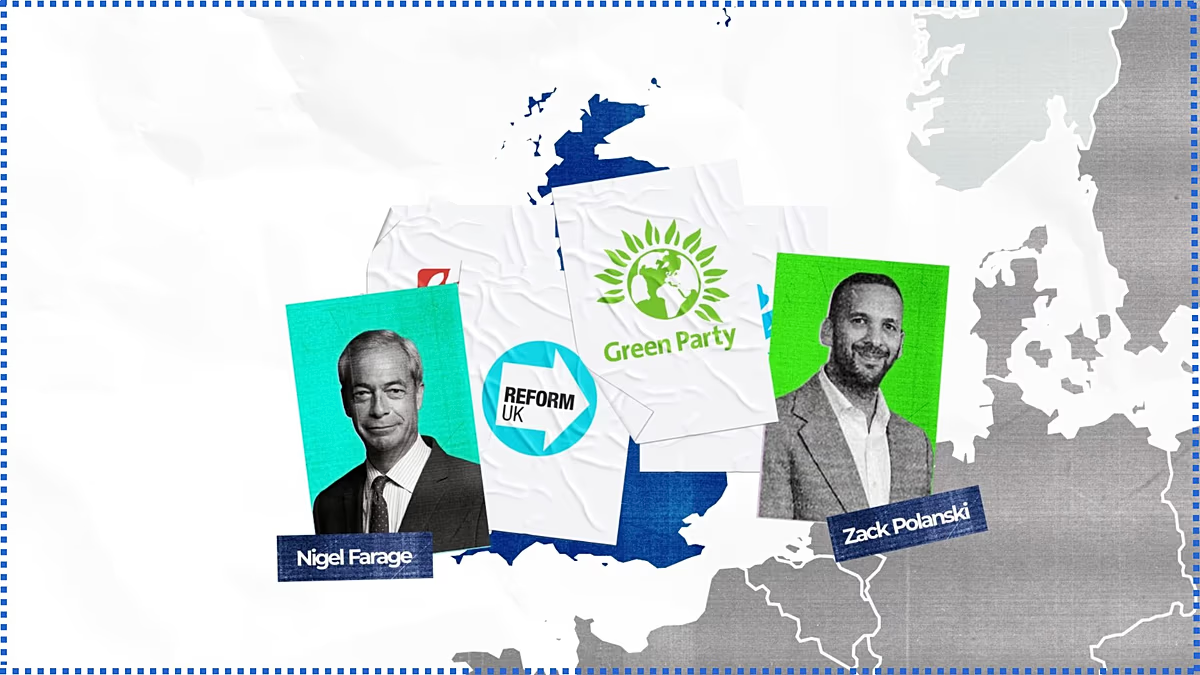
A nation once defined by its stable, two-party political system is undergoing a profound and turbulent realignment. Today, across Britain, voters are heading to the polls in a series of local and regional elections that will select councils, mayors, and the devolved parliaments in Scotland and Wales. While these ballots are formally about the delivery of community services—from bin collections and road repairs to local education and housing—they have become a dramatic referendum on the state of the country itself. The vote arrives at a moment of deep political discontent, where the traditional dominance of the Conservatives and Labour is being aggressively challenged, not by one, but by two insurgent forces: Nigel Farage’s right-wing Reform UK and the progressive Green Party. This contest reveals an electorate increasingly willing to abandon its old tribal loyalties in search of new answers.
The rise of these two parties, despite their limited experience in the granular work of local government, speaks to a powerful shift in voter priorities. Both have successfully nationalised these local elections, harnessing sweeping, emotionally charged issues that resonate far beyond town council chambers. Reform UK has doubled down on its foundational themes of Brexit sovereignty and stringent immigration control, presenting itself as the authentic voice of a populist right that feels betrayed by the Conservative establishment. Conversely, the Greens, under co-leader Zack Polanski, have mobilised a coalition focused on the climate crisis, a desire for closer ties with Europe, and, with increasing potency, a strong stance against the war in Gaza. This strategy has turned council elections into a proxy war over Britain’s identity, its role in the world, and its moral conscience.
The pressure is acutely felt within the two major parties, both of which are facing significant internal and external threats. For Prime Minister Keir Starmer’s Labour, the expectation of a sweeping national victory has been dampened by plummeting personal approval ratings and a sense of voter apathy. Projections suggest Labour may lose a substantial number of local council seats, while also confronting fierce challenges to its long-held dominance in the Welsh and Scottish parliaments. A poor showing, even with Starmer not personally on the ballot, could trigger serious internal unrest and even whispers of a leadership challenge, destabilising the party at a crucial moment. For the Conservatives, still reeling from their decisive 2024 general election defeat, these elections are a further test of their ability to regroup and present a credible alternative, a task complicated by the steady drain of support to Reform UK.
Beneath the immediate electoral fortunes lies a profound and unresolved national contradiction, a ghost from the Brexit referendum that continues to haunt British politics. Opinion polls consistently show a clear and growing majority of the British public now supports the idea of rejoining the European Union, with this sentiment particularly strong among Labour and Green voters. Yet, in a stunning paradox, the most explicitly pro-Brexit party, Reform UK, is simultaneously surging in popularity. Their argument—that Brexit’s potential was sabotaged by incompetent implementation, not by the concept itself—is finding a receptive audience among a segment of the electorate. This creates the surreal scenario of a nation leaning towards rejoin in sentiment, while flirting politically with the most ardent champions of the original departure.
Ultimately, these local elections, for all their focus on potholes and planning permissions, reveal a country still deeply unsettled about its fundamental direction. The results will offer a mosaic of local grievances, national frustrations, and clashing visions for the future. They tell the story of a polity fragmented, where no single party commands a broad, unifying narrative. The old left-right axis of British politics is being bent and fractured by new fissures: open versus closed, global versus local, pragmatic versus ideological. The outcome will send powerful signals about the viability of Starmer’s project, the survival prospects of the modern Conservative Party, and the true electoral weight of the insurgent Greens and Reform UK.
As the counts begin, the implications will ripple far beyond council chambers. For Keir Starmer, a weak performance could cripple his authority and complicate his ambitions for a strategic reset of the UK’s relationship with the European Union. For the political class as a whole, the message is one of profound volatility. The British public, a decade on from the decisive Brexit vote, appears no closer to a settled consensus. Instead, it is using local ballots to express a deep, searching restlessness, experimenting with new political vehicles in a continued, and often contradictory, search for a path forward. The story of tonight’s results will be less about who runs the libraries and more about the soul of a nation still very much in flux.