


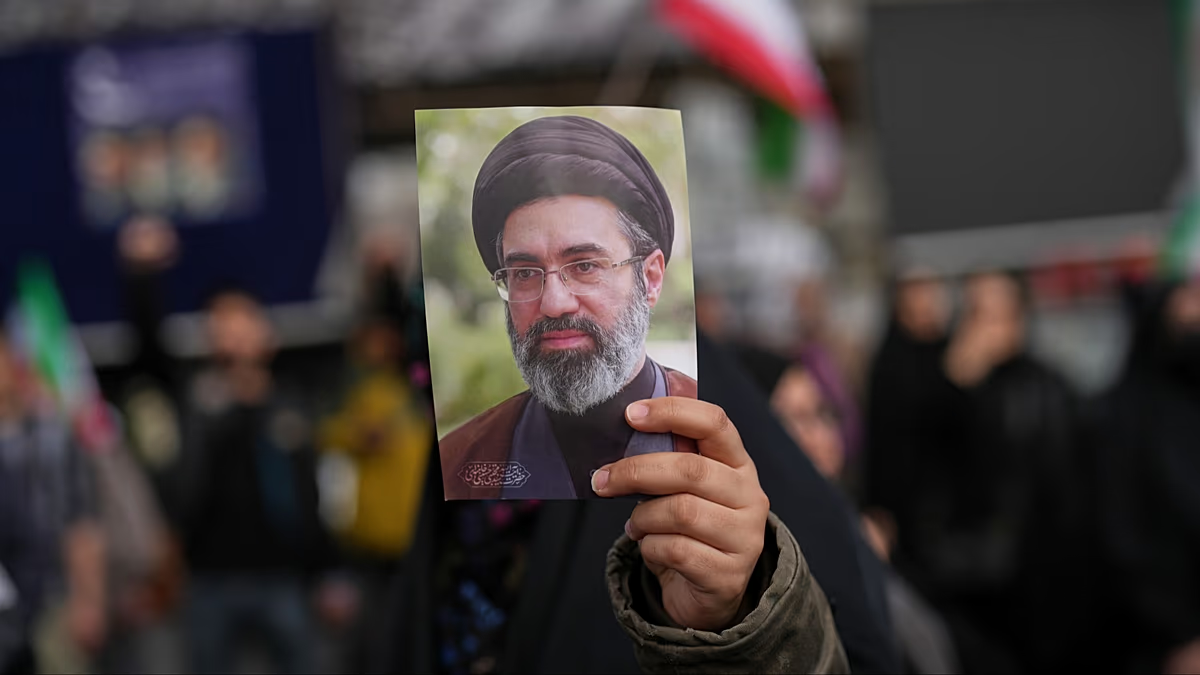
In the delicate and often opaque political landscape of Iran, a significant and unusual moment of transparency emerged. President Masoud Pezeshkian, in a meeting with trade unions, shared a deeply personal revelation: he had met privately with the nation’s new supreme leader, Ayatollah Mojtaba Khamenei. For over two and a half hours, Pezeshkian stated, they engaged in a “completely unmediated” conversation. This was the first public confirmation from a senior official that the new leader, appointed following his father’s death, had been seen at all since his ascension more than two months prior. The president offered no specifics on the time, location, or other attendees, but he painted a vivid picture of the encounter’s tone, describing Mojtaba Khamenei’s “deeply sincere and humble behaviour” which fostered an atmosphere of “trust, calmness, empathy, and direct dialogue.” For a public accustomed to ritualized and distant images of leadership, this description of a personal, transformative dialogue was striking.
This revelation took on profound importance against a backdrop of intense speculation and mystery. Mojtaba Khamenei was elevated by the Assembly of Experts after his father, the long-reigning Ayatollah Ali Khamenei, was killed in U.S. and Israeli strikes that marked the opening of a regional conflict. However, from that moment forward, the new leader vanished from public view. He made no speeches, released no videos, and was seen by no one outside a presumed tight inner circle. This absence was not a quiet one; it roared with speculation about his physical condition. International reports, citing unnamed Iranian officials, suggested he had sustained grievous injuries in the same strikes, requiring multiple surgeries on his limbs and leaving him with severe facial burns that impacted his ability to speak. While U.S. officials echoed these claims, Tehran maintained an official silence, neither confirming nor denying the alarming reports.
The vacuum of official information was filled with confusing and sometimes contradictory signals from within Iran’s own media apparatus, further deepening public anxiety. A mural unveiled in one city depicted Mojtaba Khamenei alongside revered “martyrs” of the state, including his deceased father and the slain commander Qassem Soleimani. The implied association with figures known to be dead sent a shockwave through observers. Even more directly, a post by the IRGC-affiliated Tasnim News Agency briefly referred to him as the “martyred leader of the revolution” before hastily retracting the label as an error. These incidents, whether bureaucratic mistakes or provocative symbolism, acted like sparks on the dry tinder of public uncertainty, amplifying fears that the new leader might be incapacitated or worse, and calling into question the stability of the succession itself.
It is within this context of swirling rumours and palpable tension that President Pezeshkian’s account of a lengthy, direct, and lucid meeting must be understood. His narrative served a clear and urgent political purpose: to quell the crisis of confidence. By describing a leader fully engaged in empathetic dialogue, Pezeshkian’s words were a deliberate counter-narrative to the image of a hidden, incapacitated figure. He was attempting to project an image of continuity, calm, and functional authority from the very pinnacle of the system. This was not merely a personal anecdote; it was a state-building exercise, an effort to replace disturbing imagery of injury and absence with one of composed, hands-on governance. The subtext was a reassurance to both the domestic public and the international community that the Islamic Republic’s command structure remained intact and operational.
Alongside this pivotal revelation, President Pezeshkian also addressed pressing domestic concerns, weaving them into a broader theme of national unity. He called for stricter management of energy consumption and warned against excessive spending, pragmatic appeals in an economy strained by conflict and sanctions. More significantly, he issued a caution against the dangerous rhetoric of division, urging that citizens “should not simply be accused of corruption, treason or espionage.” This plea for social cohesion stood in stark contrast to the reality he acknowledged: Iran’s judiciary had accelerated the pace of severe punishments, including executions, since the war began. His speech, therefore, walked a delicate line—on one hand, affirming the system’s strength through his meeting with the supreme leader, and on the other, gently counselling against the internal fracturing that often accompanies such periods of external pressure and internal uncertainty.
Ultimately, this episode illuminates the challenging realities of leadership transition in a time of war and secrecy. The prolonged invisibility of Mojtaba Khamenei created a vulnerability, a space where doubt could undermine authority. President Pezeshkian’s personal testimony was a tool to seal that breach. Yet, the very need for such a maneuver highlights the fragility of the moment. The combination of a leader seen only through second-hand description, a climate of judicial severity, and public appeals for unity reveals a state apparatus working to stabilize itself after a profound shock. The path forward for Iran hinges on whether this crafted image of confident, dialogue-driven leadership can withstand the pressures of ongoing conflict, economic hardship, and the unresolved questions that still linger in the shadows, unanswered.