


Of course. Here is the humanized and expanded summary, structured into six paragraphs, adhering to the requested length and detail.
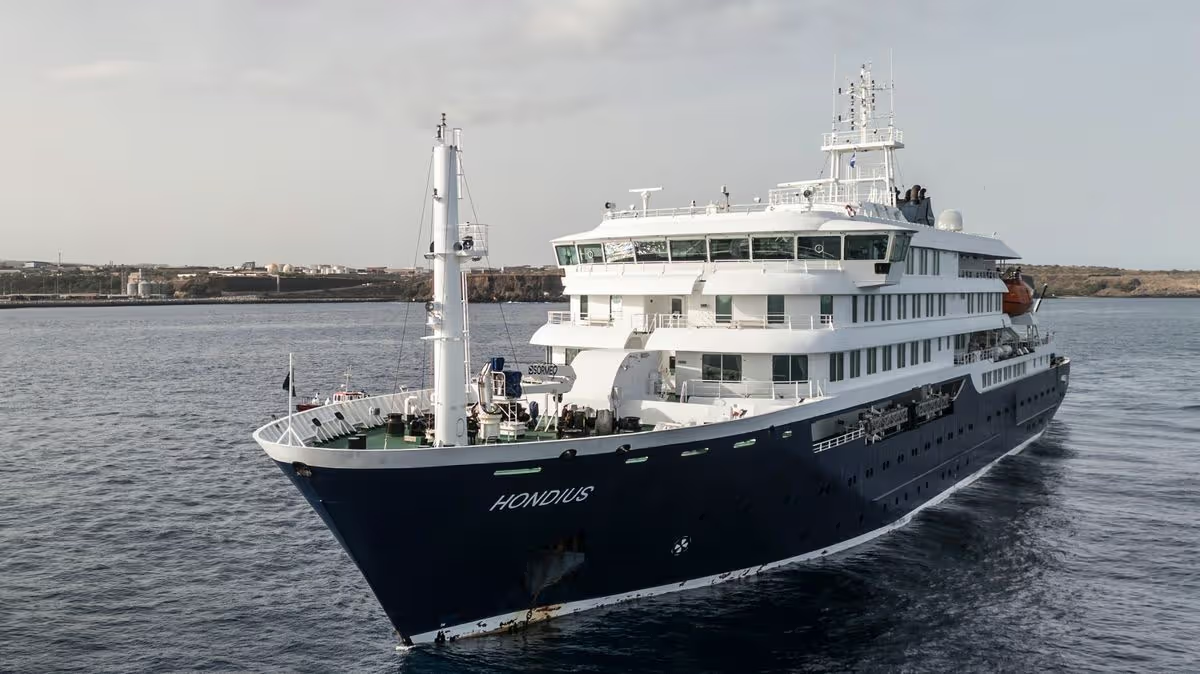
The recent outbreak of hantavirus on the cruise ship MV Hondius has shifted from a story of alarm to one of cautious hope, as global health officials confirm that the two British patients who were urgently evacuated are showing significant improvement. This development brings a measure of relief to a situation that underscored the complexities of managing a rare but serious infectious disease in a confined, international environment. The World Health Organisation (WHO), through Dr. Maria Van Kerkhove, has provided these encouraging updates, highlighting not only the patients’ progress but also the effective international coordination required to handle such medical emergencies.
The first of these patients, a 69-year-old British man, was evacuated on April 27th. He was transferred to South Africa, where he is currently receiving intensive care at a private health facility in Sandton, Johannesburg. His condition, which was initially serious, has notably improved, according to the latest reports. This case illustrates the critical importance of rapid access to advanced medical facilities, even when an incident occurs far from home. The logistical and medical effort to stabilize and transport a patient from a ship to a specialized unit in another country is a monumental task, successfully executed here.
The second Briton, Martin Anstee, 56, was evacuated just days later on Wednesday. He was flown to the Netherlands to receive specialist medical care unavailable on the ship or in the immediate region. He is one of two patients, including another Briton, who remain hospitalized there. Dr. Van Kerkhove confirmed that both individuals in the Netherlands are now reported as stable. This dual evacuation to different continents—South Africa and the Netherlands—demonstrates the tailored approach necessary in global health crises, where patient needs and available specialist expertise dictate the response pathway.
Dr. Maria Van Kerkhove’s statement at a WHO press briefing crystallized this positive turn. “I am very happy to say the patient in South Africa is doing better, and the two patients in the Netherlands we hear are stable. So that is actually very good news.” These words, delivered by a leading authority in infectious diseases, carry significant weight. They move the narrative beyond clinical statistics, offering a human reassurance to the patients’ families, the ship’s community, and the public following the event. Her emphasis on the news being “very good” reflects the relief felt by the responding health networks.
The backdrop to these evacuations is the hantavirus itself—a pathogen typically associated with rodent exposure and known for causing severe respiratory syndromes. Its occurrence on a cruise ship is unusual and prompted a swift public health response to contain the outbreak and protect other passengers and crew. The fact that the most critically affected individuals are now recovering is a testament to the efficacy of that response, from initial diagnosis on board to the orchestration of high-level care abroad. It speaks to the resilience of the patients and the capability of international medical systems to collaborate under pressure.
In conclusion, the situation regarding the Britons evacuated from the MV Hondius is evolving favorably. While the outbreak’s investigation and broader management continue, the focus on these individual patients yields a hopeful outcome. Their journeys from a stricken ship to intensive care units in Johannesburg and Dutch hospitals highlight a chain of survival forged by modern medicine and global cooperation. The updates from the WHO not only report on improving health but also silently commend the unseen efforts of countless healthcare professionals, pilots, logisticians, and officials who made these recoveries possible.