



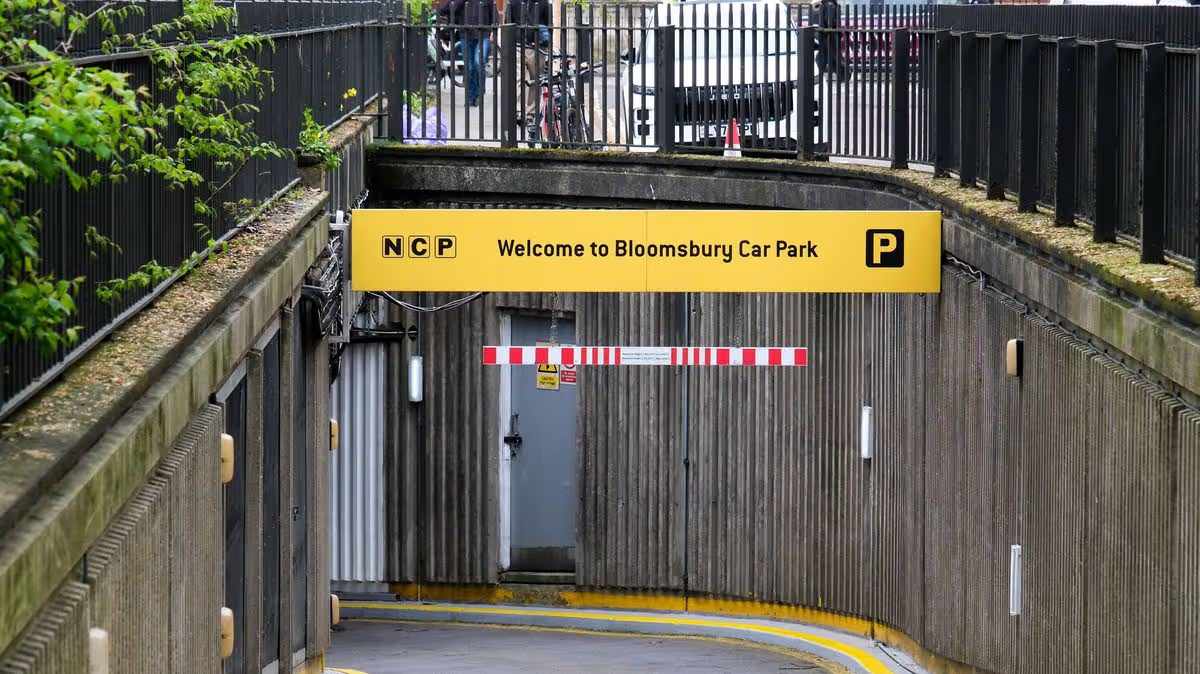
The unfolding administration proceedings for National Car Parks (NCP) represent not merely a corporate failure, but a profound moment of uncertainty for the British high street and its workforce. The UK’s largest and oldest private car park operator, a ubiquitous feature of urban life for generations, now teeters on the brink, placing 340 sites and approximately 700 jobs in immediate jeopardy. With PricewaterhouseCoopers appointed to oversee the process, the company’s collapse signals the potential closure of a critical piece of national infrastructure, threatening to leave city centres, hospitals, and transport hubs without vital parking services. The scheduled creditors’ meeting marks a critical juncture, determining whether a path to survival can be charted or if the company will be dismantled, impacting millions of motorists and hundreds of employees whose livelihoods are now hanging in the balance.
To understand the gravity of this situation, one must appreciate NCP’s deep-rooted history, which is intrinsically woven into the fabric of post-war Britain. The company’s modern identity was forged in 1948, born from the innovative conversion of a London bombsite—a poignant symbol of regeneration from the ruins of war. Under the ambitious leadership of Sir Ronald Hobson and Sir Donald Gosling, who adopted the “National” moniker in 1959, NCP embarked on a dramatic expansion. Throughout the 1960s and 1970s, the company became synonymous with the rise of the concrete multi-storey car park, enabling the car-centric boom that defined the era. These structures, often seen as brutalist eyesores yet undeniable necessities, facilitated the economic vitality of town and city centres across the nation, making NCP a quiet but essential architect of modern British commerce.
The current crisis stems from a complex mix of financial pressures that have eroded the once-dominant business model. Acquired by the Japanese firm Park24 in 2017, NCP has faced a perfect storm of challenges: the seismic shift towards remote work has permanently altered commuter patterns, reducing demand for long-stay city centre parking. The parallel rise of sustainable transport initiatives, cycling lanes, and pedestrianised zones has further diminished the primacy of the private car in urban planning. Compounded by soaring operational costs, significant debt burdens, and the volatile aftermath of the pandemic, the company’s financial foundations have crumbled. The administrators, Zelf Hussain, Rachael Maria Wilkinson, and Mark James Tobias Banfield, now face the formidable task of navigating these debts and liabilities, as confirmed by recent approvals for unpaid pre-administration costs.
The human cost of this administration is stark and deeply concerning. Behind the statistic of 700 jobs at risk are managers, maintenance workers, attendants, and administrative staff whose families depend on this income. The anxiety permeating these employees’ lives is immense, as they await news on whether they will have a job next month. Furthermore, the potential closure of 340 car parks would send disruptive ripples through local economies. Shops, restaurants, theatres, and hospitals that rely on accessible customer and visitor parking could see a sharp decline in footfall, exacerbating the struggles already faced by the UK’s high streets. For many towns, the local NCP is not just a parking lot but a key piece of civic utility, and its loss would create a void not easily filled.
As the administration process moves forward, several potential outcomes remain on the table. The administrators may seek to sell the company as a going concern, perhaps breaking it into regional portfolios to attract buyers. Alternatively, they might be forced to liquidate assets, selling off prime real estate parcels individually, which could lead to widespread site closures and redevelopment. There is a glimmer of hope that a buyer could emerge to rescue much of the operations and preserve jobs, but this would require a compelling new vision for the business in an increasingly transport-hostile and digital environment. The forthcoming decisions will be a test case for the future of urban parking itself.
Ultimately, the plight of NCP is a poignant symbol of a nation in transition. It marks the end of an era defined by the unquestioned dominance of the private car in city centres and forces a collective reckoning with what comes next. While the company’s iconic blue and white signs may yet survive in some form, its collapse undeniably closes a major chapter in British post-war history. The coming weeks will determine not only the fate of its employees and sites but also serve as a catalyst for broader conversations about urban mobility, property use, and how our city centres adapt to a new, less car-dependent future. The story of NCP, born from a bombsite and now facing its own ruin, reflects the relentless and often unforgiving cycle of economic and social change.