




Here is a humanized and expanded summary of the event, crafted into six paragraphs.
Paragraph 1: A Sovereign’s New Role in Historic Tradition
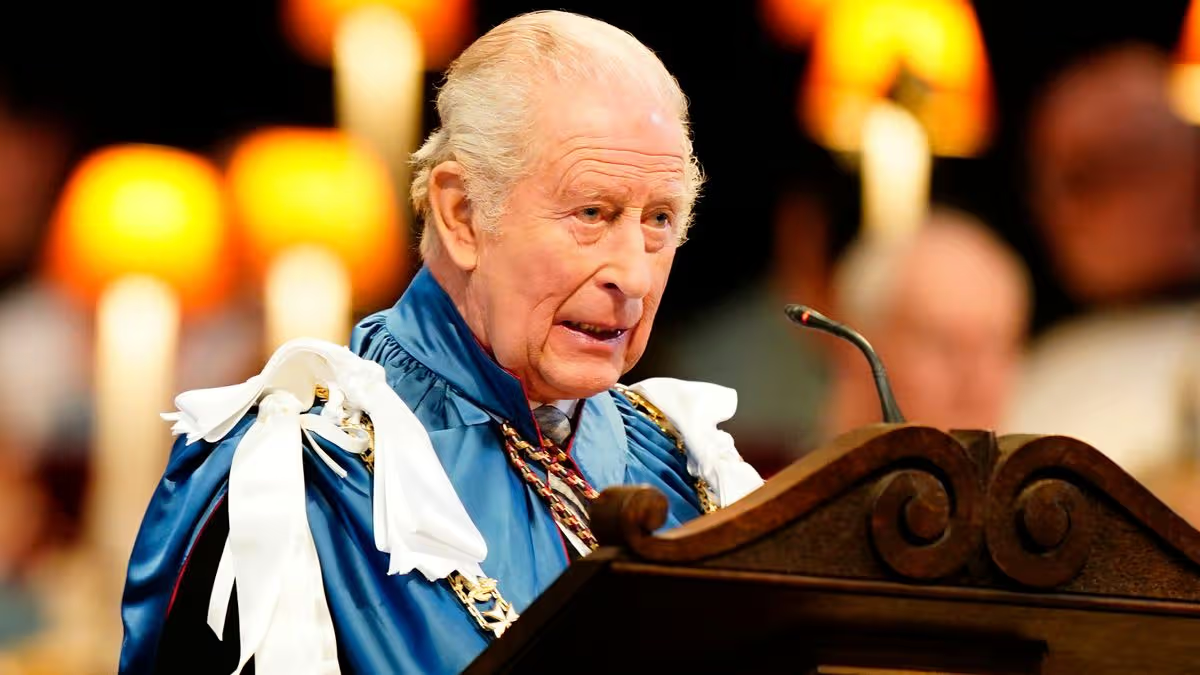
On a significant morning in London, King Charles III participated in a ceremony steeped in history and global service, attending his first Service of Dedication and Commemoration for the Order of St Michael and St George as monarch. The event, held at the majestic St Paul’s Cathedral, is a quadrennial tradition that honors individuals who have rendered exceptional service abroad or in foreign and Commonwealth affairs. For Charles, this was not merely a state function but a meaningful step into a longstanding royal duty—bestowing honors and acknowledging contributions that strengthen international ties and diplomacy. The Order itself, an esteemed order of chivalry, sees its members recognized by the Sovereign on the advice of the Prime Minister, blending constitutional process with ancient tradition.
Paragraph 2: Pomp, Pageantry, and Personal Welcome
The King’s arrival was marked by the resonant fanfare of state trumpeters positioned on the cathedral’s west steps, a clarion call announcing the royal presence. Upon his approach, he was formally welcomed by the Right Honourable Lady Mayor of the City of London, Dame Susan Langley, embodying the historic link between the Crown and the City. Charles, adorned in the distinctive blue cloak of the Order, was then escorted inside by the Duke of Kent, who serves as the Order’s Grand Master. This procession underscored the personal and institutional connections within the royal framework, with the Duke of Kent—a senior royal who has devoted decades to similar duties—guiding the King into his new role within this specific fraternity of service.
Paragraph 3: A Solemn Procession and Reflection Within the Cathedral
The service, lasting approximately an hour, was a moving spectacle of pageantry and solemnity. King Charles processed through the cathedral alongside a choir, the members of His Majesty’s Body Guard of the Honourable Corps of Gentlemen at Arms, and the Lady Mayor bearing the ceremonial Pearl Sword. This visual tapestry of music, military tradition, and civic authority culminated at the altar in the dome, where Charles took his place. There, he led the congregation in a moment of remembrance, declaring, “Let us remember before God, members of the Order lately departed.” This act centered the ceremony not on power, but on piety and collective memory, honoring the continuum of service that transcends individual lifetimes.
Paragraph 4: Honoring the Departed: A Roll Call of Distinguished Service
The call for remembrance was followed by a concrete and poignant tribute. Sir Jonathan Taylor, the Gentleman Usher of the Blue Rod, read a roll call of members who had passed away since the last ceremony. The names included eminent figures such as British diplomat Sir Crispin Tickell, who died in 2022 at age 91, and former British ambassador to Germany Christopher Mallaby, also deceased in 2022 at 85. This reading transformed the abstract concept of “service” into a litany of real lives and careers dedicated to international relations, environmental advocacy, and diplomacy. It served as a powerful reminder that the honors bestowed by the Order represent a lifetime of commitment, and that their legacy is formally cherished by the institution and the Crown.
Paragraph 5: The Ceremony’s Conclusion and Historical Roots
As the service drew to a close, another fanfare rang out, and the congregation rose to sing the national anthem, a unifying moment of patriotic reflection. The procession then retraced its path through the cathedral, with King Charles departing at around midday. The history of the Order itself, established in 1818 by the Prince Regent (later King George IV), adds profound context to these rituals. It was founded to mark the Ionian Islands and Malta coming under British protection, originally to honor the contributions of citizens in those territories. Today, its scope has broadened globally, but the ceremony at St Paul’s remains a tangible link to that origin, a four-yearly gathering that reaffirms the Crown’s role in acknowledging service that bridges nations and cultures.
Paragraph 6: The Modern Significance of an Ancient Order
While the trappings—cloaks, swords, fanfares, and processionals—are evocative of a bygone era, the purpose of the Order and this ceremony is profoundly modern and relevant. In an interconnected world, the quiet work of diplomacy, international cooperation, and dedicated service abroad is more crucial than ever. King Charles’s participation in this first service as King symbolizes his personal commitment to this sphere of duty, one that aligns with his long-standing interests in global issues and the Commonwealth. The event was not a mere relic of the past but a living tradition, adapting to honor contemporary contributors while solemnly remembering the pillars of the past, ensuring that the values of distinguished service and international goodwill remain central to the nation’s identity under the new reign.