



The past day has brought a devastating reminder of the brutal, daily reality of the war in Ukraine. Cities far from the front lines have been shaken by a coordinated wave of Russian airstrikes, leaving communities in mourning and rescue workers sifting through the rubble in a desperate search for survivors. These are not isolated incidents on a distant battlefield; they are attacks on urban centers where people were simply trying to live their lives, underscoring the profound and indiscriminate danger facing civilians as this conflict grinds on.
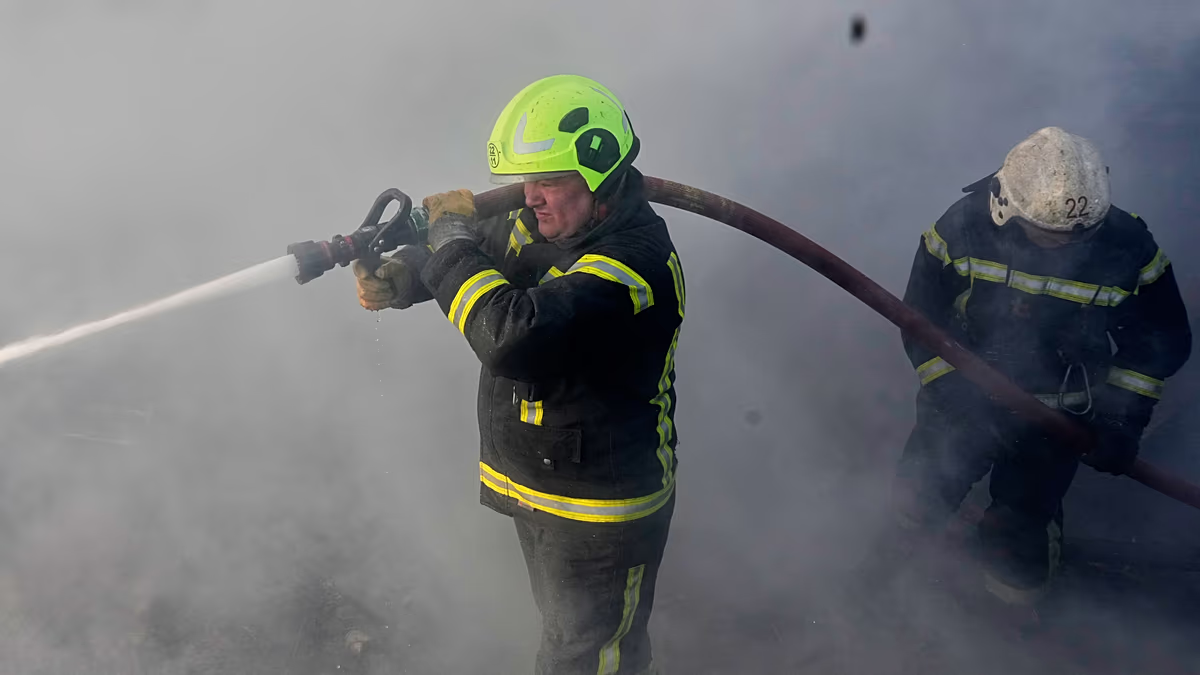
In Zaporizhzhia, the morning was shattered by the impact of powerful guided bombs. At least twelve people were killed and thirty-seven wounded in an attack that tore through the fabric of the city, damaging both residential apartments and industrial facilities. The scenes that followed were chaotic and heartbreaking. Footage from the aftermath showed burning cars and firefighters battling to control the flames, their work a stark contrast to the ordinary streets now transformed into a scene of destruction. On the pavement, visible stains of blood and a covered body lying nearby served as grim testaments to the sudden violence. Officials warned that the death toll could still rise as emergency teams continued their painstaking rescue operations, digging through debris with the hope of finding life.
Similarly, in Kramatorsk, the use of air-dropped bombs in the city center resulted in the deaths of at least five people. This attack, targeting the heart of a community, highlights a chilling pattern: urban areas, where daily commerce and family life converge, are increasingly becoming the epicenters of this war’s tragedy. The strikes in these cities, separated by distance but united in suffering, represent a deliberate escalation in the targeting of civilian infrastructure, a tactic condemned by Ukrainian authorities and international observers alike.
The violence was not confined to these two locations. Further casualties were reported in Dnipro and Nikopol from the same widespread wave of attacks, bringing the nationwide death toll from this series of strikes to at least twenty-six. Emergency services worked through the night, their headlights cutting through the darkness as they cleared debris and provided critical aid to the injured. By Wednesday, many victims remained hospitalized, fighting for their lives, while authorities cautioned that the full scale of the devastation was still emerging as rescue teams accessed all affected sites. Each number in the rising toll represents a person—a neighbor, a parent, a child—whose life has been abruptly ended or forever altered.
Ukrainian officials have consistently accused Russia of systematically targeting civilian infrastructure, a claim given grim weight by this latest barrage, which also included reported strikes in the northern region of Chernihiv. These actions, they argue, are not strategic military errors but a calculated effort to terrorize the population and break the nation’s spirit by making nowhere feel safe. The psychological impact is as profound as the physical destruction, casting a shadow of fear over every marketplace, apartment block, and city square.
As the world absorbs the news of these latest casualties, the human cost of the war comes into sharp, sorrowful focus. Behind the statistics are stories of unimaginable loss and resilience. Firefighters battling infernos, medics kneeling on bloody pavement, and families waiting in agonizing uncertainty for word of their loved ones—these are the enduring images of a conflict that continues to claim lives far from the trenches. The attacks on Zaporizhzhia, Kramatorsk, and beyond are a stark, human tragedy, a somber chapter in a war that shows no sign of relenting in its assault on ordinary people.