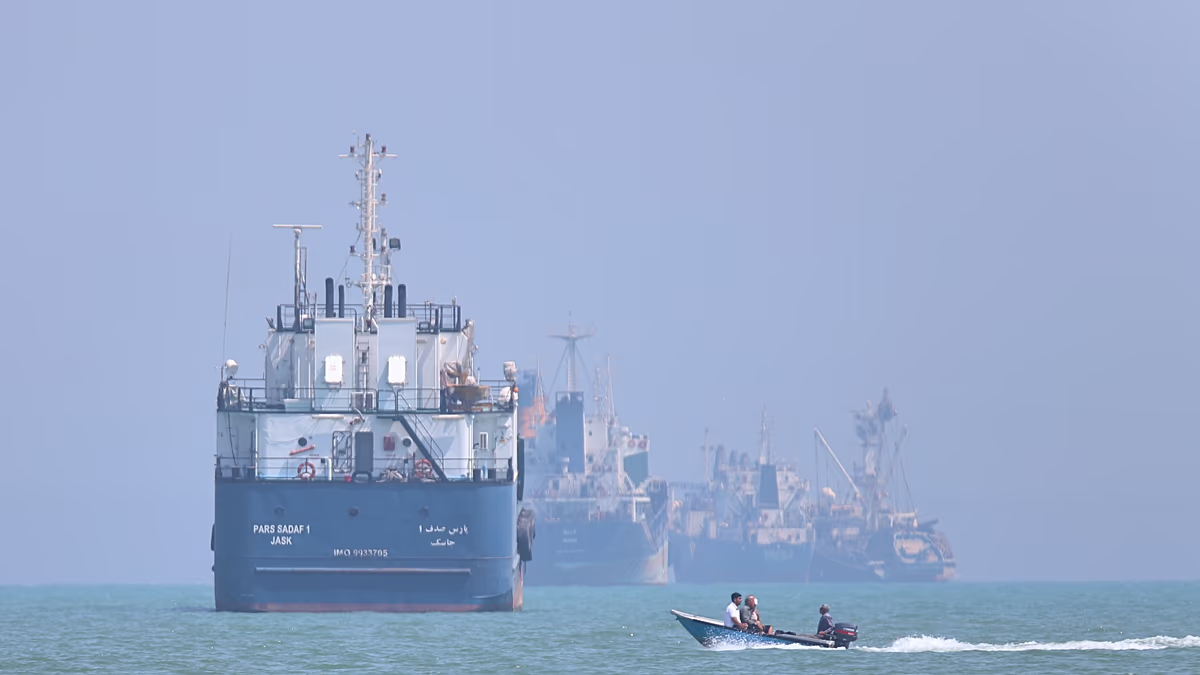




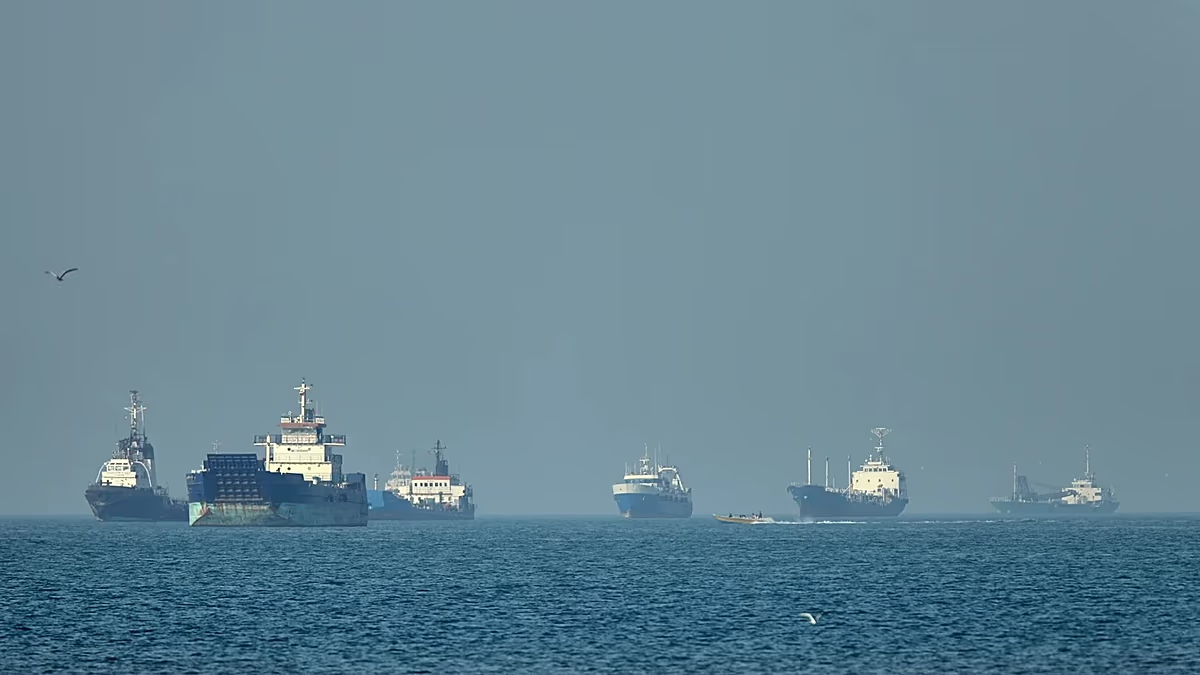
The security of the Strait of Hormuz, a vital artery for global oil shipments, remains a fragile and contested issue amid heightened regional tensions. On Wednesday, Iran’s Revolutionary Guard Corps (IRGC) issued a statement on social media asserting that safe and stable passage for commercial shipping through the strait would be ensured. The IRGC thanked international ship captains and owners for complying with what it described as Iran’s maritime regulations, framing this cooperation as a contribution to regional security. This declaration came alongside the claim that threats from an “aggressor” had been neutralized and that new protocols were now in place. The message appears designed to project an image of control and responsibility over the crucial waterway, which Iran has long viewed as within its sphere of strategic influence, even as it remains a focal point of international confrontation.
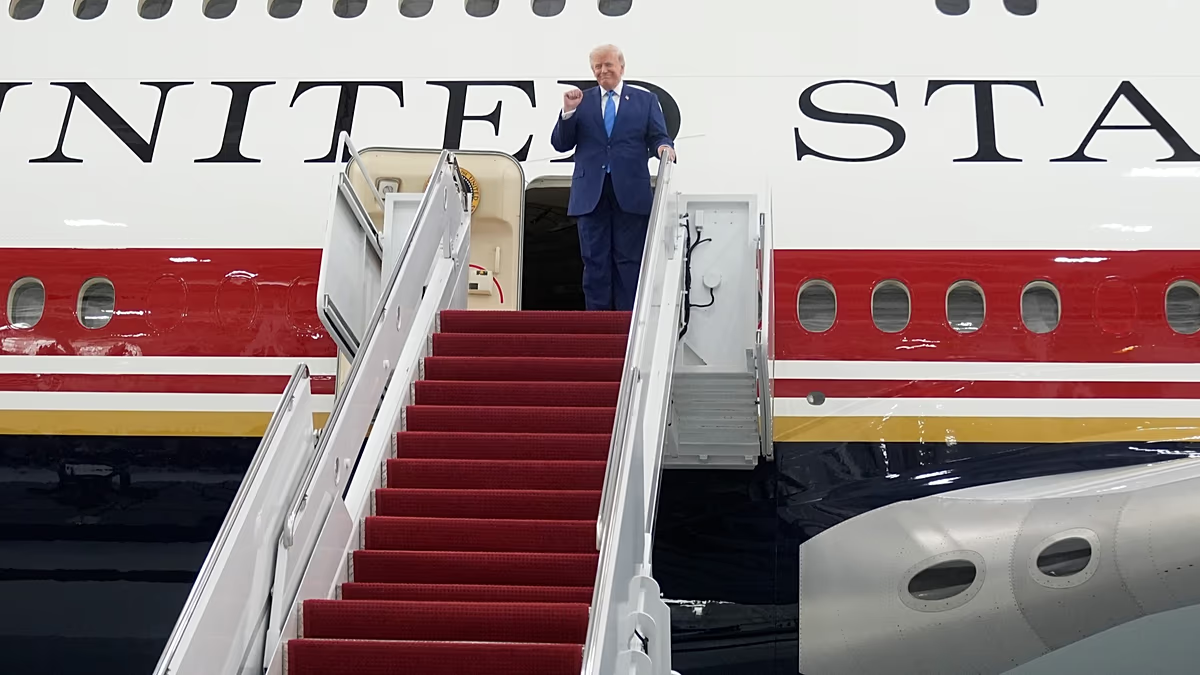
Simultaneously, a starkly different narrative emerged from the United States, with President Donald Trump leveraging social media to issue a blunt threat. He warned that the U.S. would restart bombing campaigns against Iran “at a much higher level and intensity” if Tehran did not agree to a deal to end the ongoing conflict. In a conditional offer, Trump suggested that if Iran complied with terms he claimed were already agreed upon, the “Epic Fury” operation would end and the blockade—presumably referring to restrictions on Iranian ports—would be lifted, allowing the Strait of Hormuz to be “OPEN TO ALL, including Iran.” This post underscored the volatile, transactional nature of the diplomacy, where public threats and promises are intertwined. Earlier that same day, President Trump announced a pause in the newly launched U.S. mission to escort commercial vessels through the strait, a mission barely two days old. He cited a desire to finalize a peace deal, stating that “great progress has been made,” and attributed the pause to requests from Pakistan and other nations, though he emphasized the blockade on Iran would continue in full force.
The backdrop to these political statements is a scene of persistent military danger and violence in the strait itself. Just days prior, hostilities had sharply escalated, breaking a month-long truce. Iran had launched missiles and drones at U.S. forces, while the U.S. reported striking six Iranian boats accused of threatening merchant ships. The tangible human and economic cost of this tension was made clear when French shipping giant CMA CGM reported that one of its vessels, the CMA CGM San Antonio, had been attacked in the Strait of Hormuz. The attack resulted in injured crew members and damage to the ship, forcing the evacuation of the wounded. This incident, occurring the day after the U.S. launched its “Project Freedom” escort operation, highlighted the very real risks faced by seafarers and global commerce, demonstrating that diplomatic maneuvering in capitals was far removed from the perilous reality on the water.
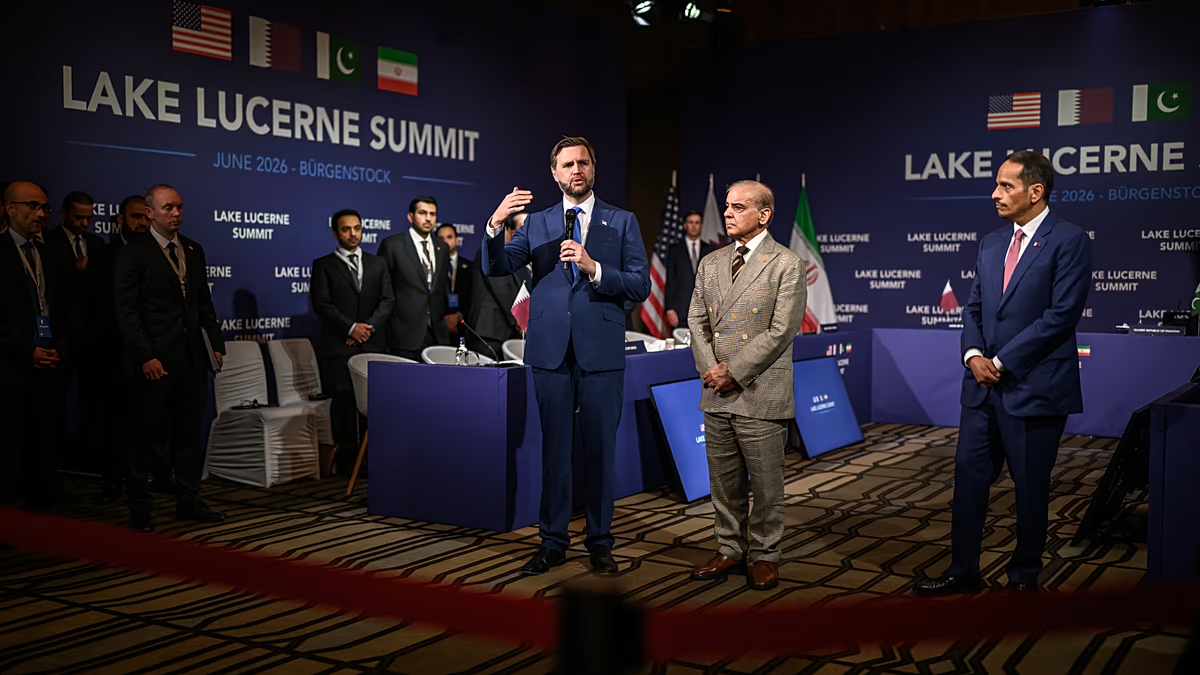
Amid this climate, diplomatic channels were actively being pursued elsewhere, notably in Beijing. Iran’s Foreign Minister, Abbas Araghchi, met with his Chinese counterpart, Wang Yi, as China—a key buyer of Iranian oil despite U.S. sanctions—positioned itself as a potential mediator. Wang Yi called for an immediate end to hostilities and urged the U.S. and Iran to reopen the Strait of Hormuz “as soon as possible,” emphasizing that a return to fighting was “unacceptable” and that continued negotiation was essential. This meeting was strategically timed, occurring just days before a scheduled visit by President Trump to China, a trip that had already been delayed by the war. China’s involvement introduces another complex layer to the crisis, balancing its significant economic interests with a stated preference for diplomatic resolution, while the U.S. maintains its campaign of “maximum pressure.”
The conflicting positions on the ground were further illustrated by the war of words and contradictory claims between Iran and U.S. allies. For a second consecutive day, the United Arab Emirates reported intercepting missiles and drones launched from Iran, a claim that Iran’s military command “categorically” denied. Meanwhile, U.S. Defense officials stated they were “not looking for a fight” but promised “overwhelming and devastating” force in response to any new Iranian attacks. In Israel, the air force chief signaled readiness to deploy forces eastward if needed. Iranian President Masoud Pezeshkian reiterated Tehran’s openness to dialogue but firmly rejected the U.S. “maximum pressure” demands as “impossible.” These exchanges reveal a deep-seated mistrust and the potential for miscalculation, where defensive postures and offensive capabilities are openly displayed, perpetuating a cycle of threat and response.
Ultimately, the situation surrounding the Strait of Hormuz encapsulates a high-stakes geopolitical standoff with profound implications for global energy markets and regional stability. The war has already battered the world economy, and the fragile ceasefire remains imperiled by incidents like the attack on the CMA CGM San Antonio and the relentless rhetorical volleys between leaders. The concurrent messages from the IRGC guaranteeing safety and from the U.S. threatening intensified warfare create a bewildering picture for the international community and commercial shippers. The path forward hinges on whether the paused diplomacy can yield a sustainable agreement, or if the breakdown of talks will trigger the renewed, catastrophic conflict that leaders claim they wish to avoid. The seafarers transiting the narrow strait, the global economy reliant on their safe passage, and the populations of the region remain caught in the balance, awaiting a decisive turn toward either lasting peace or escalated war.