
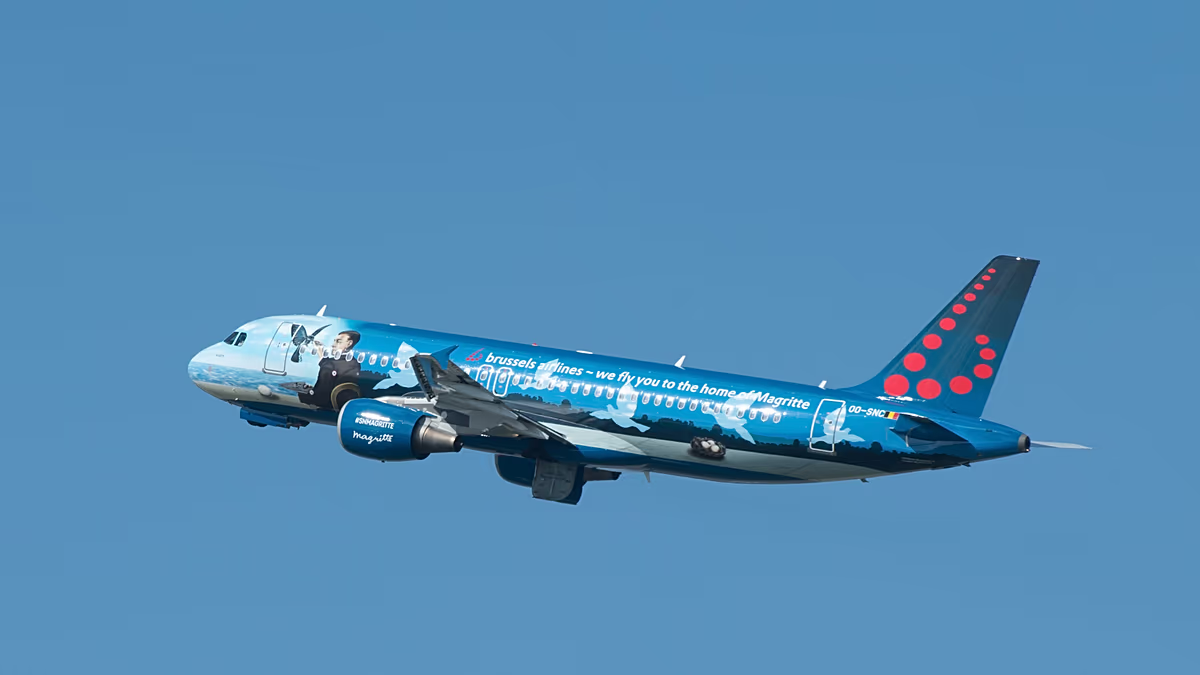


In the face of growing traveler anxiety about summer disruptions, Brussels Airlines has moved to provide reassurance. The carrier, a member of the sprawling Lufthansa Group, has stated it has no plans to cancel flights “at the moment,” despite the turbulent geopolitical landscape. This uncertainty stems from the ongoing conflict in the Middle East and related disruptions in the Strait of Hormuz, a critical global chokepoint for oil and fuel shipments. The specter of jet fuel shortages has loomed large in the industry, prompting fears that long-awaited summer vacations could be abruptly grounded. However, Brussels Airlines points to a strategic financial cushion, noting that a significant 80% of its estimated jet fuel needs for 2026 have already been secured in terms of price through corporate hedging strategies managed centrally by its parent company.
This financial hedging is a crucial detail for understanding the current situation. As a Brussels Airlines spokesperson clarified, this strategy involves locking in fuel prices at pre-crisis levels as a financial instrument, not the physical, immediate purchase and storage of thousands of tons of kerosene. It is a risk-management tool designed to protect against volatile price spikes, not necessarily a guarantee of physical supply at a specific airport on a specific day. The Lufthansa Group, which oversees this process for all its airlines, has expressed confidence in the short-term supply chain, noting that fuel suppliers typically provide reliable information about availability six weeks in advance. With global travel demand remaining robust, the group is optimistic about a strong summer season, suggesting operational confidence behind the scenes.
Nevertheless, the dramatic economic impact of the crisis is already being felt by passengers in a very tangible way. To mitigate the soaring costs of jet fuel—which Brussels Airlines notes have increased by approximately 150% since the Strait of Hormuz closure—the airline has introduced a new basic fare structure. Effective from April, this fare for short- and medium-haul flights no longer includes a free standard carry-on bag. Travelers are now permitted only a small personal item, such as a purse or laptop bag, with an additional fee required to bring a typical overhead cabin bag. This move exemplifies how airlines are transferring the financial burden of higher operational costs directly to consumers, reshaping the traditional expectations of air travel.
The official stance from European Union institutions offers a broader, more systemic perspective. While airlines voice concerns, EU officials maintain that no actual jet fuel shortages have been reported across the bloc’s 27 member states. Transport Commissioner Apostolos Tzitzikostas has suggested that recent flight cancellations are linked more to certain airlines’ profitability issues than to a lack of fuel. However, the Commission is not complacent. Recognizing the precariousness of the global situation, officials and industry experts have begun contingency planning. Discussions are underway about the potential for a coordinated, EU-wide release of emergency strategic fuel reserves if the geopolitical disruption persists beyond May, emphasizing that such a move would need careful coordination to be effective.
A critical legal distinction is being drawn in Brussels that could significantly affect passenger rights. The European Commission has clarified that while exorbitantly high fuel prices do not constitute a “force majeure” or extraordinary circumstance—which would relieve airlines of obligations to compensate passengers for cancellations—an actual, verifiable physical shortage of fuel potentially could. This means airlines blaming cancellations on high costs would still owe travelers compensation, whereas proving a true shortage might absolve them. However, as Commission spokesperson Anna-Kaisa Itkonen noted, a transparency problem exists: airlines are not obligated to disclose their specific fuel procurement levels, making it difficult for authorities to verify claims of shortage.
This gap in transparency highlights the complex interplay between private commercial operations and public energy security. The Commission acknowledges having a “full overview” of fuel availability at the national level, thanks to member states’ strategic reserves. Yet, the immediate fuel stocks that airlines and airports rely on are commercial, held by private entities. This creates a fragmented picture. The EU’s preparedness hinges on its ability to bridge this information gap and coordinate between public reserves and private sector needs. For now, the message from Brussels Airlines and its parent group is one of cautious stability, but the summer’s trajectory remains tightly linked to geopolitical events far from the airport tarmac, with passengers ultimately bearing both the financial and logistical uncertainties.