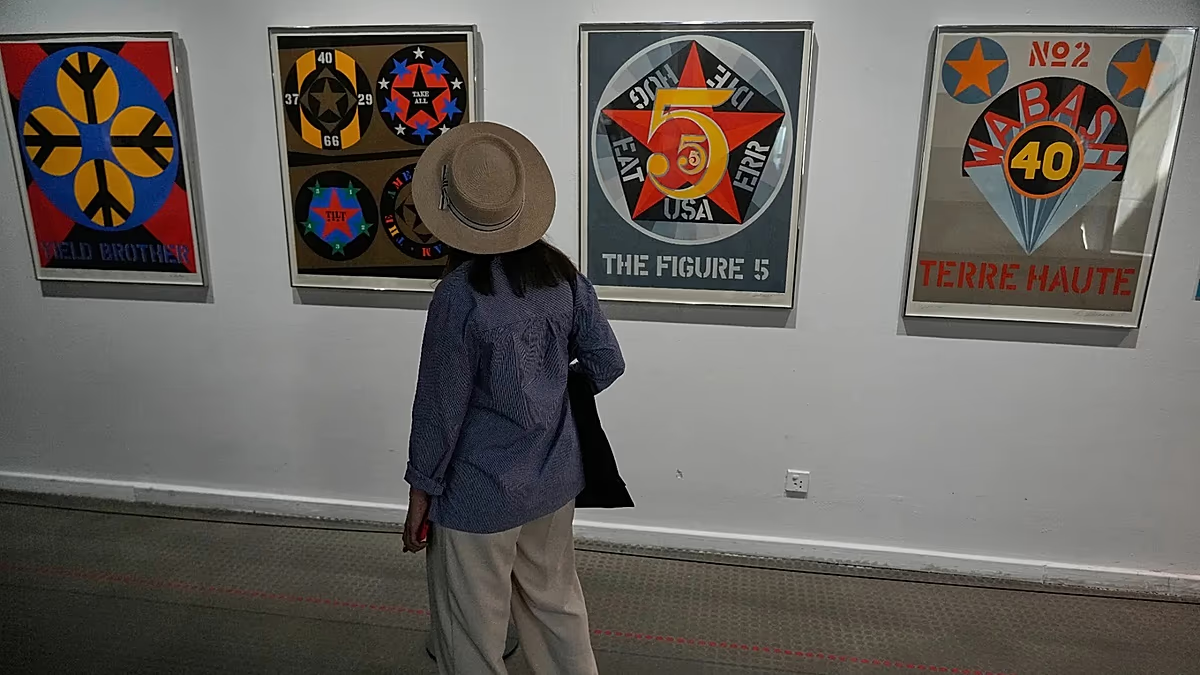


In the heart of Tehran, where billboards often display stark anti-American imagery amidst the ongoing tensions in the Middle East, a remarkable cultural event recently unfolded. Iranians gathered at one of the city’s premier museums to visit an exhibition titled “Art and War.” This collection, drawn from the museum’s long-hidden vaults, features iconic 1960s American Pop Art by Roy Lichtenstein, Robert Indiana, and James Rosenquist, all selected for their potent anti-war messages. The presence of these works in today’s Iran creates a profound juxtaposition: Western art, born from a critique of American power and militarism, is being presented in a nation whose official rhetoric often positions the United States as an adversary. This exhibition represents a delicate, courageous act of cultural diplomacy, offering a space for reflection amid regional conflict.
The artworks on display carry significant historical weight. They originate from a major collection of American and European modern art acquired in the 1970s under the patronage of Farah Pahlavi, the wife of the last Shah of Iran. During that era, fueled by oil wealth and a close alliance with the U.S., Iran actively engaged with the global art scene, assembling treasures from Picasso and Van Gogh to Rothko and Bacon. However, just two years after the museum opened, the 1979 Islamic Revolution overthrew the monarchy, establishing a theocratic state. The collection, embodying Western modernist values, was deemed problematic and was sealed away in storage for decades, unseen by the public to avoid conflicting with Islamic principles and the appearance of endorsing Western cultural influence.
Now, in a time of renewed regional war and hardship, these works have been carefully brought back into the light. As young visitors strolled through the gallery, the art resonated deeply with the contemporary moment. Many examined James Rosenquist’s monumental collage “F-111,” a critical portrayal of America’s military-industrial complex that intertwines images of a warplane’s fuselage, a nuclear mushroom cloud, and a child’s innocent face. Nearby, Roy Lichtenstein’s “Brattata,” depicting a fighter pilot in his characteristic comic-book style, presented war as a dramatic, yet hollow, spectacle. For local artists like Ghazaleh Jahanbin, this American tradition of ridiculing war through art is fascinating, perhaps stemming from a geographical distance from direct conflict that allows for a certain critical perspective.
The public’s response underscores art’s universal role as a sanctuary. Visitor Mohammad Sadegh Abbasi articulated a sentiment shared by many: despite the war and daily hardships, art provides an escape from pervasive pressure, becoming a means of survival and a way to preserve humanity. Museum director Reza Dabiri-Nejad explicitly framed the exhibition as a direct response to “the events unfolding around it,” choosing works shaped by the experience of war or created as reactions to it. This curatorial choice acknowledges that while museums and cultural activities were shut down during the intense 40-day war period, their reopening after the ceasefire is vital. The exhibition itself is staged with practical caution—the number of displayed works is deliberately limited so they can be swiftly moved to secure storage if conflict resumes.
The reappearance of this collection is a poignant chapter in Iran’s complex cultural narrative. It symbolizes a tentative, pragmatic opening within the constraints of the current system. The museum is navigating a delicate path: showcasing art that critically examines war and power— themes undeniably relevant to Iranian society today—while drawing from a collection that is itself a relic of a pre-revolutionary, pro-Western era. This act suggests a maturation of cultural policy, recognizing that these works, though born in the West, carry messages that transcend their origin and speak to universal human concerns about violence, consumption, and peace.
Ultimately, this exhibition in Tehran is more than an art show; it is a subtle form of dialogue. It allows Iranian citizens to engage with powerful global artistic statements about war, even as their own country is embroiled in regional tensions. It recontextualizes a hidden national collection, finding contemporary relevance in its themes. By presenting American art that critiques American militarism, it creates a space for reflection that is both intellectually consistent and emotionally resonant for the local audience. In doing so, it highlights the enduring power of art to bridge divides, to offer solace during strife, and to serve as a quiet but persistent voice for humanistic values against the backdrop of conflict and political animosity.