


Of course. Here is a humanized and expanded summary of the provided content, crafted into six paragraphs.
In an era where the boundaries between public duty and private life are increasingly blurred, the Prince and Princess of Wales have navigated their unique position with a masterful blend of warmth and discretion. While fiercely protective of their three children—George, Charlotte, and Louis—they understand the public’s natural affection for the young family and occasionally offer delightful, carefully chosen glimpses. These might be William sharing Charlotte’s confident football advice to the Lionesses or Kate recounting Louis’ poignant, childlike perspective during a period of national mourning. These moments are charming precisely because they are rare and feel authentically parental, never crossing into overexposure. The couple’s overarching philosophy is clear: their children are not public property, and their right to a childhood away from the spotlight is paramount. This commitment requires a deft, almost artistic skill in public engagement—knowing how to be open and personable while firmly, and gracefully, drawing a line.
The ingenuity of this approach was hilariously and revealingly highlighted not by a royal commentator, but by an unsuspecting Hollywood actor. Rami Malek, fresh from his Oscar-winning role as Freddie Mercury, found himself chatting with the Princess of Wales at the 2019 BAFTAs. In a moment of well-meaning, star-struck informality, Malek, recalling that the couple had recently welcomed Prince Louis, offered his services as a babysitter. “If you ever need a day off… I’m back-up for you,” he proposed to a seemingly startled Kate. He then doubled down, directly referencing the new baby: “You just had a baby, right?” In that instant, the casual norms of a Hollywood after-party collided with the centuries-old protocols of royal public interaction. Malek had, quite innocently, ventured into the deeply personal sphere the Waleses so diligently guard.
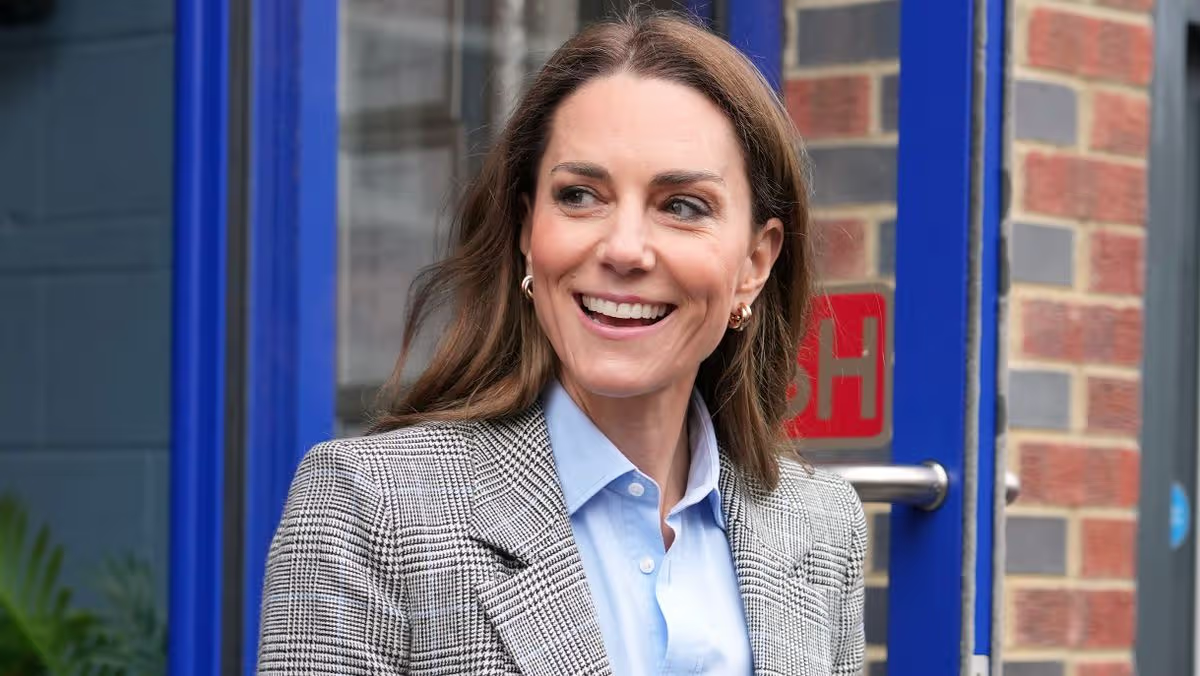
What happened next was a masterclass in graceful deflection. Instead of answering the personal query or shutting it down coldly, the Princess elegantly pivoted. As Malek recounted, she simply turned the question back on him with a warm, “How are you doing?” He described being momentarily flummoxed, insisting “No, how are you?” before recognizing the tactful maneuver. He saw in her expression, as he put it, “in the most regal, elegant way,” a silent acknowledgement of the realities of new parenthood—the fatigue, the juggling act—without uttering a single private detail. It was communication through empathy and implication, a silent “you understand,” that respected both the actor’s friendly intent and her own family’s boundaries. This wasn’t evasion; it was a sophisticated form of conversational redirection that maintained warmth while protecting privacy.
This incident underscores the immense, often overlooked, pressure and precision required of senior royals in public settings. Malek himself reflected on the context: “Imagine, you’re dressed to the nines, have to talk to all these actors.” Every handshake, every brief conversation at a glittering event is a potential diplomatic minefield or a headline in the making. The Waleses, as Malek noted, are “so careful,” listening with focused attention because every interaction matters. Their professionalism is so total that a moment of genuine, off-script surprise becomes a memorable story. Far from being offended by Malek’s candid approach, they apparently appreciated his genuine demeanor—Prince William later invited the actor to co-host the Earthshot Prize awards, suggesting that authenticity, even when it momentarily breaks the script, is valued.
Kate’s ability to blend this regal composure with palpable warmth is a trait noted by many who meet her. Academy Award-winning actress Reese Witherspoon became a fangirl herself upon meeting the Princess, detailing in her memoir the extreme lengths she went to for the occasion, including a 4 a.m. wake-up. Witherspoon’s effusive praise reveals the impact of Kate’s personal demeanor: “She was just lovely and warm, elegant and composed.” Significantly, Witherspoon highlighted that Kate told a joke, instantly putting her at ease, and displayed a “very compassionate, socially conscious, deeply caring” nature. This is the crucial balance: the Princess manages to be both magnificently “royal” and recognizably human. As Witherspoon astutely observed, it takes a special person to commit to such a life—one where every public smile and private boundary is scrutinized.
Ultimately, the story shared by Rami Malek is more than a funny celebrity anecdote; it is a microcosm of the modern royal tightrope. It illustrates the human reality behind the polished facade—the tired new parents, the desire for normalcy—and the sophisticated tools required to safeguard it. The Prince and Princess of Wales, through a blend of practiced poise and innate kindness, are carefully rewriting the royal playbook for a new generation. They offer just enough relatable humanity to foster connection and national affection, while employing a repertoire of elegant deflections, subject changes, and warm but firm boundaries to shield their family’s inner world. In doing so, they demonstrate that in the 21st century, royal strength lies not in imperious detachment, but in the confident, graceful management of what is shared and what is held sacred.