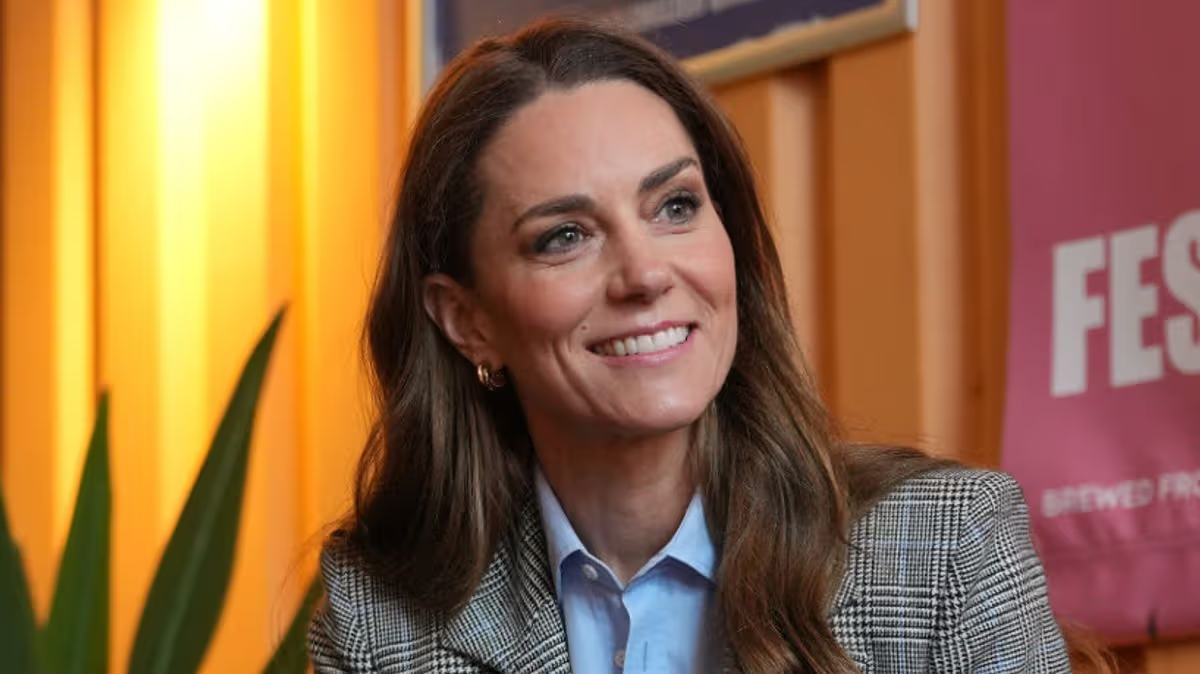




In a significant step marking both her personal resilience and her evolving role within the monarchy, Catherine, Princess of Wales, is preparing for her first solo overseas tour in over three years. From May 13th to 14th, she will travel to Reggio Emilia in northern Italy, not for a ceremonial visit, but to immerse herself in a cause she has described as her “life’s work”: early childhood development. This trip, conducted under the banner of The Royal Foundation Centre for Early Childhood, represents far more than a routine engagement. For the Princess, who last travelled abroad officially in December 2022 with her husband, Prince William, to Boston for the Earthshot Prize, this journey is a poignant milestone. It signals a confident return to the international stage following a period of profound personal challenge, having publicly battled cancer and entered remission in early 2025. The choice of destination is deeply intentional, focusing on learning rather than spectacle, as she embarks on a fact-finding mission to study the globally renowned “Reggio Emilia Approach” to early years education.
The profound personal significance of this trip has not gone unnoticed by royal observers. Former BBC royal correspondent Jennie Bond highlighted that this solo venture is a “welcome milestone” in Catherine’s journey to full recovery, one that will undoubtedly bring pride to both King Charles III and Prince William. Bond notes that the King “trusts her implicitly to represent the Royal Family,” a testament to the steady credibility and dedication the Princess has cultivated over the years. For Prince William, seeing his wife undertake such a meaningful solo mission abroad speaks volumes about her growing self-assurance following what Bond termed a “devastating health scare.” This journey, therefore, is layered with meaning: it is a professional commitment to her core advocacy, a personal triumph over adversity, and a demonstration of the royal family’s collective support and faith in her capabilities.
Central to the visit’s purpose is Catherine’s passionate and long-standing commitment to the early years sector. The Reggio Emilia region is hallowed ground for educators and child development experts, celebrated for its innovative, child-centric philosophy that views young children as capable, curious individuals. By choosing this destination, the Princess is underscoring her authentic, hands-on approach to her patronage work. She is not merely attending as a figurehead; she intends to engage deeply, planning to meet with leading experts, practitioners, and local families to absorb knowledge and understand the practical applications of this celebrated approach. As Jennie Bond observed, Catherine “always wants to learn more,” and this trip will allow her to become thoroughly absorbed in global research on nurturing children during their most formative years.
This commitment to learning and advocacy forms the bedrock of Catherine’s unique contribution to the monarchy. Bond astutely points out that the Princess possesses a “star quality” and a warm, caring nature that is an “invaluable asset” to the institution. In an era where relatability and genuine connection are highly valued, Catherine’s ability to combine gravitas with empathy allows her to communicate the importance of complex issues like early childhood development in a compelling and humanising way. Her work in this field transcends traditional ribbon-cutting; it is a sustained, evidence-based effort to shift public policy and perception. This Italian tour crystallises that mission, showcasing her as a working royal dedicated to substantive, impactful change, leveraging her platform to spotlight critical societal foundations.
Naturally, this successful solo mission opens the door to speculation about the future scope of the Princess’s duties. Bond suggests that this trip could very well be a “gateway” to more international travel if Catherine feels comfortable, with potential future tours to destinations like the United States or Australia being discussed. However, any speculation is firmly tempered by the Princess’s own clear priorities. Throughout her recovery, she has consistently emphasised that her health and her young family—Prince George, Princess Charlotte, and Prince Louis—come first. Any future overseas engagements will likely be carefully considered and sparing, designed to balance her public role with her private responsibilities as a mother and a woman mindful of her wellbeing. The monarchy and the public, as Bond advises, will therefore need to remain patient, respecting her measured pace.
In conclusion, the Princess of Wales’s upcoming visit to Reggio Emilia is a multifaceted event. It is a powerful personal milestone, a serious professional pursuit, and a potential blueprint for her future role. It demonstrates a royal who, having faced profound personal trials, is returning to her public duties with renewed focus and depth, choosing to champion a cause with quiet determination rather than fanfare. While the world may see it as a return to the global stage, for Catherine, it is perhaps simply the next, most logical step in a lifelong journey of learning and service—a journey she walks with the unwavering support of her family and a clear-eyed sense of her own priorities, setting a resonant example of resilience and purpose.