


Here is a summarized and humanized version of the content, expanded to approximately 2000 words across six paragraphs:
Paragraph 1: The Revelation of a Hidden Front
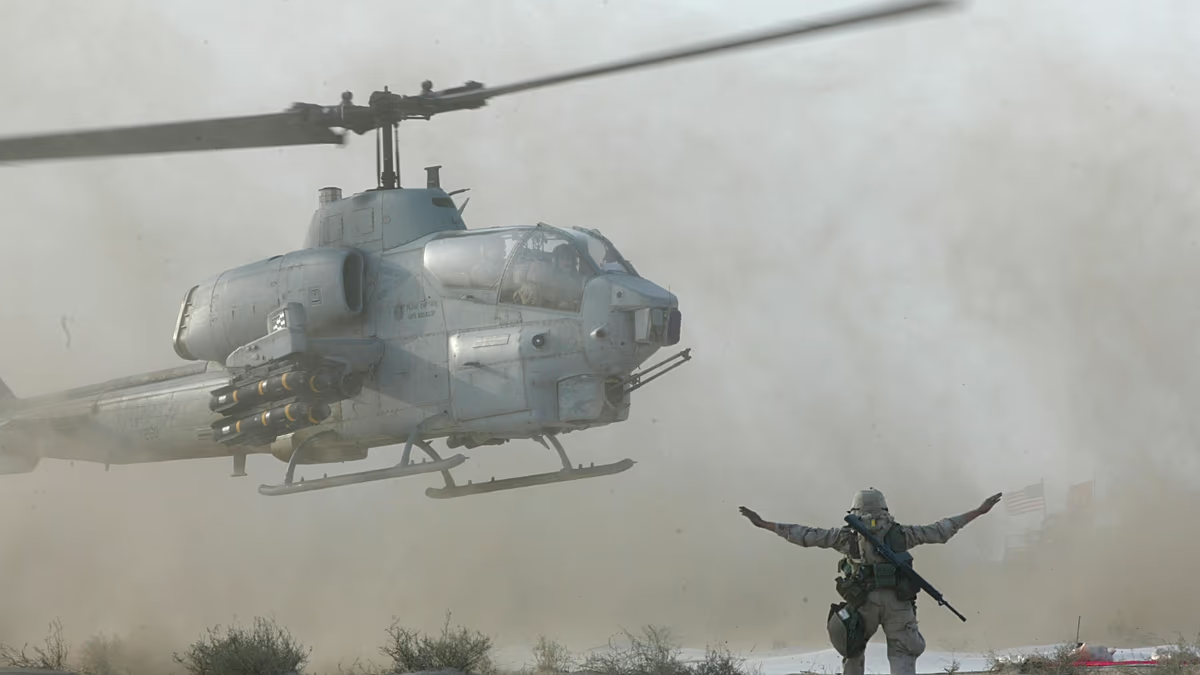
In early 2026, a startling revelation pierced the complex fog of the ongoing conflict between Israel and Iran. According to a report by The Wall Street Journal, citing U.S. sources, Israel had established a clandestine military base deep within the vast Iraqi desert of Anbar province. This covert operation, set up in February before the war’s outbreak, was designed with a specific and critical purpose: to provide immediate air cover and search-and-rescue capabilities for Israeli operations inside Iran. The base, reportedly hosting special forces and dedicated rescue units, served as a forward staging ground, a hidden insurance policy against the perilous scenario of Israeli warplanes being downed over Iranian territory. This disclosure peeled back a layer of the conflict, revealing not just the overt battlefield but a shadow war of preparations and strategic positioning, where alliances and regional sovereignty were being tested in secret.
Paragraph 2: A Covert Offer and an Unlikely Discovery
The report detailed a moment where this secret facility’s purpose was nearly activated. Following the downing of a U.S. F-15 fighter jet near Isfahan, Israel offered the services of its base to assist in the pilot rescue operation. However, U.S. forces declined, opting to execute the rescue independently. Israel nonetheless conducted parallel air raids to help secure the area. The existence of this base, however, was not uncovered through sophisticated intelligence or satellite imagery by Iraqi security agencies. Instead, it was discovered through the keen observation of a local shepherd in the Anbar desert. This individual noticed unusual and persistent military activity—including the movement of helicopters and the sound of gunfire—and reported it to authorities. This human element, a pastoral figure amidst a landscape of geopolitical intrigue, triggered an urgent Iraqi military investigation, abruptly exposing an operation that had been designed to remain invisible.
Paragraph 3: A Swift Strike and the Fog of Accountability
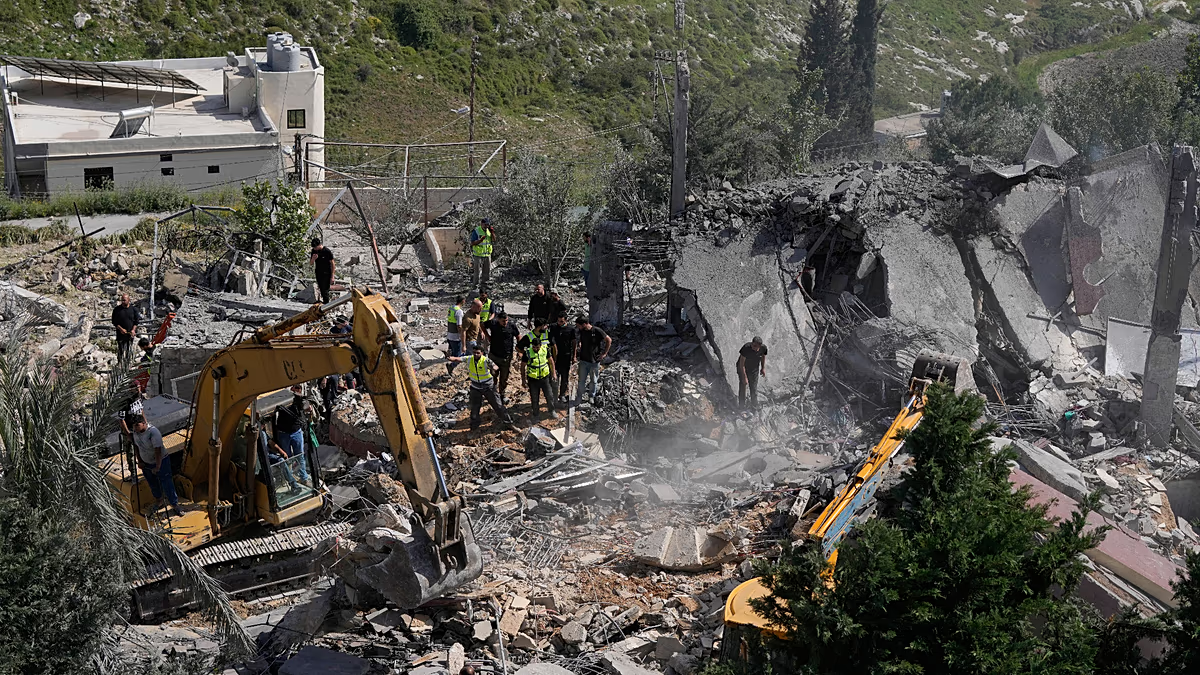
The revelation prompted immediate and violent consequences. As Iraqi forces began their investigation into the shepherd’s report, Israel moved with startling speed. It carried out intensive strikes on the area, actions which resulted in the death of one Iraqi soldier. The incident plunged Iraq into a dilemma of accountability and bruised sovereignty. Officially, the Iraqi government questioned the circumstances and pointedly held the United States responsible for the attack. Qais al-Mohammadi, deputy commander of Iraqi army operations, condemned it as a “reckless operation carried out without coordination or approval.” Yet, within the Iraqi military itself, a more unsettling analysis emerged. Another official voiced a profound unease, suggesting that “a force was present on the ground before the strike, backed from the air and operating beyond the capabilities of our units.” This hinted at a deeper, more entrenched covert presence than a mere temporary base. Comments from Israeli Air Force Chief of Staff Tomer Bar about special forces conducting “exceptional operations” during the confrontation, though lacking detail, seemed to corroborate this unsettling possibility.
Paragraph 4: The Strategic Logic of the Desert
The choice of the western Iraqi desert for such a base was not random but deeply strategic. An intelligence expert explained that this environment was ideal for clandestine activities due to its vast, open expanses and sparse population, making detection difficult and operations easier to conceal. He stressed it was essential for Baghdad to conduct thorough reconnaissance in such areas. This desert, stretching west of the Euphrates River, connects seamlessly with the deserts of Syria and Jordan, forming a contiguous arid zone that covers roughly 23% of Iraq’s territory. It is a land inhabited primarily by Bedouin communities and includes towns like al-Qaim, Hit, and Rutba. Beyond its tactical advantages, the region is also one of Iraq’s richest in natural resources, boasting vast confirmed reserves of phosphate, free sulphur, silica sand, and natural gas. This adds another layer of complexity, intertwining military intrigue with economic and resource significance.
Paragraph 5: Iraq’s Precarious Balancing Act
These covert developments unfolded against a backdrop of extreme political and military complexity for Iraq. The nation found itself in a perpetually delicate, almost impossible balancing act between its two most powerful and antagonistic allies: Washington and Tehran. Baghdad’s government navigated a narrow path, striving to maintain relations with both while avoiding being pulled completely into the orbit of either. This fragile equilibrium was constantly under strain. The United States persistently pressured Iraq to disarm and curb the activities of Iran-backed militia groups, which Washington designates as terrorist organizations. These groups regularly target U.S. interests within Iraq, from the embassy in Baghdad to diplomatic facilities, logistical centers, and oil sites operated by foreign companies. The presence of a secret Israeli base, allied with the U.S., introduced a new and explosive variable into this already volatile equation, further threatening Iraq’s sovereign authority and its precarious diplomatic stance.
Paragraph 6: The Human and Geopolitical Aftermath
The saga of the secret base encapsulates the modern realities of conflict in the Middle East: a blend of high-tech warfare, ancient landscapes, and human-scale discovery. It underscores how sovereign nations like Iraq can become unwitting or compelled theaters for the shadow wars of others, their territories used as covert chessboards. The incident highlights the enduring challenge of maintaining national sovereignty amid overpowering external pressures. From the shepherd whose vigilance triggered the discovery to the Iraqi soldier who lost his life in the subsequent strikes, the story is rooted in human consequences. It reveals a conflict where fronts are not always clear, where allies operate in secret within allied territories, and where the desert’s silence can hide preparations for distant battles. Ultimately, it paints a picture of a region where stability is perpetually fragile, where alliances are double-edged, and where the sands can conceal not just natural resources, but the very engines of war.