


Of 1,980 words
The vibrant pulse of a Saturday night in Birmingham’s Digbeth area was violently disrupted when what should have been an evening of musical escape turned into one of fear and urgent evacuation. At the Luna Springs venue on Lower Trinity Street, attendees of the Cru2 music event were immersed in the performance when the unthinkable occurred. Reports emerged of a stabbing incident, culminating in two men being wounded. The immediate aftermath was a scene of confusion and dread, as the revelry ground to a halt and the primary focus shifted from entertainment to survival and safety. This jarring intrusion of violence into a space dedicated to community and enjoyment starkly reminded everyone present of how quickly ordinary life can be upended.
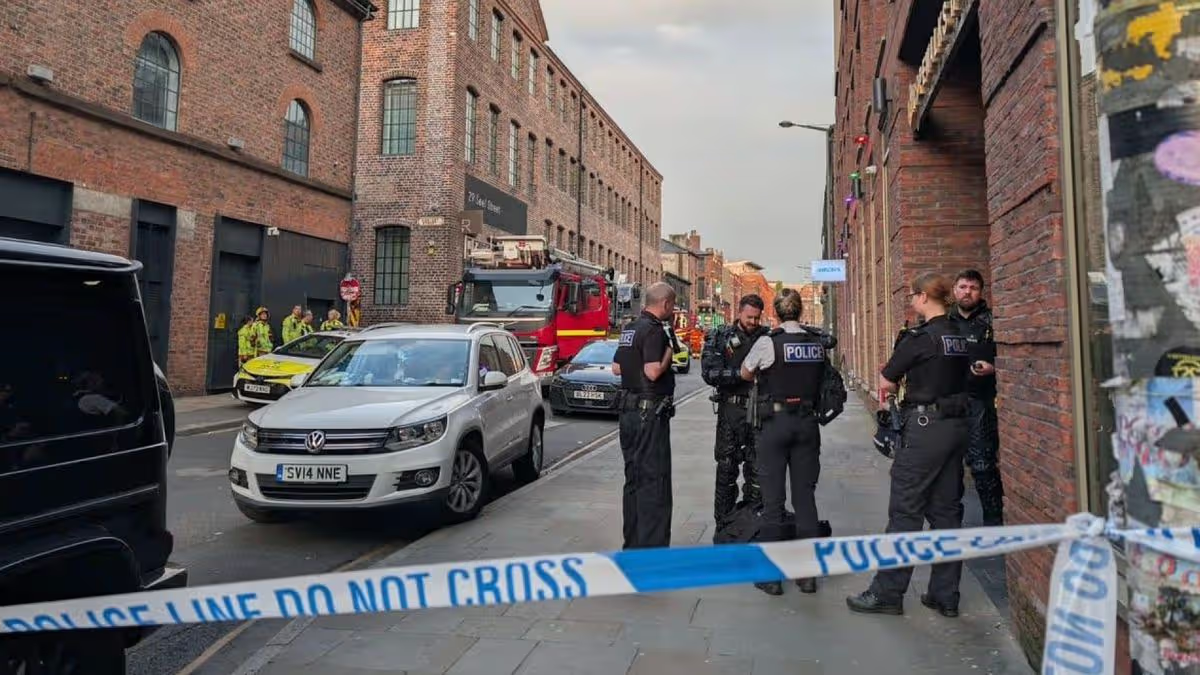
Responding with commendable speed, officers from West Midlands Police arrived at the scene shortly before 7 p.m., their sirens cutting through the evening’s altered atmosphere. The force’s primary concern, after securing the area, was the condition of the two victims. In a statement that offered a sliver of relief amidst the chaos, a police spokesperson confirmed that both men had been transported to hospital and, crucially, that their injuries were not believed to be life-threatening. This detail, while not diminishing the seriousness of the attack, provided a foundational hope that the individuals would recover. The police then embarked on the meticulous work that follows such events: officers remained cordoning the scene and circulating in the surrounding area, initiating an investigation to piece together the precise sequence of events and, most importantly, to identify and locate those responsible for the violence.
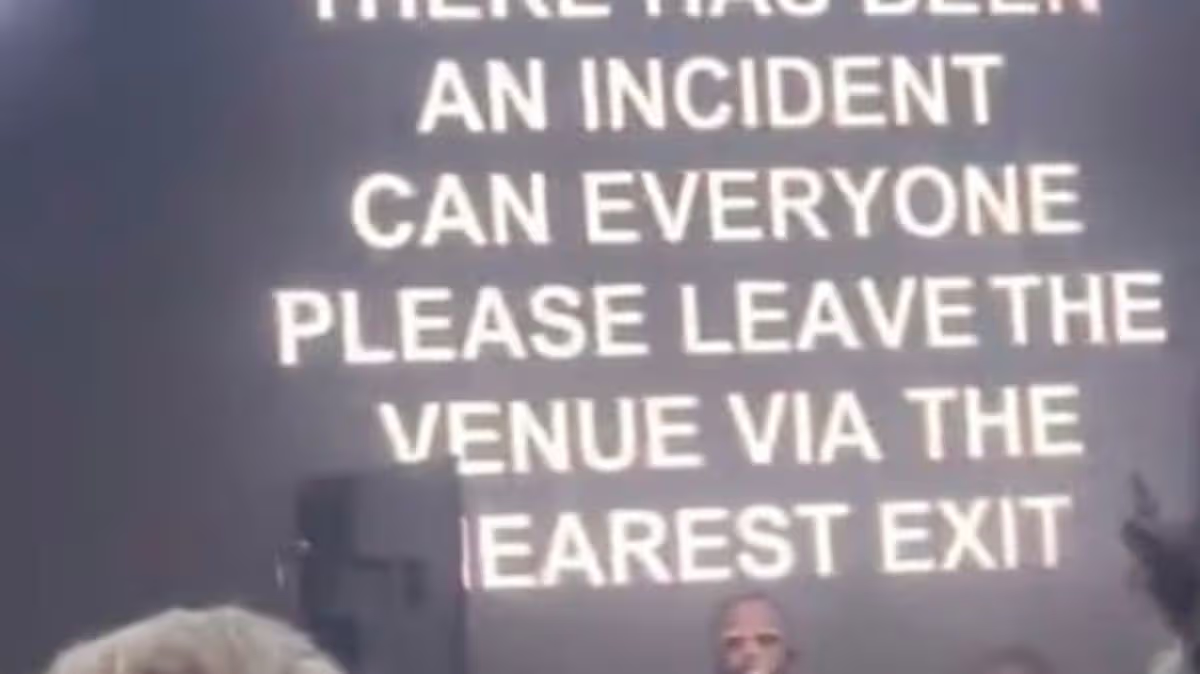
Inside the venue, the transition from concert to crisis was managed through stark digital messages that flashed across the screen behind the DJ booth, a modern and chilling form of communication. According to reports from Birmingham Live, the initial message read: “There has been an incident. Can everyone please bare with us.” This request for patience, likely issued in the first moments of uncertainty as staff assessed the situation, held the crowd in a tense limbo. However, as the full scope of the emergency became clear, the instruction changed decisively. The screen soon updated to a more direct and urgent directive: “There has been an incident. Can everyone please leave the venue via the nearest exit.” This command transformed the anxious waiting into an orderly but undoubtedly anxious exodus, as hundreds of people funneled towards exits, their night of entertainment concluded not with an encore, but with a quiet and concerned dispersal.
The human impact of such an event extends far beyond the physical wounds. For the attendees, the psychological aftershock is profound. One moment, they are part of a collective experience, united by rhythm and sound; the next, they are individuals confronted with a potential threat, forced to move swiftly and obey safety protocols. The fear in that room—the worried glances, the hushed conversations, the accelerated heartbeats—paints a picture of communal trauma. For the injured men, their journey from a night out to a hospital bed represents a violent breach of personal security, an experience that will leave marks deeper than the physical scars. Their families and friends, receiving that dreadful phone call or message, were suddenly plunged into a vortex of worry, their lives also abruptly re-centered around a hospital waiting room rather than a quiet Saturday evening at home.
In the wider context, this incident strikes a chord of painful familiarity for communities and cities worldwide. Music venues and nightlife hubs are supposed to be sanctuaries of cultural expression and social connection, yet they are not immune to the societal issues that lead to violence. Each such event forces a public reckoning with questions of safety, security measures, and the root causes that lead individuals to carry and use weapons. For the Digbeth community and Birmingham as a whole, known for its vibrant cultural scene, there is a palpable sense of violation. A local landmark for entertainment, Luna Springs, became the focal point of a crime scene, an association that organizers, neighbors, and city officials will work hard to overcome. It challenges the very idea of public gathering and demands a collective reflection on how to better protect these spaces of joy.
As the investigation continues, the path forward involves multiple layers of response. The West Midlands Police will continue their diligent work, appealing for witnesses and scrutinizing evidence to deliver justice. The venue and event organizers will inevitably review their safety protocols, seeking ways to prevent a recurrence. For the public, the process is one of gradual healing and regained confidence. The resilience of a community is tested not in the absence of fear, but in the response to it. The hope is that from this distressing night, a renewed commitment to community vigilance and non-violence will emerge. The ultimate goal is to ensure that the music can one day play again in Digbeth, not with an undercurrent of anxiety, but with the restored promise of safety and shared enjoyment that every community deserves.