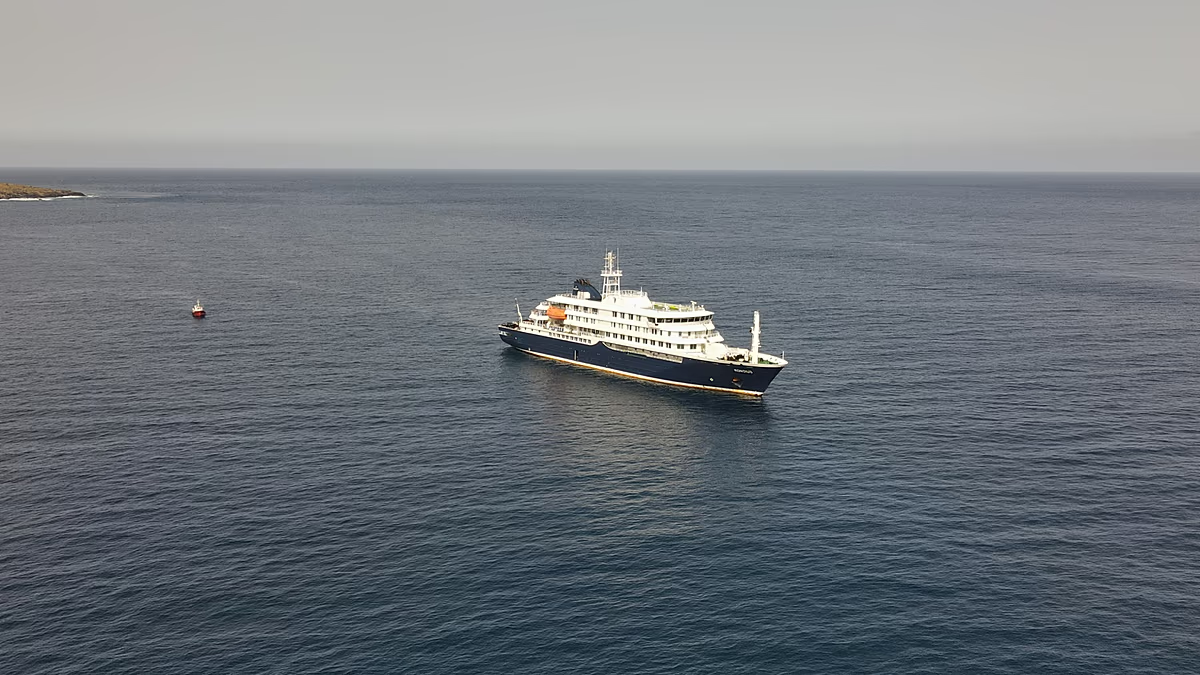
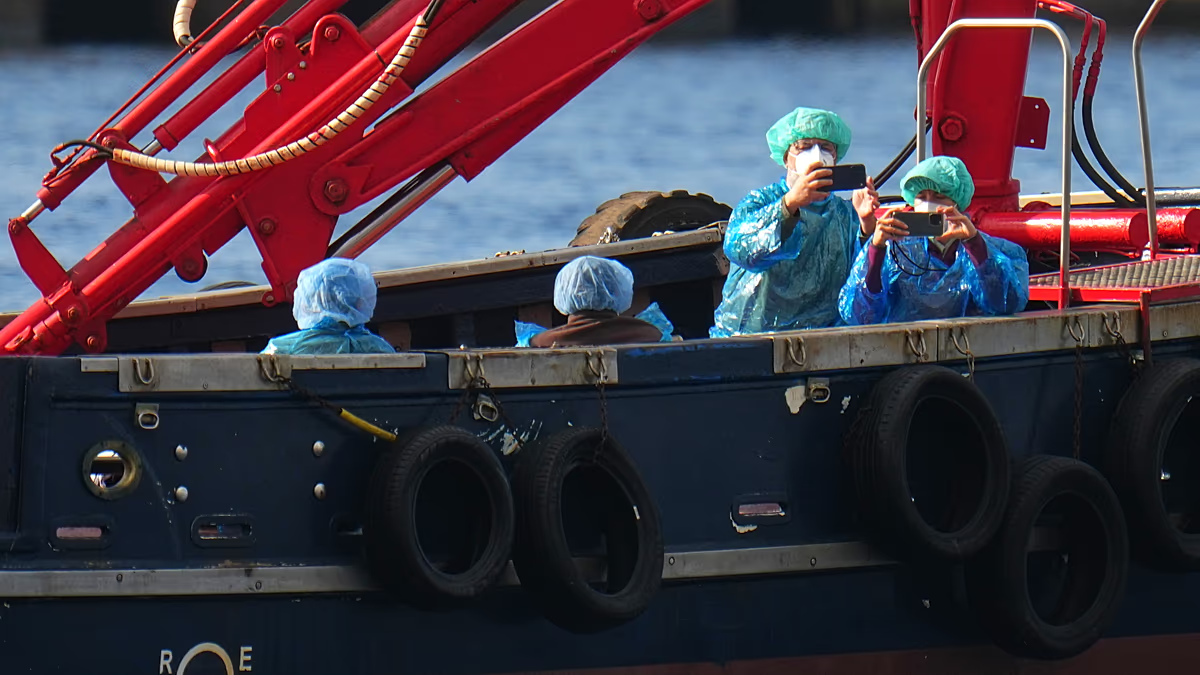


The unfolding situation aboard the MV Hondius, a cruise ship grappling with a hantavirus outbreak, escalated into a stark political confrontation as it approached the port of Granadilla de Abona in Tenerife. The core of the dispute lay between the regional government of the Canary Islands, led by President Fernando Clavijo, and Spain’s central administration. Clavijo leveled a sharp accusation: despite having requested that a Spanish military aircraft with a capacity for 210 people be used to evacuate passengers still awaiting transfer, the central government had left the plane nearly empty, scheduled to carry only 14 individuals. After unsuccessful meetings with three national ministers, Clavijo took a hardline stance, announcing he would instruct the Port Authority to refuse the ship permission to anchor, a dramatic move that highlighted the severe breakdown in coordination during a public health emergency.
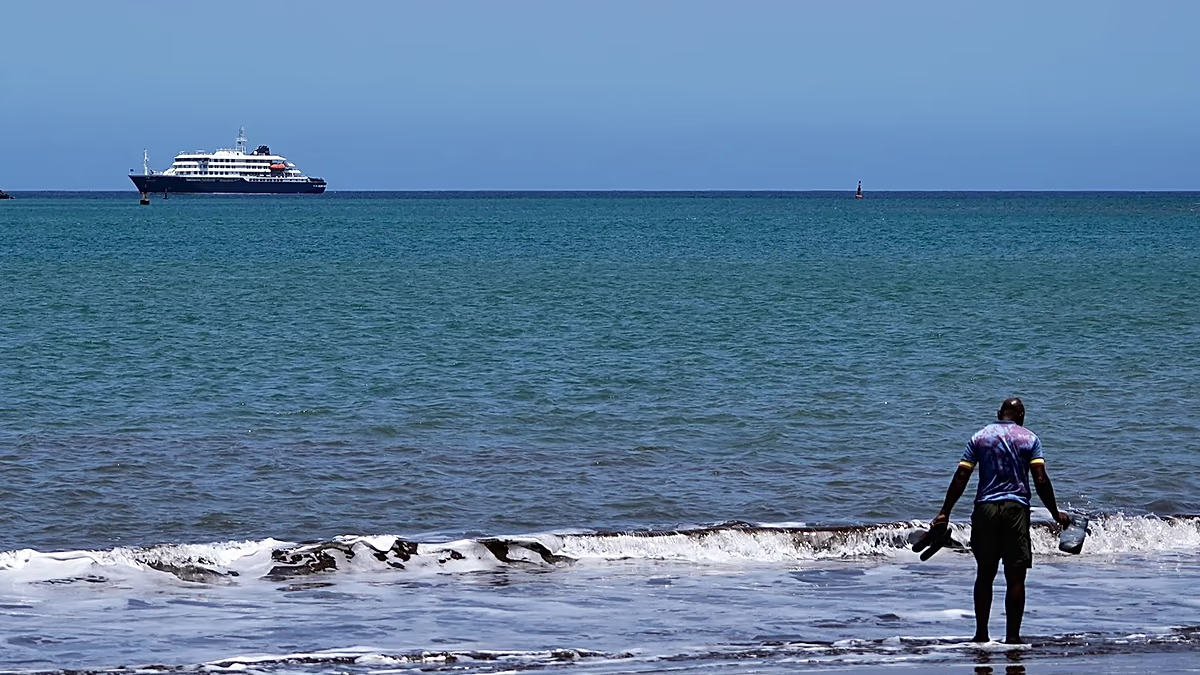
The central government’s response was swift and firm, arriving in the form of an official order from the Directorate-General for Merchant Shipping. Overriding the regional objection, the directive commanded the port to receive the MV Hondius, citing the urgent “need for medical assistance on board” and deteriorating weather conditions. The letter argued that managing the health crisis would be far more effective in port than leaving the ship adrift at sea. Unmoved, President Clavijo fired back, stating the ship would not anchor with his government’s authorisation and warning that if it did so on Madrid’s orders, the central government would bear full responsibility for any consequences. This public blame game set a tense backdrop for the humanitarian operation, ultimately concluding when the Hondius anchored at dawn on Sunday, with the first disembarkation of Spanish citizens beginning a few hours later.
While the political war of words played out, a meticulous and orderly ground operation was being assembled through the night. Health Minister Mónica García, Interior Minister Fernando Grande-Marlaska, and even the Director-General of the World Health Organization, Tedros Adhanom Ghebreyesus, were on-site to oversee preparations. Minister García confirmed all passengers remained asymptomatic and outlined a precise plan: the ship would anchor in the harbour, with passengers brought ashore via launches in carefully staggered groups, organised by nationality and aligned with departing flight schedules. In a measure to ensure control and safety, no luggage was permitted; each person could only carry a small bag with absolute essentials, and everyone, including staff and drivers, wore FFP2 masks.
The logistical scale of the evacuation was immense, involving passengers from 23 different nationalities. Interior Minister Grande-Marlaska assured that most required aircraft were already on the island, with the rest due to arrive. The European Commission activated its Civil Protection Mechanism, with Norway dispatching an air ambulance and other member states placing transport capacity on standby. Throughout, the decision-making for the ship’s handling was described as a technical one, balancing inputs from maritime authorities, port officials, sea conditions, and health protocols. This concerted international and multi-agency effort stood in contrast to the earlier political friction, demonstrating a operational unity that finally prioritised human welfare.
A crucial voice of reassurance came from WHO chief Tedros Adhanom Ghebreyesus, who directly addressed the understandable anxiety of Tenerife’s residents. Acknowledging the collective trauma of the COVID-19 pandemic, he urged calm, stressing that the present situation was fundamentally different and better managed. He expressed gratitude for Spain’s “strong conviction of solidarity,” highlighting the country’s cooperation under the International Health Regulations. This context was vital, as the ship’s ordeal had been lengthy; departing from Ushuaia in early April, it had faced refusals to dock, including from Cape Verde, before Spain, after days of consideration, finally mobilised in response to the WHO’s request.
In conclusion, the episode of the MV Hondius serves as a complex case study in crisis management, where a pressing humanitarian need collided with political jurisdiction and public fear. The public disagreement between governments risked overshadowing the subsequent efficient and compassionate evacuation executed by health, military, and civil protection teams. The presence of the WHO director-general underscored the global dimensions of such health threats and the imperative for international solidarity. Ultimately, the successful disembarkation and repatriation of passengers from 23 nations, coordinated amidst geopolitical tensions, reaffirmed the necessity of placing science, logistics, and human dignity at the forefront when navigating the treacherous waters of a public health emergency.