


The Gulf Crisis Deepens: A Tangled Web of Diplomacy, Drones, and Warning Shots
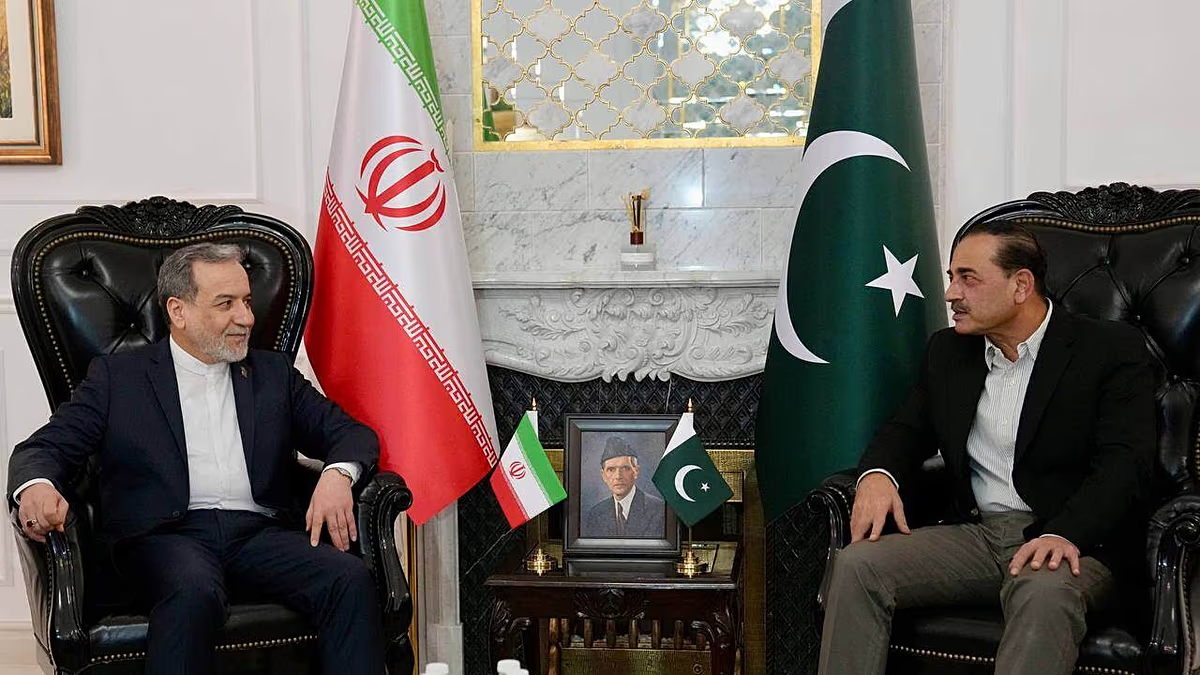
In a tense diplomatic development on Sunday, Iran formally submitted its response to a proposed U.S. draft agreement aimed at ending the regional conflict. The communication was delivered through a Pakistani intermediary, as reported by Iran’s official IRNA news agency. While the specific contents of Iran’s reply were not disclosed, the act of utilizing a third-party mediator underscores the profound breakdown in direct communication between Tehran and Washington. This move signals a continued reliance on back-channel diplomacy, a fragile process where every nuance and delay carries significant weight. The world now awaits further clarification, as the substance of this response will determine whether a path toward de-escalation remains open or if the diplomatic track is effectively closed.
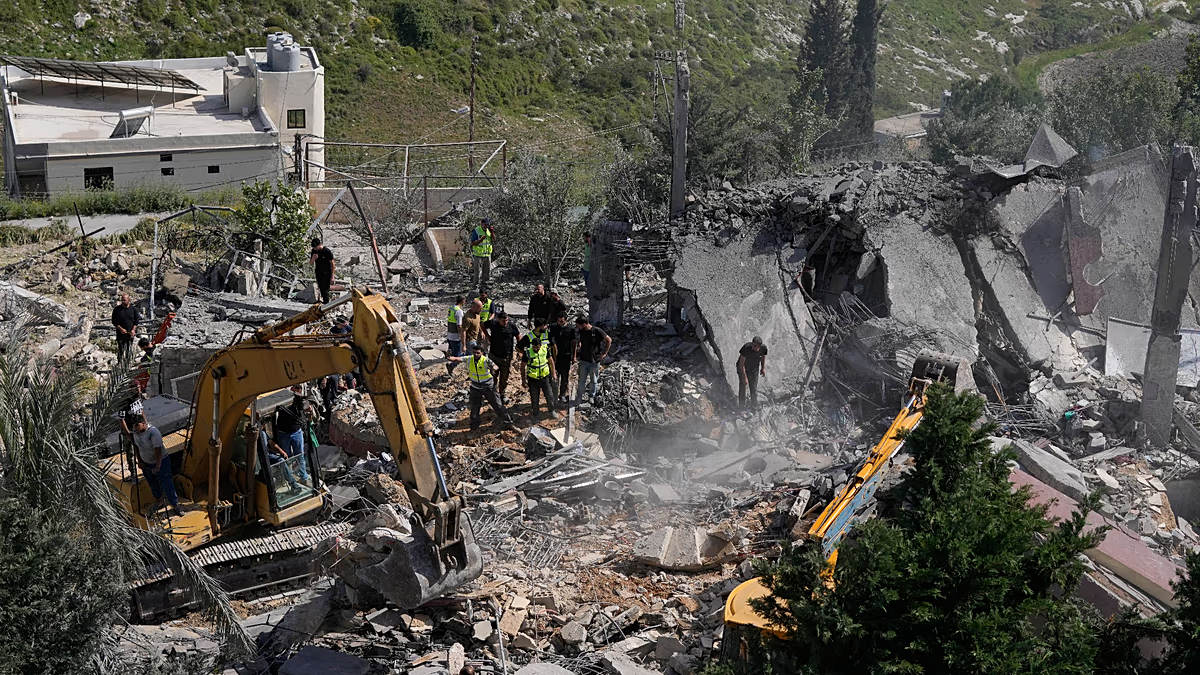
Simultaneously, and in a stark counterpoint to the quiet diplomacy, the volatile security situation in the Gulf region dramatically escalated. A wave of drone attacks struck multiple targets across the vital waterway. Among the incidents was a direct hit on a commercial freighter en route to Qatar. This brazen assault on international shipping lanes represents a dangerous expansion of the conflict, directly threatening the global economic arteries that depend on the free flow of trade through the Strait of Hormuz. These attacks serve as a grim, real-world manifestation of the threats that have long simmered beneath the surface of diplomatic negotiations, shattering any illusion of calm.
Iran directly linked these military actions to its diplomatic stance. Concurrently with the drone strikes, Tehran issued a stark warning to the United States, declaring that its policy of “strategic patience” was over and that it would no longer refrain from launching retaliatory attacks. This declaration transforms the conflict dynamics, moving from a state of managed tension to one of active, promised reprisal. The message is unequivocal: Iran perceives itself as under threat and is now willing to engage in asymmetric warfare—using relatively low-cost drone technology—to project power and respond to perceived aggressions, making the strategic environment significantly more unpredictable and dangerous.
The attacks placed Qatar, a nation that has often played the role of mediator in regional disputes, in a particularly difficult position. The targeted vessel was headed to its shores, directly implicating Qatari interests. In response, Qatar’s Prime Minister issued a sharp and public rebuke to Iran, cautioning that any attempt to use the strategic Strait of Hormuz “as a pressure card would only lead to deepening the crisis.” This statement is a significant diplomatic condemnation, highlighting the fears of Gulf Arab states that rely on the strait for their economic survival. It underscores a critical rift, showing that Iran’s actions risk alienating not just Western powers but also neighboring states with which it has maintained complex, sometimes pragmatic, relationships.
The day’s events paint a picture of a regime pursuing a dual-track strategy of calibrated aggression and indirect diplomacy. On one hand, Iran engages with a peace proposal through a mediator, keeping a door ajar. On the other, it demonstrates its capacity and willingness to inflict economic and military pain, thereby strengthening its bargaining position through coercion. This high-wire act is incredibly risky; the drone attacks, while demonstrating capability, also galvanize international opposition and could harden the resolve of its adversaries. The strategy seeks to force concessions by raising the cost of inaction for the U.S. and its allies, but it equally raises the potential for a catastrophic miscalculation.
Ultimately, the synchronized occurrence of a diplomatic communiqué and military strikes reveals the fragile and explosive nature of the current impasse. The region stands at a precarious crossroads. The path forward hinges on whether the opaque diplomatic response contains the seeds of a negotiated off-ramp, or if it is merely a prelude to further violence. The attacks on shipping and the explicit warning of retaliation have already shifted the ground, forcing nations to recalculate their security postures. The international community now watches with acute concern, aware that the stability of global energy markets and regional security hangs in the balance, threatened by the specter of a conflict that diplomacy may no longer contain.