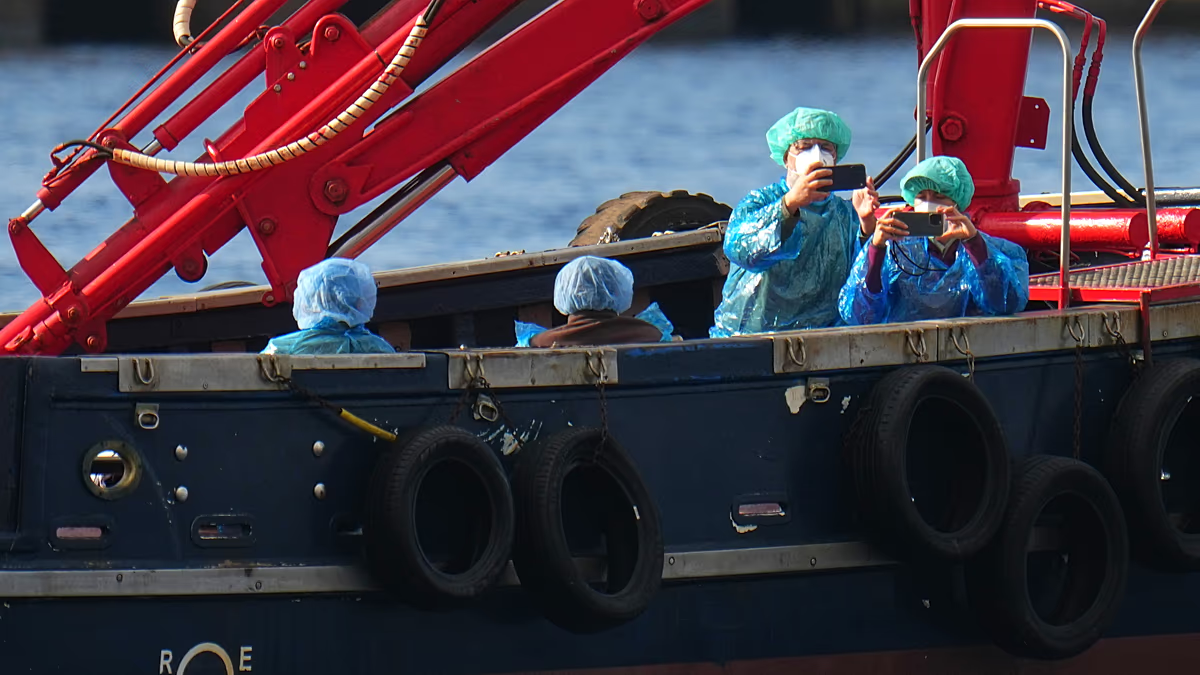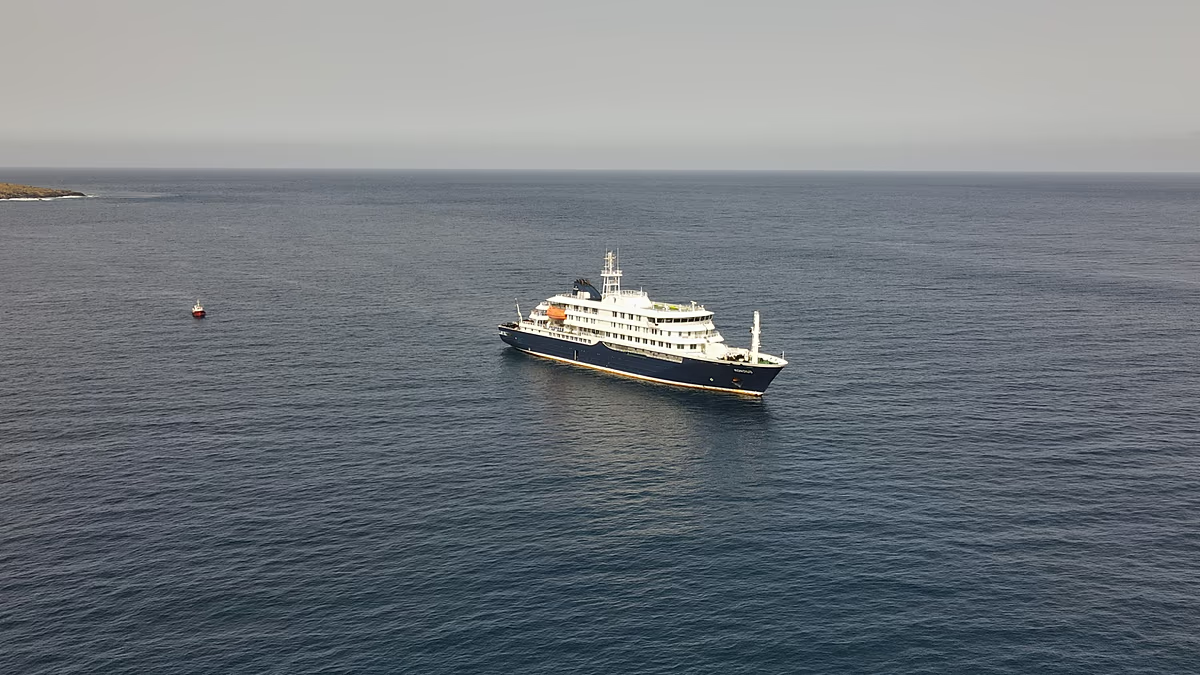




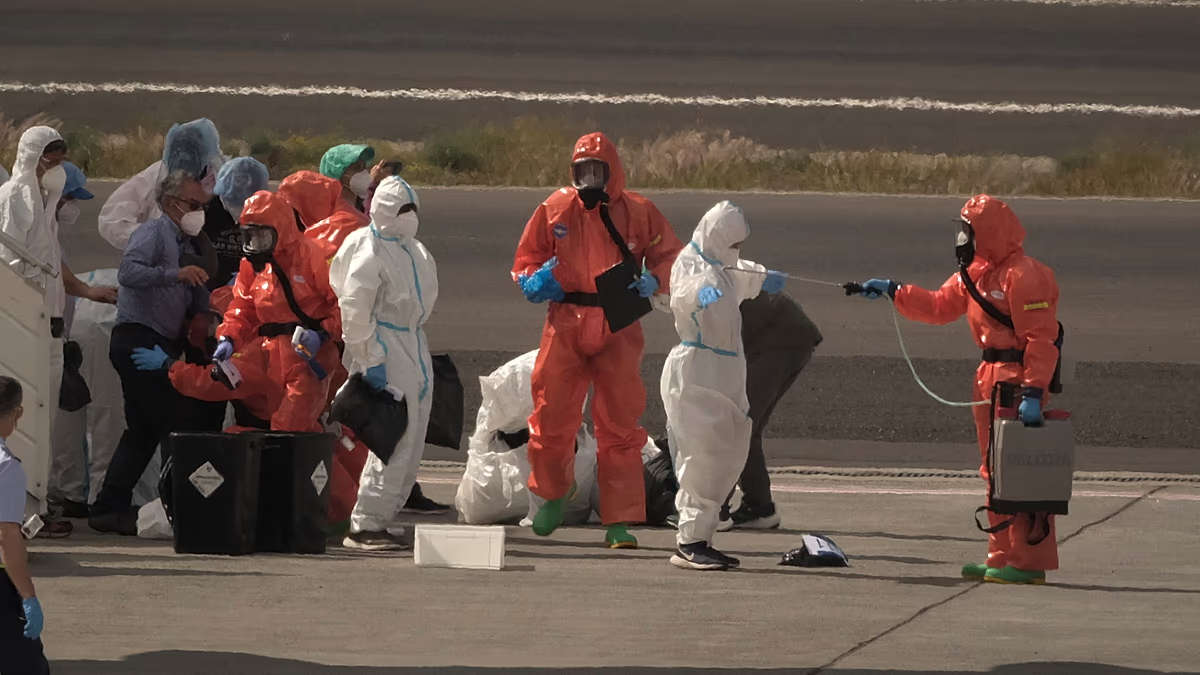
In the midst of a serene Antarctic voyage, a public health challenge has emerged aboard the cruise ship MV Hondius, connecting remote islands to global capitals in a shared effort to contain a rare pathogen. French Health Minister Stéphanie Rist confirmed a new case of hantavirus involving a woman evacuated from the ship, underscoring the international scope of the response. While Spain’s government reported that two suspected cases among passengers tested negative, the vessel’s arrival at Tenerife’s port of Granadilla de Abona marked a critical juncture. From there, travelers began their journeys home to undergo medical evaluations and isolation, a process complicated by differing clinical interpretations. The United States noted one passenger with mild symptoms and another described as “mildly PCR positive” for the Andes strain of hantavirus, highlighting the nuanced and sometimes ambiguous nature of diagnosing such infections during a rapidly evolving situation.
The nuances in testing and diagnosis have prompted officials to clarify the situation for a concerned global audience. Javier Padilla, Spain’s Secretary of State for Health, explained that health authorities are working to provide context around the cases identified by the United States. He detailed that one American passenger received an indeterminate PCR result onboard, which European and Spanish epidemiologists considered negative, whereas U.S. authorities are treating it as a mild positive. A similar divergence exists for a symptomatic passenger, whose condition Spain and the European Centre for Disease Prevention and Control (ECDC) view as inconsistent with hantavirus. These careful distinctions are vital as the final groups of passengers prepare for repatriation flights to Australia and the Netherlands, even as the World Health Organization (WHO) confirms six cases linked to the outbreak and warns that more may surface due to the virus’s lengthy incubation period of up to six weeks.
Amid understandable public anxiety, WHO infectious disease epidemiologist Maria Van Kerkhove has taken great care to differentiate this outbreak from the traumatic onset of the COVID-19 pandemic. She unequivocally stated that this is not SARS-CoV-2 nor the beginning of a similar pandemic, but rather a contained outbreak on a ship. Van Kerkhove emphasized that hantavirus typically does not spread through casual contact or airborne transmission like coronaviruses, but primarily through close, intimate contact with infected individuals or, more commonly, through environmental exposure to rodent excreta. This distinction is crucial for calibrating the public health response and alleviating undue fear, even as the situation on the MV Hondius remains serious. The ship, now anchored off Cape Verde, has reported three passenger fatalities and nine illnesses, prompting a coordinated multinational effort to manage the aftermath and care for the nearly 150 people still associated with the vessel.
The narrative of the outbreak is inextricably linked to the ship’s altered journey and the global scramble to track its dispersed passengers. The MV Hondius departed Argentina in early April for an Atlantic cruise intending to visit Antarctica and the Falkland Islands, an itinerary disrupted by the emerging illness. In a significant and concerning development, Dutch officials revealed that around 40 passengers disembarked during a stop at the remote island of St. Helena after the first death onboard, long before the full scale of the outbreak was understood. Among them was the wife of a deceased Dutch passenger, who herself later fell ill and died in a South African hospital after a commercial flight. This early, unmonitored dispersal has triggered a vast contact-tracing operation across four continents, as health authorities work to find and monitor these individuals and their subsequent contacts, a testament to the complexities of containing a pathogen in our interconnected world.
The human impact of the outbreak continues to unfold in personal tragedies and logistical challenges. A Dutch woman, whose husband died onboard, was too ill to complete a flight to Europe and was removed in Johannesburg, where she subsequently passed away. This event prompted the quarantine of a KLM flight attendant who later fell ill, though she has since tested negative for the virus. Meanwhile, UK health authorities are monitoring a suspected third British case on the remote territory of Tristan da Cunha, where the ship docked in April. With confirmed British patients hospitalized in the Netherlands and South Africa, the response has been a patchwork of national efforts, including the United States and Britain chartering planes for citizen repatriation. These stories highlight the deeply personal layer of this crisis—families separated, individuals in isolation wards, and communities on distant islands brought into the global health spotlight.
At the heart of this incident is hantavirus itself, a group of viruses that, while alarming, operates within known and limited transmission parameters. Carried primarily by rodents, the viruses are usually transmitted to humans who inhale aerosolized particles from dried droppings or urine. According to the U.S. Centers for Disease Control and Prevention, infection can lead to two severe illnesses: Hantavirus Pulmonary Syndrome, which attacks the lungs and can cause severe respiratory failure, and Hemorrhagic Fever with Renal Syndrome, which impacts the kidneys. A particularly unusual aspect of this cruise ship outbreak is the investigation into possible human-to-human transmission, which is considered extremely rare. Authorities suspect the index case was infected before boarding, and notably, have confirmed there are no rodents on the ship. This detail, coupled with the WHO’s assessment that the overall public health risk remains low, provides a measure of reassurance even as the story of the MV Hondius serves as a sobering reminder of nature’s capacity to disrupt human endeavors, and of the enduring need for vigilant, cooperative global health surveillance.