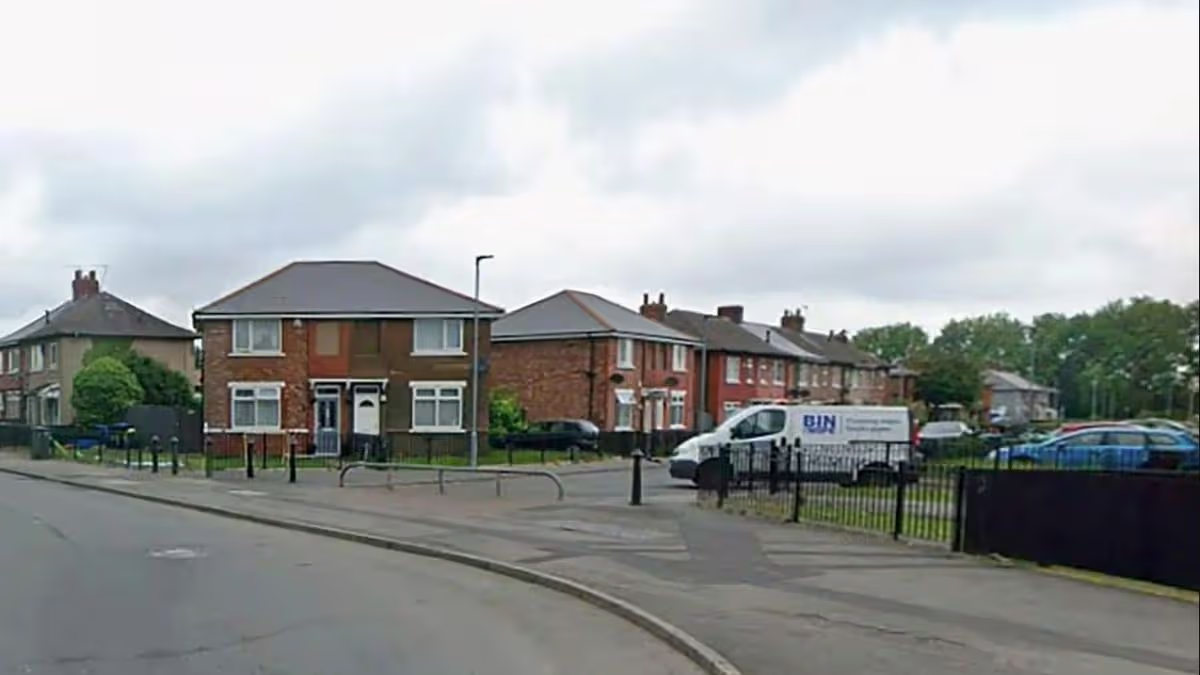



The community of Carrick-on-Suir, County Tipperary, has been plunged into mourning following the heartbreaking and tragic death of a young mother, Monika Kubasiewicz. The 33-year-old Polish national had only recently begun a new chapter of her life, having moved into the house at Blackthorn Close, Greenhill Village, just a few months prior. Early on Friday, May 11th, 2026, a moment that should have been filled with the profound joy of welcoming a new life instead ended in unspeakable loss. Monika’s life was cut short in what investigators believe was a tragic incident occurring during childbirth, a time that should be among the most sacred and supported experiences in a person’s life.
The devastating discovery was made by Monika’s partner around 1 p.m. on that fateful Friday. He found both Monika and her newborn baby daughter in a bathroom of their home. Authorities believe the deaths had occurred several hours earlier, painting a picture of a solitary and deeply traumatic sequence of events. The image of a partner stumbling upon such a scene underscores the profound personal tragedy at the heart of this public news story, a moment of shattered dreams and immeasurable grief for a family now left to grapple with an unbearable absence.
Initial investigations by An Garda Síochána have provided some preliminary understanding of this tragedy. A post-mortem examination was conducted on Monika on Friday, and it is understood that gardaí are satisfied there was no foul play involved in her death. The focus, therefore, turns to the immense physical ordeal of childbirth itself. Officers also believe that her baby girl died during the birthing process, a detail that only deepens the sense of cruel futility surrounding the event. The community and the family now await the results of a separate post-mortem on the infant, scheduled for later in the week, which may provide more definitive answers.
This story transcends the clinical details of an investigation, speaking instead to a universal human fear and a profound societal responsibility. It is a stark reminder of the vulnerability inherent in bringing new life into the world, even in modern times. Monika Kubasiewicz was a young woman in the prime of her life, embarking on motherhood, far from her native Poland yet building a home in Ireland. Her story highlights the silent, private moments of crisis that can unfold behind any door, turning anticipated celebration into devastating sorrow in a matter of hours.
As a breaking news story, this tragedy captures immediate attention, but its resonance will linger long after the headlines fade. It prompts difficult questions about prenatal care, support systems for expectant mothers, especially those who may be navigating life in a new country, and the very nature of solitary maternal emergencies. The collective heartbreak extends beyond Monika’s immediate circle to encompass all who can imagine the promise of that new beginning so catastrophically lost.
Ultimately, this is a story of two lives lost: a mother, Monika Kubasiewicz, remembered now through a single published photograph of a life full of potential, and a baby girl who never had the chance to have her name known to the world. Their intertwined stories leave a community in mourning and serve as a somber reflection on life’s fragility. As the formal investigations continue to establish precise medical causes, the human narrative remains achingly clear—a family has been destroyed, and a quiet street in Tipperary has become the site of a loss that echoes with profound sadness.