



Paragraph 1
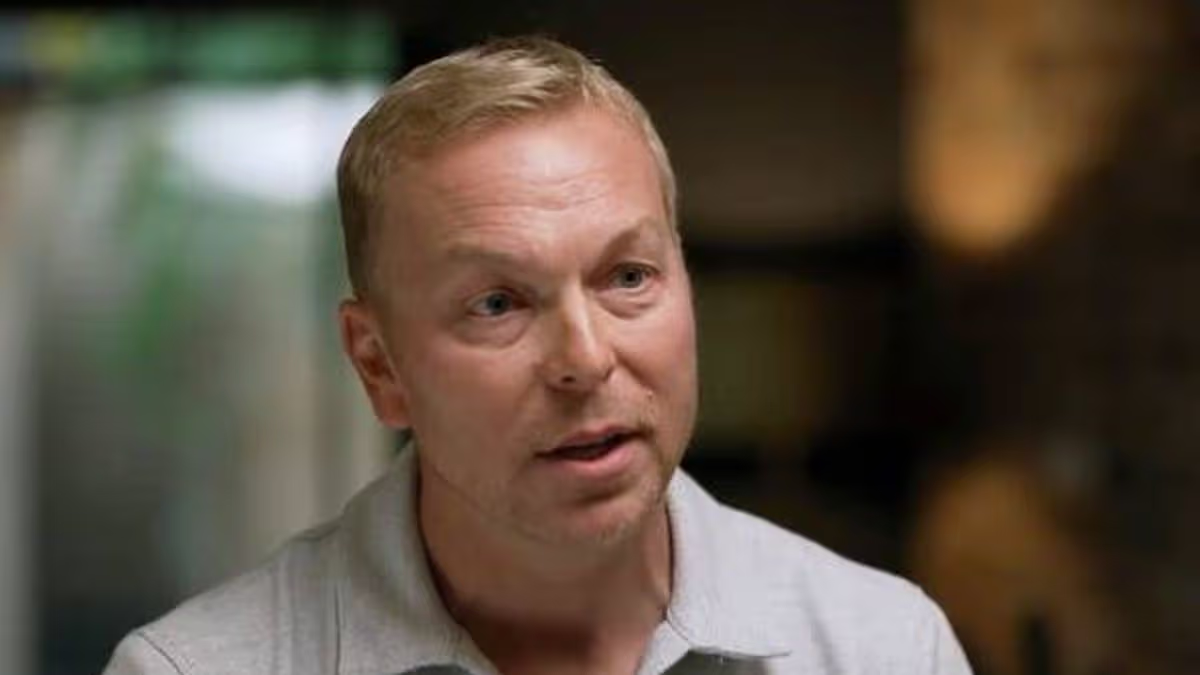
In the pantheon of British sporting heroes, Sir Chris Hoy occupies a place of rare distinction, his six Olympic gold medals a testament to a will of iron and relentless dedication. Yet today, the legendary cyclist faces a challenge of an entirely different, profoundly personal nature. In 2023, his world was abruptly reshaped by a diagnosis of prostate cancer, news that would later evolve into a devastating prognosis: the disease had spread to his bones, and doctors informed him he might have as little as two to four years to live. For a man whose life has been defined by pushing physical limits and mastering the clock, this stark timeline imposed by illness is a brutal and heartbreaking twist of fate. However, from this personal earthquake, Sir Chris has chosen not to retreat, but to build a platform of hope and action, transforming his private struggle into a powerful public campaign.
Paragraph 2
Central to Sir Chris’s resilience is a philosophical shift to living firmly in the present. He candidly acknowledges the dark days that accompany his diagnosis, but actively chooses to anchor himself in the “here and now.” This mindset, he explains, is how he manages the emotional weight. Rather than being consumed by an uncertain future, he focuses on the tangible present—the love of his family, the purpose of his advocacy, and the immediate positive impacts he can foster. This approach is not about denying reality, but about finding stability and meaning within it, a lesson forged in the crucible of elite sport and now applied to an even more daunting arena. It is a conscious decision to reject despair and seek out light, a daily practice of mental strength that matches his famed physical fortitude.
Paragraph 3
This positive outlook is profoundly fueled by a sense of tangible purpose, discovered in the ripple effects of his public disclosure. Sir Chris has been deeply heartened by a significant and immediate surge in men across the UK requesting PSA (Prostate-Specific Antigen) tests following the news of his illness—an increase of thousands in just the first few weeks. The messages he receives provide powerful motivation; men and their families write to tell him that, though they had no symptoms, his story prompted them to get checked, leading to early detection and treatable intervention. This knowledge, that his vulnerability is directly saving and extending the lives of others, provides what he describes as an essential “lift.” It transforms his personal battle into a collective mission, offering a profound “net positive gain” from a deeply negative situation.
Paragraph 4
Channeling this purpose into action, Sir Chris is tireless in his charitable efforts. He is the driving force behind events like the “Tour de 4” charity cycle, whose inaugural ride raised an astonishing £3.1 million. The event’s name is intentionally symbolic, representing stage four cancer—the advanced stage he and many others live with. His aim is multifaceted: to raise crucial funds for research and support, but equally to radically shift the public perception of a terminal diagnosis. He wants to demonstrate vividly that a stage four cancer diagnosis is not the immediate end of living, but a different context for life. By showcasing individuals living actively and purposefully with advanced cancer, he hopes to provide a crucial beacon of hope for those receiving similar devastating news.
Paragraph 5
The journey is intensely personal, with its most poignant challenges existing within the walls of his own home. Sir Chris is married to Lady Sarra Hoy, and together they have two young children, Callum and Chloe. He speaks openly about the immense difficulty the past years have posed for his family, confronting the future with the knowledge his children are so young. This family dimension adds a layer of profound emotional complexity to his ordeal. Yet, it also clarifies his purpose. His efforts extend far beyond the world of sport; they are now fundamentally about life, death, and the legacy he leaves for his children and for countless other families. The race is no longer for medals, but for awareness, time, and a better future for others.
Paragraph 6
In essence, Sir Chris Hoy’s story has evolved from one of sporting triumph to a profound lesson in human courage. He stands today not only as an Olympic icon but as a different kind of hero—one who meets a devastating prognosis with clear-eyed realism, unwavering positivity, and transformative action. By choosing to focus on the present, drawing strength from helping others, and working to change the narrative around terminal illness, he embodies a resilience that resonates far beyond the velodrome. His legacy is expanding in real-time, measured not just in gold, but in the early diagnoses he inspires and the hope he offers to thousands, proving that even the most formidable challenges can be met with a champion’s spirit.